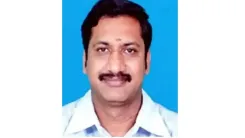
CM Samrat Choudhary Highlights Ayushman Bharat's 61 Crore Coverage
Synopsis
Bihar CM Samrat Choudhary amplified Union Health Minister JP Nadda's statement that Ayushman Bharat and the PM National Dialysis Programme now cover approximately 61 crore Indians with up to ₹5 lakh health insurance, with universal coverage extended to all citizens aged 70 and above.
Key Takeaways
Ayushman Bharat and the PM National Dialysis Programme together cover approximately 61 crore people with up to ₹5 lakh annual health insurance.
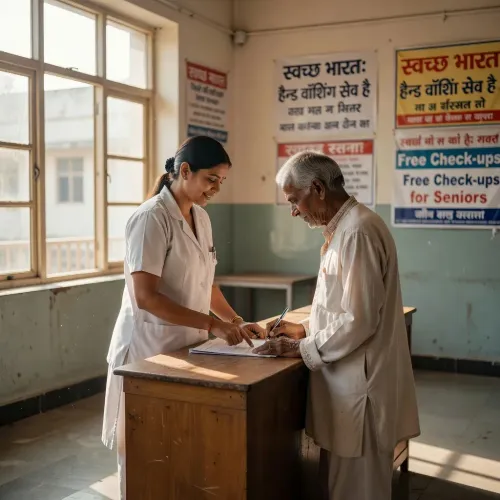
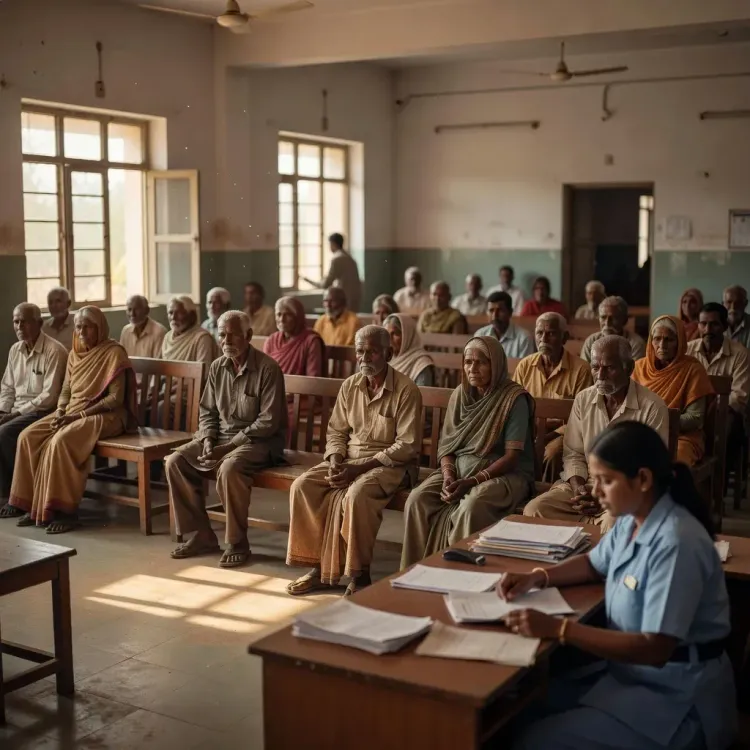
All senior citizens aged 70 and above are now eligible for ₹5 lakh health coverage regardless of income level.
Ayushman Bharat PM-JAY was launched in 2018 , originally targeting over 10 crore poor families for hospitalisation costs.
The PM National Dialysis Programme , launched in 2016 , provides free dialysis at district hospitals for chronic kidney disease patients.
Bihar CM Samrat Choudhary shared the statement by Union Health Minister JP Nadda , underlining Bihar's stake in the central scheme's expansion.
India's publicly funded health insurance has grown from the 2008 Rashtriya Swasthya Bima Yojana to the current near-universal Ayushman Bharat framework.
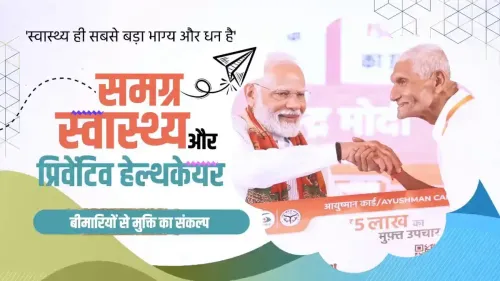
A single health crisis can wipe out a family's lifetime savings — and it is that exact vulnerability that two central government programmes are now racing to address at massive scale. Bihar Chief Minister Samrat Choudhary on Thursday, 29 October 2026, shared a statement by Union Health Minister JP Nadda underscoring the reach of the Pradhan Mantri National Dialysis Programme and Ayushman Bharat, which together provide health coverage of up to ₹5 lakh to approximately 61 crore Indians — and now extend that same financial shield to every citizen aged 70 years and above, regardless of income.
What the Nadda statement says — and who it covers
Quoting Union Minister JP Nadda directly, CM Choudhary's post states: 'Pradhan Mantri Rashtriya Dialysis Karyakram aur Ayushman Bharat Yojana ke madhyam se lagbhag 61 crore logon ko ₹5 lakh tak ka swasthya coverage uplabdh karaaya ja raha hai' — 'Through the PM National Dialysis Programme and Ayushman Bharat, approximately 61 crore people are being provided health coverage of up to ₹5 lakh.' The post goes on to confirm that all senior citizens aged 70 years and above are separately eligible for the same ₹5 lakh annual health coverage, regardless of their economic status — a significant departure from the scheme's original income-based targeting.
Ayushman Bharat Pradhan Mantri Jan Arogya Yojana (PM-JAY) was launched in 2018 as the world's largest publicly funded health insurance scheme, originally designed to cover over 10 crore poor families for secondary and tertiary hospitalisation. The Pradhan Mantri National Dialysis Programme, rolled out in 2016, targets a more specific but critical need: free dialysis for patients with chronic kidney disease at district hospitals, a lifeline for a population that would otherwise face catastrophic out-of-pocket costs.
The 70-plus extension — a policy shift worth watching
The inclusion of all senior citizens above 70 years — irrespective of income — marks a meaningful policy pivot. Earlier iterations of publicly funded health insurance in India, from the 2008 Rashtriya Swasthya Bima Yojana onward, were means-tested by design. Extending universal age-based coverage signals a broader political and administrative commitment to elderly care that cuts across economic categories.
Bihar, one of India's most populous and economically challenged states, has a significant stake in both programmes. The state participates in the Ayushman Bharat framework by empanelling hospitals and co-branding the scheme locally, meaning CM Choudhary's amplification of the Health Minister's figures is also a reminder of what the central scheme delivers on the ground in Bihar's districts.
Bihar's role in India's public health expansion
By sharing the Health Minister's statement, CM Choudhary is drawing a direct line between central health policy and Bihar's on-ground beneficiaries — a political and administrative signal that the state is aligned with, and invested in, the scheme's expansion. With the 70-plus universal coverage extension still being rolled out across states, the next milestone to watch is the empanelment of additional hospitals in states like Bihar and the health ministry's upcoming budgetary signals for the programme's next phase.
For a country where out-of-pocket health spending remains among the highest in Asia, the difference between 'covered' and 'uncovered' is not a policy abstraction. It is the difference between selling land and keeping it.
Point of View
Especially ahead of budget cycles and state elections. The 70-plus universal coverage extension is the most structurally significant element: it breaks from the means-tested DNA of Indian public health insurance and signals a shift toward age-based entitlement. For Bihar, with its large elderly rural population and limited private healthcare infrastructure, effective implementation of this extension could have a measurable impact on household financial resilience. The state-level rollout — hospital empanelment, claim settlement rates, awareness penetration — will determine whether the headline figure of 61 crore translates into lived coverage.
NationPress
29 Oct 2026
Frequently Asked Questions
What is Ayushman Bharat and who is eligible?
Ayushman Bharat PM-JAY is India's central health insurance scheme launched in 2018, providing up to ₹5 lakh annual coverage per family for hospitalisation. It was originally designed for economically weaker sections and has now been extended to all citizens aged 70 and above regardless of income.
What is the PM National Dialysis Programme?
The Pradhan Mantri National Dialysis Programme, launched in 2016, provides free dialysis services at district-level government hospitals to poor patients suffering from chronic kidney disease, removing catastrophic out-of-pocket costs for vulnerable families.
How many people does Ayushman Bharat cover in 2026?
According to a statement by Union Health Minister JP Nadda shared by Bihar CM Samrat Choudhary, approximately 61 crore people are being provided health coverage of up to ₹5 lakh through Ayushman Bharat and the PM National Dialysis Programme.
Do senior citizens above 70 get free health insurance under Ayushman Bharat?
Yes. All citizens aged 70 years and above are eligible for up to ₹5 lakh annual health coverage under the Ayushman Bharat framework, irrespective of their income or economic status.
What is Bihar CM Samrat Choudhary's role in Ayushman Bharat?
Bihar participates in Ayushman Bharat by empanelling hospitals across the state and co-implementing the scheme locally. CM Samrat Choudhary shared the Union Health Minister's statement to highlight how central health policy benefits Bihar's residents.