CM Vishnu Deo Sai Offers Navratri Prayers at Maa Chandrahansini
Synopsis
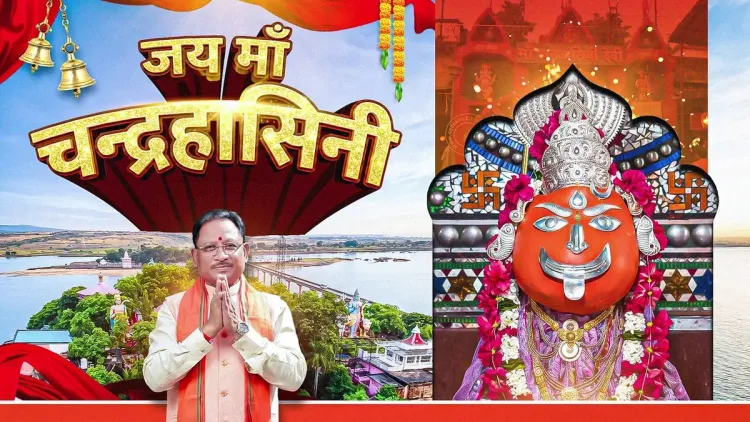
On Navratri's fifth day, Chhattisgarh Chief Minister Vishnu Deo Sai offered devotional tribute to Maa Chandrahansini Devi, praying for her continued grace upon the state and its devotees during the 2026 festival.
Key Takeaways
CM Vishnu Deo Sai posted a Navratri tribute on 15 October 2026 , the festival's fifth day.
He invoked Maa Chandrahansini Devi , one of Chhattisgarh's principal Shakti Peeths.
The CM prayed for the goddess to fulfil all auspicious wishes of devotees and sustain her grace on Chhattisgarh.
The post was tagged #CGNavratri2026 and #महतारी_का_सम्मान , linking the tribute to the state's cultural messaging.
The Chandrahansini temple is part of Chhattisgarh's recognised religious heritage and pilgrimage circuit .
On the fifth day of Navratri 2026, Chhattisgarh Chief Minister Vishnu Deo Sai paid devotional tribute to Maa Chandrahansini Devi, invoking the goddess's blessings for the state's people and honouring one of Chhattisgarh's most revered Shakti Peeths.
In his post, CM Sai opened with 'Jai Maa Chandrahansini' (Glory to Maa Chandrahansini) and offered what he described as 'koti-koti vandan' — crores of salutations — at the goddess's feet on the festival's fifth night. He prayed that she 'fulfil all the auspicious wishes of her devotees and always keep her grace upon Chhattisgarh.'
Chandrahansini: Chhattisgarh's Moon-Faced Goddess
The Chandrahansini Devi temple is counted among Chhattisgarh's principal Shakti Peeths — sacred seats of the goddess that draw pilgrims from across central India. The deity is venerated in devotional tradition as one whose 'radiance, like the face of the moon, illuminates the lives of her devotees,' a line CM Sai echoed directly in his message. The site forms part of the state's recognised religious heritage and pilgrimage circuit, alongside several other Shakti Peeths that define Chhattisgarh's spiritual landscape.
Navratri's Fifth Day and Chhattisgarh's Festival Identity
Navratri, the nine-night festival honouring forms of the goddess, is among India's most widely observed Hindu celebrations, and Chhattisgarh marks it with considerable public fervour. For state leaders, Navratri messaging is a visible part of the festival calendar — a moment to connect governance with cultural identity. CM Sai's post, hashtagged #CGNavratri2026 and #महतारी_का_सम्मान (Respect for the Mother), reflects both the devotional rhythm of the season and the state government's emphasis on Chhattisgarh's religious heritage sites as a point of cultural pride.
As pilgrims across the state continue their nine-night observances, the Chief Minister's tribute places Maa Chandrahansini at the centre of Chhattisgarh's Navratri story — a reminder that in India's heartland, faith and public life still speak the same language.
Point of View
Reinforcing cultural identity alongside governance. The hashtag 'Mahtari ka Samman' signals a broader state-level branding effort that ties religious heritage sites to Chhattisgarh's identity under BJP rule. For a Chief Minister consolidating his public profile, such posts serve to deepen local cultural credibility with a devout electorate. The spotlight on Shakti Peeths also subtly underscores the state government's ongoing push to develop religious tourism as an economic lever.
NationPress
15 Oct 2026
Frequently Asked Questions
Where is the Chandrahansini Devi temple located?
The Chandrahansini Devi temple is a prominent Shakti Peeth in Chhattisgarh, counted among the state's major pilgrimage centres and part of its religious heritage circuit.
What did CM Vishnu Deo Sai say on Navratri's fifth day 2026?
CM Sai posted a devotional tribute to Maa Chandrahansini Devi on 15 October 2026, praying that she fulfil her devotees' wishes and always keep her grace upon Chhattisgarh.
What is the significance of Navratri's fifth day?
Navratri's fifth day (Panchami) is one of the nine sacred nights of the Hindu festival dedicated to the goddess, observed with prayers and rituals across India including at Shakti Peeths in Chhattisgarh.
What is a Shakti Peeth?
A Shakti Peeth is a sacred shrine or seat of the goddess in Hindu tradition. Chhattisgarh is home to several recognised Shakti Peeths, including the Chandrahansini Devi temple, which draw devotees from across central India.
Who is Vishnu Deo Sai?
Vishnu Deo Sai is the Chief Minister of Chhattisgarh and a BJP leader who regularly shares public messages marking state festivals and religious occasions.