CM Sai puts villages at the heart of Chhattisgarh's growth plan
Synopsis
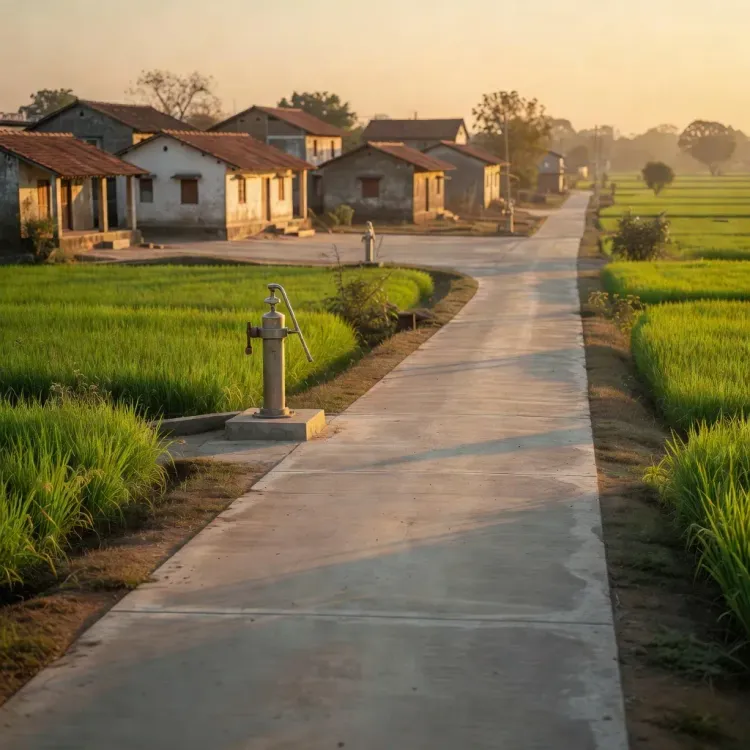
Chhattisgarh Chief Minister Vishnu Deo Sai declared on 28 July 2026 that empowered, self-reliant villages are the foundation of the state's progress, citing modern infrastructure, agricultural prosperity, water conservation, and citizen participation as the four pillars of his rural-first development agenda.
Key Takeaways
CM Vishnu Deo Sai posted on 28 July 2026 reaffirming that village development is central to Chhattisgarh's growth strategy.
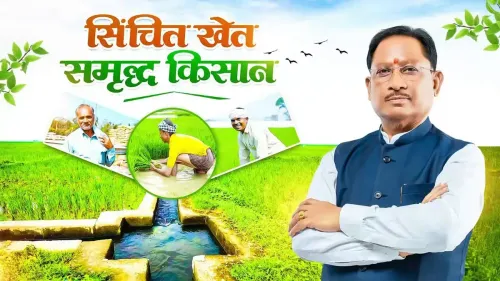
Four development pillars named: modern infrastructure, agricultural prosperity, water conservation, and janbhagidari (citizen participation).
The vision aims to deliver opportunity, prosperity, and good governance equally to every citizen.
Chhattisgarh's large rural and tribal population makes village-level policy both an economic necessity and a political priority.
The BJP government, in office since December 2023 , has consistently framed rural self-reliance as the state's core development doctrine.
Villages are not the starting point of Chhattisgarh's development story — they are the story itself. Chhattisgarh Chief Minister Vishnu Deo Sai made that case plainly on Tuesday, 28 July 2026, outlining a rural-first vision that frames empowered, self-reliant villages as the only durable foundation for state progress.
Posting in Hindi, CM Sai wrote: 'विकसित छत्तीसगढ़ का मार्ग हमारे गाँवों से होकर गुजरता है' — 'The road to a developed Chhattisgarh passes through our villages.' He identified four pillars driving this effort: modern infrastructure, agricultural prosperity, water conservation, and people's participation (janbhagidari). The goal, he said, is to ensure that opportunity, prosperity, and good governance reach every citizen equally.
Why Chhattisgarh's villages are the political and economic centre of gravity
Chhattisgarh, carved out of Madhya Pradesh in 2000, is one of India's most resource-rich states — yet the bulk of its population remains rural and agriculture-dependent. The state's tribal heartland, spanning districts like Bastar, Surguja, and Korba, has historically lagged on human-development indicators even as coal and mineral revenues flowed outward. That structural tension — wealth extracted from the ground, welfare lagging in the village — has made rural development a recurring and politically charged priority for every administration. CM Sai, who took office in December 2023 after the BJP's decisive assembly election victory, has consistently placed village-level welfare at the centre of his government's pitch. The framing in Tuesday's post — self-reliance, equal access, governance reaching the last citizen — echoes the national BJP vocabulary of Aatmanirbhar Bharat and Sabka Saath, Sabka Vikas, but grounds it in Chhattisgarh's specific rural geography.Infrastructure, water, and the participation piece
Of the four pillars Sai named, water conservation stands out as particularly urgent for a state where rain-fed agriculture dominates and erratic monsoons can devastate smallholder incomes. Successive governments across India have treated watershed management and farm-pond programmes as low-cost, high-impact rural interventions; Chhattisgarh's flat, plateau terrain makes such measures especially viable. Janbhagidari — citizen participation — is the fourth pillar and arguably the most politically loaded. It signals an intent to move beyond top-down scheme delivery toward community-owned development, a model that has shown results in states like Himachal Pradesh and parts of Maharashtra. Whether that intent translates into budget allocations and gram-sabha empowerment in Chhattisgarh's upcoming state cycle will be the real test. The path to a developed Chhattisgarh, CM Sai insists, is a rural road. The question now is how much concrete gets laid on it.Point of View
Not merely a governance update — it anchors the BJP's Chhattisgarh project firmly in the 'village-first' development grammar that has defined the party's national narrative since 2014. For a state with deep tribal constituencies and a history of Maoist unrest in its rural belt, emphasising equal access to governance carries a security subtext alongside the welfare one. The four-pillar framing — infrastructure, agriculture, water, participation — maps closely onto central scheme priorities, suggesting Sai is positioning Chhattisgarh to capture maximum Union funding in the next planning cycle. Watch state budget announcements and gram-sabha empowerment moves in the months ahead as the real measure of this rhetoric.
NationPress
28 Jul 2026
Frequently Asked Questions
What is Vishnu Deo Sai's vision for Chhattisgarh's development?
CM Vishnu Deo Sai has outlined a rural-first vision, stating that empowered and self-reliant villages are the foundation of Chhattisgarh's progress, with modern infrastructure, agriculture, water conservation, and citizen participation as the four key pillars.
When did Vishnu Deo Sai become Chief Minister of Chhattisgarh?
Vishnu Deo Sai assumed office as Chief Minister of Chhattisgarh in December 2023 after the BJP won the state assembly elections.
Why is rural development important for Chhattisgarh?
Chhattisgarh has a large rural and tribal population that depends heavily on agriculture. Despite being mineral-rich, the state's villages have historically lagged on welfare indicators, making rural development both an economic and political priority.
What is janbhagidari and why does CM Sai emphasise it?
Janbhagidari means citizen or people's participation. CM Sai has named it a core pillar of development to signal a shift from top-down scheme delivery toward community-owned, locally driven progress in Chhattisgarh's villages.
What is Chhattisgarh's approach to water conservation under CM Sai?
Water conservation is one of four pillars in CM Sai's rural development framework, reflecting the urgency of protecting rain-fed agriculture in a state where erratic monsoons can severely impact smallholder farmers.