CM Sai Revives Koyabekur Irrigation Scheme in Sukma
Synopsis
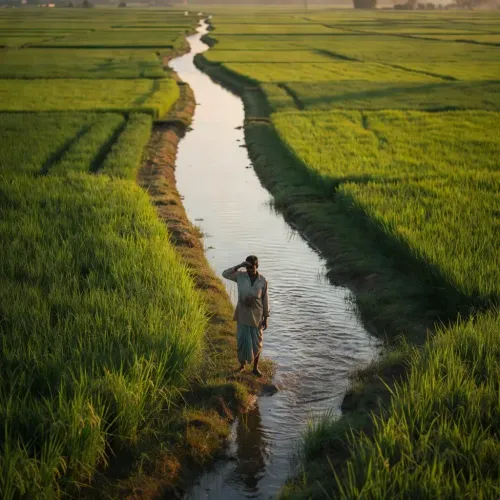
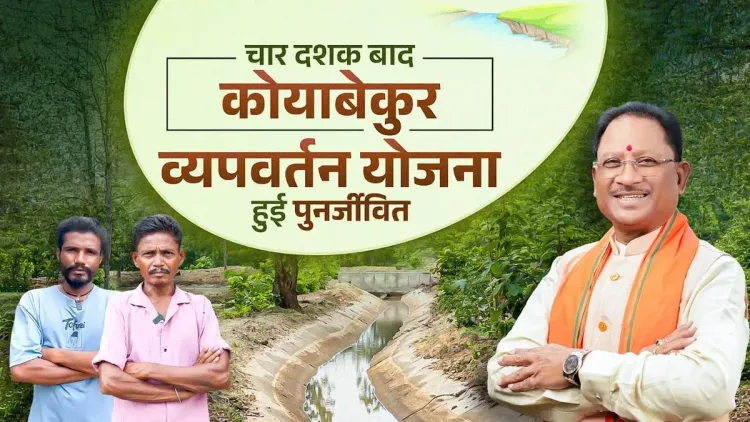
The Chhattisgarh CMO announced on 19 July 2026 that CM Vishnu Deo Sai has revived the Koyabekur Vyapavartan Yojana in Sukma after four decades. A 2.74 km canal will irrigate 160 hectares for over 100 tribal farmers, promising year-round water access and higher agricultural incomes in a historically under-served district.
Key Takeaways
The Koyabekur Vyapavartan Yojana in Sukma has been revived after roughly four decades of being stalled.
A 2.74-kilometre canal will divert water to the Koyabekur and Golabekur farming areas of Sukma district.
More than 100 farmers with a combined 160 hectares of land will gain year-round irrigation access.
The project is part of the post- December 2023 BJP government's broader push to complete pending irrigation works in southern Chhattisgarh's tribal districts.
Irrigation planning for this region dates to the 1980s , predating Chhattisgarh's formation as a state in 2000 .
Physical completion timelines and the funding source for the scheme have not yet been officially disclosed.
The Chief Minister's Office of Chhattisgarh announced on 19 July 2026 that the long-stalled Koyabekur Vyapavartan Yojana in Sukma district has been revived under Chief Minister Vishnu Deo Sai, ending a wait of four decades for farmers in one of the state's most under-served tribal belts.
Context
The CMO's post states: 'Chaar dashak ka intezaar sushaasan sarkar mein hua samapt' ('Four decades of waiting have ended under the good-governance government'). A 2.74-kilometre canal will now carry diverted water to the Koyabekur and Golabekur areas of Sukma, irrigating 160 hectares of farmland belonging to more than 100 farmers. The announcement promises year-round irrigation access, improved yields, and higher incomes for cultivators in these communities.
Policy Backdrop
Irrigation planning for the Bastar division, of which Sukma is the southernmost district, dates to the 1980s — when the region was still part of undivided Madhya Pradesh, before Chhattisgarh was carved out as a separate state in 2000. Decades of left-wing extremism and security disruptions repeatedly stalled minor and medium irrigation works across southern Chhattisgarh, leaving tribal cultivators dependent on monsoon rains. The Chhattisgarh Water Resources Department is the nodal agency responsible for executing canal and diversion projects of this kind.
Since the BJP government took office in December 2023, the administration has prioritised completing long-pending irrigation schemes in districts such as Dantewada, Bijapur, and Narayanpur. The Koyabekur revival fits squarely within that pattern, extending the state's push to expand cultivable area in tribal belts under the banner of 'Viksit Chhattisgarh' (Developed Chhattisgarh).
Stakeholders and Impact
The direct beneficiaries are more than 100 farmers — predominantly tribal cultivators — in the Koyabekur and Golabekur pockets of Sukma block. Access to year-round irrigation is expected to allow a shift from single-crop rain-fed agriculture to multi-season cultivation, lifting household incomes in an area that remains among the most economically marginalised in the country. For the state government, the project also carries political symbolism: Sukma has historically been at the epicentre of Maoist conflict, and visible development works serve as a signal of normalcy returning to the region.
What's Next
Attention will now turn to the physical progress of the 2.74 km canal and whether the scheme can be extended to additional villages within Sukma block ahead of the 2026-27 rabi season. Independent verification of beneficiary numbers, the funding source, and a formal completion timeline have not yet been made public. Observers will also watch whether similar diversion schemes in neighbouring Sukma sub-divisions receive comparable attention in the state's next budget cycle.
Point of View
Building a 'completion' narrative ahead of future electoral cycles. Sukma's dual identity as both a Maoist-conflict zone and a tribal farming district gives such announcements outsized political weight: infrastructure delivery here is read as proof of state reach in areas where it was long absent. The project also slots into a recognisable pattern across Chhattisgarh's southern districts, suggesting a coordinated departmental push rather than an isolated announcement. The real test, however, will be whether the canal becomes operational before the next kharif season and whether beneficiary numbers hold up to independent scrutiny.
NationPress
18 Oct 2026
Frequently Asked Questions
What is the Koyabekur Vyapavartan Yojana in Sukma?
The Koyabekur Vyapavartan Yojana is a minor irrigation diversion project in Sukma district, Chhattisgarh, designed to channel water through a 2.74-kilometre canal to irrigate 160 hectares of farmland in the Koyabekur and Golabekur areas. The scheme was originally planned decades ago but remained stalled until its revival was announced by the Chhattisgarh CMO in July 2026.
How many farmers will benefit from the Koyabekur irrigation canal?
According to the Chief Minister's Office of Chhattisgarh, more than 100 farmers in the Koyabekur and Golabekur areas of Sukma will benefit, gaining access to year-round irrigation across a combined 160 hectares of agricultural land.
Why was the Koyabekur scheme delayed for four decades?
Irrigation planning for the Bastar division, including Sukma, began in the 1980s under undivided Madhya Pradesh. After Chhattisgarh's formation in 2000, persistent left-wing extremism and security disruptions repeatedly stalled minor and medium irrigation works across the region's southern districts, leaving the scheme incomplete for roughly forty years.
Who is Vishnu Deo Sai and what is his role in this project?
Vishnu Deo Sai is the Chief Minister of Chhattisgarh, a BJP leader from the Surguja region who took office in December 2023. The CMO credited his 'sensitive leadership' with giving the Koyabekur Vyapavartan Yojana a new lease of life as part of the government's broader irrigation revival drive in southern Chhattisgarh.
Which other districts in Chhattisgarh have seen similar irrigation project revivals?
The post-2023 Chhattisgarh government has highlighted the restart of similar pending irrigation schemes in Dantewada, Bijapur, and Narayanpur districts, all in the Bastar division, as part of a wider push to expand cultivable area in the state's tribal belts.