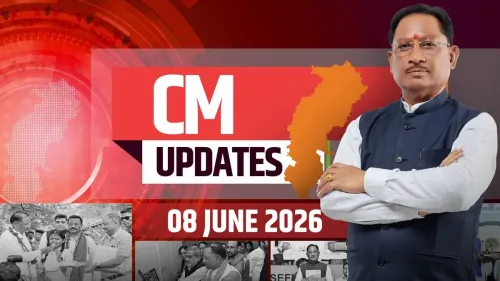
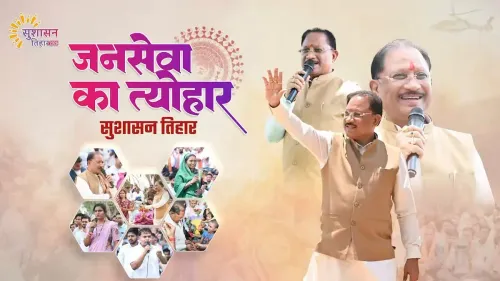
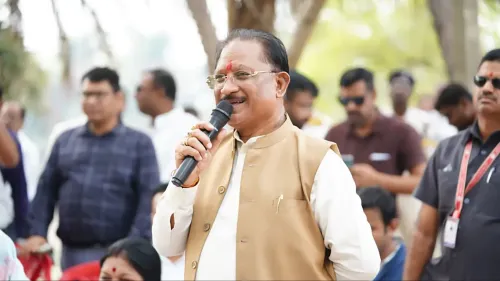
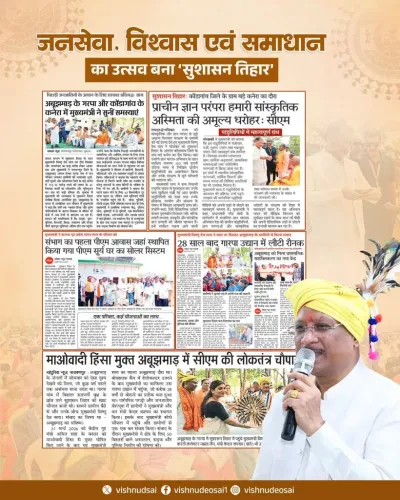
CM Sai Takes Sushasan Tihar to Chhattisgarh's Tribal Heartland
Synopsis
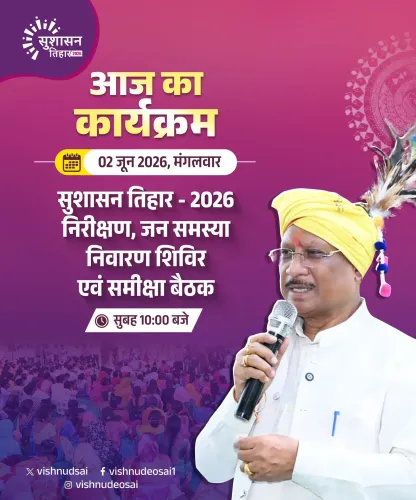
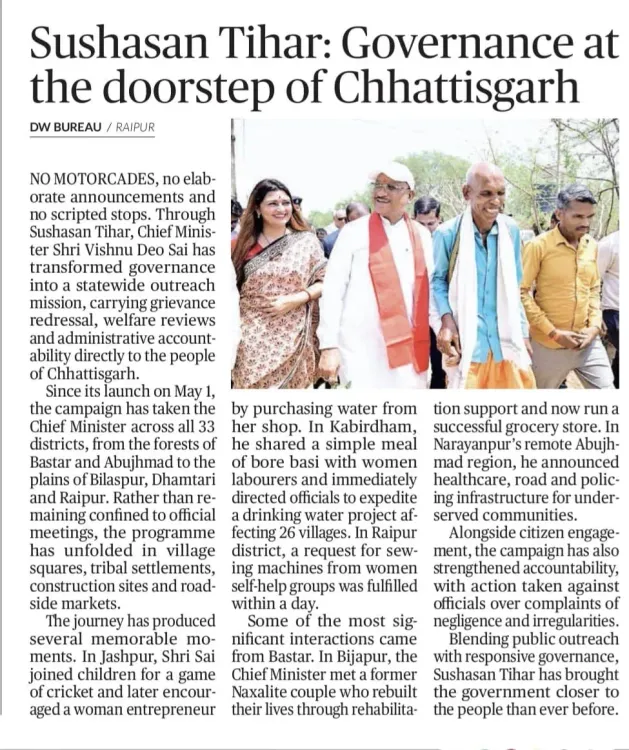
Chief Minister Vishnu Deo Sai personally led Sushasan Tihar, a statewide governance festival in Chhattisgarh aimed at connecting administration with citizens in remote tribal settlements, the Chief Minister's Office announced on 23 June 2026.
Key Takeaways
Sushasan Tihar is a statewide governance outreach initiative launched by the Chhattisgarh government under Chief Minister Vishnu Deo Sai .
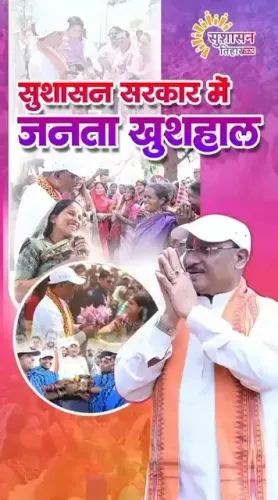
CM Sai personally participated in taking the programme to the grassroots, including remote tribal settlements.
Chhattisgarh has over 30 percent Scheduled Tribe population, making tribal outreach a central governance challenge.
The BJP government, in power since December 2023 , has prioritised last-mile service delivery in tribal districts as a core policy plank.
The programme is framed as a movement and festival ( tihar ), signalling intent to make citizen-administration contact a recurring norm rather than a one-off exercise.
District-level rollout data and grievance resolution outcomes will be key metrics to watch for assessing the programme's real impact.
The Chief Minister's Office of Chhattisgarh announced on Tuesday, 23 June 2026 that Sushasan Tihar — a statewide governance outreach initiative — has been carried to the remotest corners of the state under the personal leadership of Chief Minister Vishnu Deo Sai, connecting administration directly with citizens including those in tribal settlements.
Context
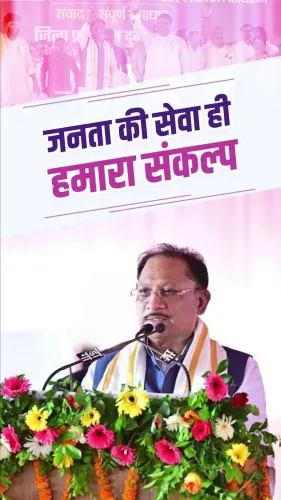
The Chief Minister's Office described Sushasan Tihar as a movement that brings governance to 'the heart of every citizen.' The announcement notes that CM Sai personally led the initiative to the grassroots, with the programme reaching 'remote tribal settlements' — underscoring its stated intent to bridge the gap between state administration and citizens who are often the last to receive government services.
Chhattisgarh has one of the largest Scheduled Tribe populations in India, accounting for over 30 percent of the state's total population. Large swathes of the state are forested and geographically isolated, making direct administrative outreach both a political priority and a logistical challenge for any government in Raipur.
Policy Backdrop
The Bharatiya Janata Party government led by Vishnu Deo Sai came to power in Chhattisgarh in December 2023 following state assembly elections, with administrative reform and last-mile service delivery in tribal districts forming a core plank of its governance agenda. Sushasan — meaning 'good governance' in Hindi — is the conceptual anchor of this agenda.
Across India, state governments have run direct grievance-redressal camps and 'jan sampark' (public contact) programmes for decades, but initiatives of this scale — branded as a tihar, or festival — represent an effort to give routine administrative outreach the cultural weight and mass participation of a public celebration. The framing signals that the government views citizen-administration contact not as an exception but as a recurring norm.
Stakeholders and Impact
The primary beneficiaries of Sushasan Tihar are tribal communities and rural citizens in Chhattisgarh's remote districts, who face structural barriers to accessing welfare schemes, forest rights settlements, and basic civic services. By positioning CM Sai as the face of the outreach, the government signals high-level political commitment to last-mile delivery rather than delegating it entirely to district officials.
For the state administration, the programme also functions as a real-time feedback mechanism — on-the-spot interactions between officials and citizens can surface unresolved grievances that do not ordinarily reach the secretariat. District collectors and block-level officers are typically central to executing such camps, making their coordination capacity a key variable in outcomes.
What's Next
The scale and reach of Sushasan Tihar across Chhattisgarh's districts will be a measure of the programme's actual impact beyond its announcement. Observers and opposition legislators are likely to scrutinise district-level rollout data, the number of grievances registered and resolved, and whether welfare scheme enrolments increased in tribal blocks covered by the initiative.
With the programme framed as a statewide movement rather than a one-off event, the Sai government has implicitly committed to sustained follow-through — making accountability for outcomes, not just outreach, the defining test of Sushasan Tihar's long-term credibility.
Point of View
On-ground governance delivery. By branding the outreach as a tihar, the administration borrows the cultural resonance of a festival to normalise state-citizen contact in regions where administrative presence has historically been thin. The personal involvement of CM Sai raises the political stakes: success becomes a credential, but shortfalls in follow-through become equally attributable to the top leadership. In the broader Indian context, this fits a pattern of chief ministers using branded outreach programmes to differentiate their governance style ahead of the next electoral cycle.
NationPress
23 Jun 2026
Frequently Asked Questions
What is Sushasan Tihar in Chhattisgarh?
Sushasan Tihar is a statewide governance outreach initiative by the Chhattisgarh government in which Chief Minister Vishnu Deo Sai personally leads efforts to connect administration with citizens, particularly in remote tribal areas. The name combines 'sushasan' (good governance) and 'tihar' (festival), framing citizen-government contact as a celebratory public movement.
Who is Vishnu Deo Sai?
Vishnu Deo Sai is the Chief Minister of Chhattisgarh, sworn into office in December 2023 after the Bharatiya Janata Party won the state assembly elections. He is a senior BJP leader and the first tribal chief minister of Chhattisgarh.
Which communities does Sushasan Tihar target?
The programme primarily targets tribal communities and rural citizens in Chhattisgarh's remote and forested districts, which account for over 30 percent of the state's Scheduled Tribe population and often face barriers to accessing government welfare schemes and services.
How does Sushasan Tihar work?
The initiative involves the chief minister and state officials travelling to remote areas to hold direct interactions with citizens, hear grievances on the spot, and facilitate enrolment in welfare schemes — a model similar to grievance-redressal camps run by state governments across India.
What will determine the success of Sushasan Tihar?
Key indicators will include the number of districts covered, grievances registered and resolved, welfare scheme enrolments in tribal blocks, and whether the programme is sustained over time rather than remaining a one-time publicity exercise.