Owaisi flags double standard over Ganga party row
Synopsis
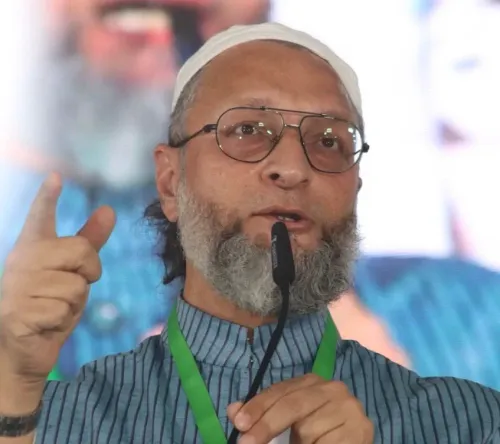
AIMIM chief Asaduddin Owaisi on June 23 called out what he termed selective outrage over events on the Ganga, contrasting criticism of a Muslim Iftar gathering with silence over a reported chicken-and-liquor party at the same site, and attributing the difference to the community involved.
Key Takeaways
Owaisi posted on June 23, 2026 , highlighting a contrast between public reactions to an Iftar on the Ganga and a reported chicken-and-liquor party at the same location.
He argued that the community identity of the organisers determined the scale of public outrage, not the act itself.
The post was written in Hindi and framed as a rhetorical question rather than a direct accusation.
Neither event was named or dated specifically in the post; the Ganga was the common reference point for both.
The episode fits a documented pattern in Indian political discourse where communal identity shapes the intensity of reactions to shared-space events.
The Namami Gange programme governs conservation of the river, but enforcement of activity restrictions has historically been inconsistent.
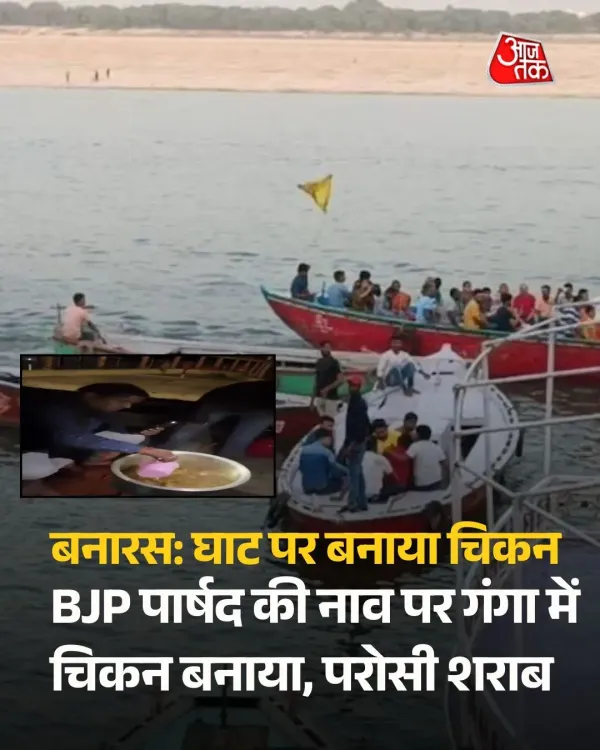
AIMIM president Asaduddin Owaisi on Tuesday, June 23, 2026, took to X to highlight what he described as a glaring double standard in public and political outrage over events held on or near the Ganga — contrasting the backlash against an Iftar gathering on the river with the apparent silence over a reported chicken-and-liquor party at the same site.
In his Hindi-language post, Owaisi wrote: 'Veg chicken party thi shayad...' — sarcastically suggesting the gathering may have been a 'vegetarian chicken party.' He asked pointedly: 'Until yesterday, people's sentiments were being hurt by an Iftar on the Ganga. Today, why are no sentiments being hurt by a chicken-and-liquor party on that same Ganga? Perhaps because those partying this time belong to a different community.'
Context
The post references two separate incidents on the Ganga — an Iftar gathering that reportedly drew sharp criticism from certain quarters, and a subsequent event involving chicken and alcohol at the same river, which drew comparatively little public condemnation. Owaisi's central argument is that the identity of the community organising an event determines the scale of outrage it receives.
The Hyderabad MP did not name specific individuals, organisations, or dates for either event in his post. He framed his observation as a question rather than a direct accusation, allowing the contrast to speak for itself.
Policy Backdrop
The Ganga occupies a unique position in Indian public life — simultaneously a site of deep religious significance for Hindus and a subject of ongoing environmental policy. The Namami Gange programme, launched in 2014, was designed to clean and conserve the river while accommodating the vast range of religious and cultural practices along its banks.
Debates over what activities are permissible on or near the Ganga have repeatedly intersected with communal tensions. Environmental concerns — including the impact of food waste, alcohol, and large gatherings on water quality — are frequently raised selectively, critics argue, depending on the religious identity of those involved.
Stakeholders and Impact
Owaisi's post speaks directly to both Muslim and Hindu communities, as well as to political observers tracking the consistency of public outrage in India's communally sensitive media environment. For the Muslim community, the post articulates a widely felt grievance: that minority religious practices face disproportionate scrutiny when conducted in shared public spaces.
For Hindu groups and ruling-party supporters, the post is likely to be read as a political provocation. AIMIM, as a party focused on Muslim representation and secular critique of majoritarian politics, has consistently used such contrasts to build its electoral narrative, particularly in urban constituencies with significant Muslim populations.
The broader Indian electorate, increasingly attuned to identity-based political signalling, is the third stakeholder. Episodes like this one tend to circulate widely on social media, shaping perceptions of fairness and institutional neutrality well beyond the immediate incident.
What's Next
It remains to be seen whether other national or regional parties will respond to Owaisi's challenge, or whether the reported chicken-and-liquor party on the Ganga will attract formal scrutiny from river conservation authorities. Any parliamentary session discussion on river-use regulations or communal harmony legislation could give this episode renewed salience.
If the contrast Owaisi has drawn gains traction on social media, it may compel political parties and environmental regulators to articulate a consistent, community-neutral standard for permissible activities on the Ganga — a test that Indian institutions have historically struggled to pass in a politically charged climate.
Point of View
He avoids direct provocation while maximising rhetorical impact. The post plugs into a long-running AIMIM strategy of documenting perceived double standards to consolidate Muslim voter sentiment ahead of any electoral cycle. The deeper policy implication is that India still lacks a community-neutral, enforceable framework for regulating cultural and religious activities on ecologically sensitive sites like the Ganga.
NationPress
23 Jun 2026
Frequently Asked Questions
What did Asaduddin Owaisi say about the Ganga party?
Owaisi posted on X on June 23, 2026, questioning why a reported chicken-and-liquor party on the Ganga drew no public outrage, while an earlier Iftar gathering on the same river had sparked significant criticism. He suggested the difference in reactions was due to the community identity of those involved.
What is the Iftar on Ganga controversy Owaisi mentioned?
Owaisi referenced an earlier incident in which an Iftar gathering — a Muslim fast-breaking meal during Ramadan — held on or near the Ganga reportedly drew criticism that it hurt Hindu sentiments. He contrasted this with the muted reaction to a subsequent non-vegetarian party at the same site.
What is AIMIM's position on communal double standards in India?
AIMIM, led by Owaisi, has consistently argued that minority religious and cultural practices face disproportionate public and political scrutiny compared with similar activities by members of the majority community. The party uses such contrasts as a central part of its political messaging.
What is the Namami Gange programme and does it regulate events on the river?
The Namami Gange programme, launched in 2014, aims to clean and conserve the Ganga. While it addresses pollution and encroachment, the regulation of cultural or social gatherings on the riverbanks remains inconsistently enforced and is frequently subject to political pressure.
Why does the Ganga keep coming up in communal controversies in India?
The Ganga holds deep religious significance for Hindus, making any perceived desecration politically sensitive. At the same time, its banks are shared public spaces used by all communities. This combination means events there are frequently flashpoints for identity-based political debates in India.