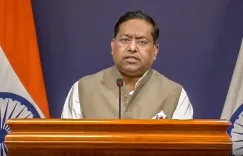
CM Sai: No Renaming of Telibandha Chowk in Raipur
Synopsis
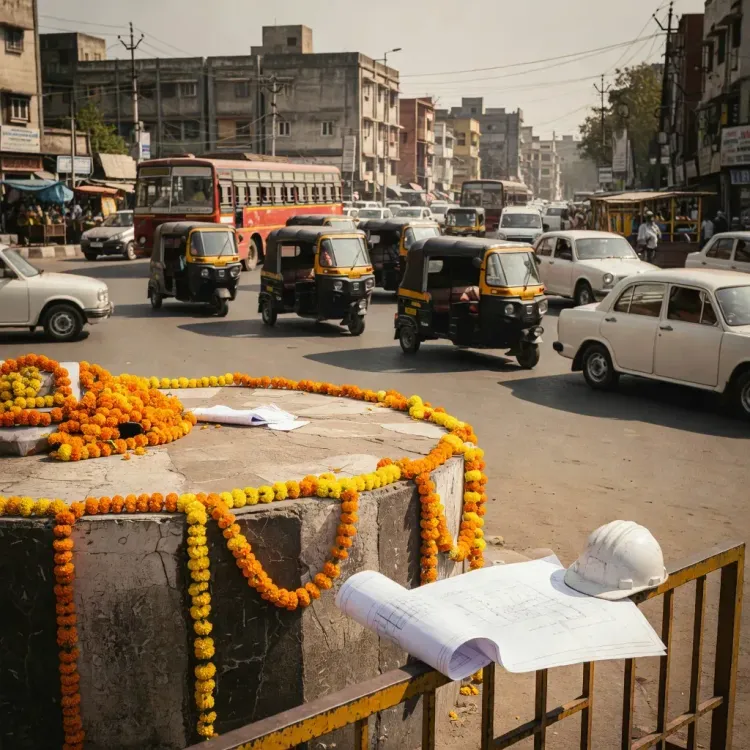
Chhattisgarh CM Vishnu Deo Sai personally denied reports of Telibandha Chowk being renamed, clarifying that only Seva Jyoti Sankalp development work is planned at the Raipur landmark.
Key Takeaways
Telibandha Chowk in Raipur will not be renamed — CM Sai confirmed this directly on 8 October 2026 .
Development work at the site will proceed under the Seva Jyoti Sankalp initiative.
CM Sai urged citizens not to be misled by any misinformation about the chowk.
The clarification came directly from the Chief Minister via a personal post on X, not a routine government notice.
No structural or symbolic alteration to the chowk's name or identity is planned.
A rumour stopped in its tracks — by the Chief Minister himself. Chhattisgarh Chief Minister Vishnu Deo Sai took to X on Thursday, 8 October 2026, to categorically deny any plan to rename Telibandha Chowk in Raipur, urging citizens not to be misled by misinformation circulating about the landmark intersection.
In a direct Hindi-language post, CM Sai stated: 'तेलीबांधा चौक का कोई नाम परिवर्तन नहीं किया जा रहा है' — 'There is no renaming of Telibandha Chowk being done.' He made clear that development work at the site will proceed under the banner of the Seva Jyoti Sankalp initiative, and that the chowk's identity remains entirely unchanged.
What Is Actually Happening at Telibandha Chowk
The Chief Minister was unambiguous: only developmental work will be carried out at the junction under the Seva Jyoti Sankalp framework. No structural alteration to the chowk's name or character is on the table. 'The chowk is neither being renamed nor is any interference being made in it,' Sai wrote, using language precise enough to leave no room for interpretation.
Telibandha Chowk is a well-known landmark in Raipur, the state capital. Chowk renamings have historically been sensitive political flashpoints in Indian cities, making the CM's swift clarification notable — he chose to personally address the speculation rather than delegate a government statement.
Why the Clarification Matters
Renaming public landmarks is a charged issue across India, often intersecting with identity politics and community sentiments. The speed with which CM Sai intervened — publicly and personally — signals that the misinformation had spread far enough to warrant direct executive response. By framing the work as Seva Jyoti Sankalp, a development-oriented programme, the government draws a clear line between infrastructure improvement and symbolic renaming.
The clarification is a reminder that in the age of social media, a rumour about a civic landmark can travel faster than any official order — and sometimes only the top office can shut it down.
Point of View
Direct denial of the renaming rumour is a calculated move to pre-empt community backlash — in Chhattisgarh, as across India, chowk and street renamings can rapidly become identity flashpoints. By framing the Telibandha activity strictly as 'Seva Jyoti Sankalp' development, the BJP government draws a deliberate boundary between infrastructure work and symbolic politics. The swiftness of the intervention also reflects a broader pattern of senior leaders using social media to control narrative before it metastasises into street-level tension. Whether the clarification fully closes the controversy will depend on how transparently the Seva Jyoti Sankalp work is implemented.
NationPress
8 Oct 2026
Frequently Asked Questions
Is Telibandha Chowk in Raipur being renamed?
No. Chhattisgarh Chief Minister Vishnu Deo Sai has categorically stated that Telibandha Chowk is not being renamed. Only development work under the Seva Jyoti Sankalp initiative will take place there.
What is Seva Jyoti Sankalp?
Seva Jyoti Sankalp is the development initiative under which infrastructure or improvement work will be carried out at Telibandha Chowk, according to CM Sai's clarification on 8 October 2026.
Why did CM Vishnu Deo Sai issue a clarification about Telibandha Chowk?
Misinformation about a possible renaming of the landmark Raipur chowk had apparently spread widely enough to prompt CM Sai to personally deny the rumours on X.
Where is Telibandha Chowk located?
Telibandha Chowk is a well-known intersection in Raipur, the capital city of Chhattisgarh.
What did CM Sai say about Telibandha Chowk on X?
CM Sai wrote that no renaming of Telibandha Chowk is underway, that citizens should not remain under any misunderstanding, and that only Seva Jyoti Sankalp development work will be done there.