CM Sai Touts Chhattisgarh Revenue Reforms as National Model
Synopsis
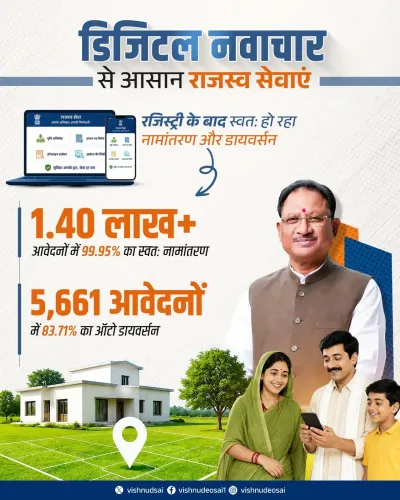
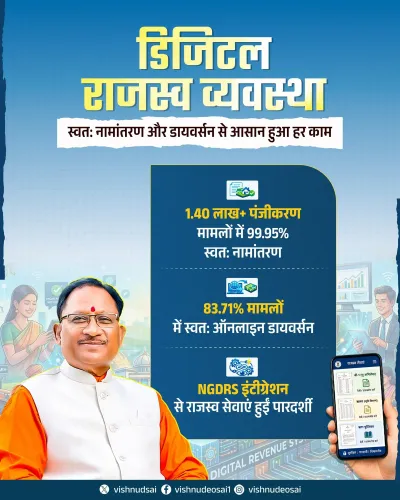
Chhattisgarh CM Vishnu Deo Sai announced sweeping digital reforms in the state's revenue department on 30 July 2026, citing DigiLocker integration, digital payments, WhatsApp services, and auto deed generation as tools to make property registration simpler and more transparent.
Key Takeaways
Vishnu Deo Sai announced revenue department reforms on 30 July 2026 , calling Chhattisgarh's model a national inspiration.
Key tools cited include DigiLocker , digital payments, WhatsApp-based services, and auto deed generation for property registration.
DigiLocker is a Government of India initiative launched in 2015 under the Digital India programme.
The reforms aim to eliminate middlemen, reduce processing time, and improve transparency in land transactions.
Chhattisgarh's digitisation effort fits a broader national pattern of states modernising revenue and land-record systems since the mid-2010s.
District-level performance data and independent assessments are yet to be published by the state revenue department.
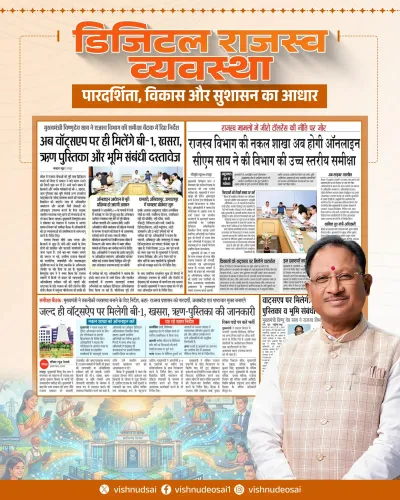
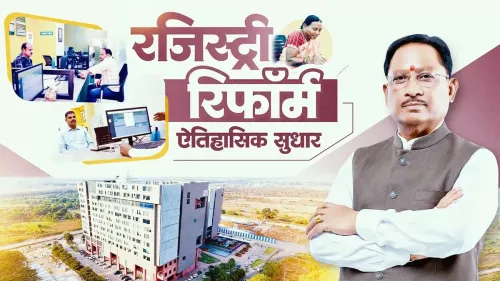
A land registry that once meant queues, middlemen, and paperwork now fits inside a smartphone — and Chhattisgarh Chief Minister Vishnu Deo Sai wants the country to take note. On 30 July 2026, Sai took to X to declare that the state's revenue department has undergone 'unprecedented reforms', positioning Chhattisgarh's digital land-administration system as an inspiration for the rest of India.
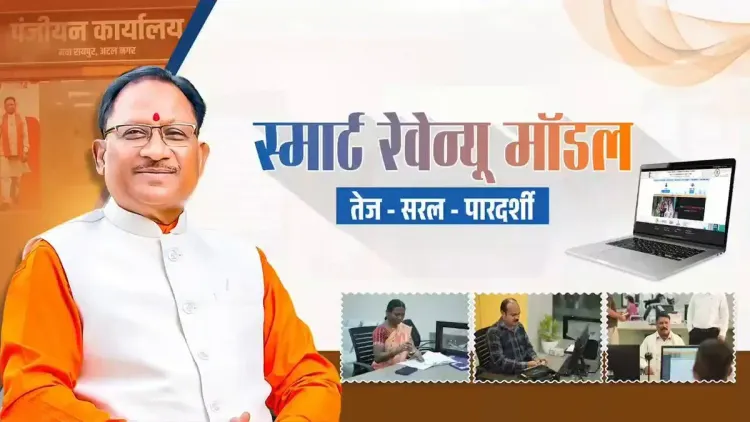
In his post, Sai framed the philosophy plainly: 'Sushasan ka mool mantra hai — saral prakriya, pardarshi vyavastha aur santusht nagrik' ('The core mantra of good governance is simple processes, a transparent system, and satisfied citizens'). The reforms he cited — digital payments, WhatsApp-based services, DigiLocker integration, and auto deed generation — are squarely aimed at stripping friction from the property registration process.
What the Revenue Overhaul Actually Involves
The centrepiece tools Sai highlighted span the full arc of a property transaction. DigiLocker, the Government of India initiative launched under the Digital India programme in 2015, allows citizens to store and present verified documents without physical copies. Paired with digital payment rails and, according to the CM, WhatsApp-based service delivery, the intent is to collapse a multi-day, in-person process into something far leaner. Auto deed generation — if fully operational — would mean the registration document itself is machine-produced, cutting scope for manual errors or manipulation.
Chhattisgarh in the Broader State Digitisation Race
Chhattisgarh's push is part of a decade-long national pattern. Since the mid-2010s, Indian states have progressively moved land records and revenue services online, driven partly by the Centre's Digital India umbrella and partly by the political dividend of visibly cutting red tape. The goal is consistent across states: reduce the role of middlemen, shrink processing time, and create an audit trail that makes corruption harder to hide. Chhattisgarh, a state formed in 2000 with a large tribal population and a complex land-tenure landscape, has particular reason to prioritise transparent revenue administration.
Sai's government, which came to power after the 2023 state assembly elections, has made 'sushasan' (good governance) a recurring brand — this post is a deliberate effort to show that phrase backed by operational specifics, not just rhetoric.
Whether the model genuinely outperforms peer states will depend on district-level rollout data and independent assessments the revenue department has yet to publish. But the political signal is clear: Raipur is staking a claim to be the benchmark for digital land governance in India — and daring other capitals to catch up.
Point of View
Where states that demonstrate Digital India adoption earn political capital with the Centre. The absence of third-party performance data, however, means the claim rests on the government's own narrative for now. If rollout data is eventually published and holds up, Chhattisgarh could genuinely anchor a replicable blueprint for revenue digitisation in resource-rich, tribal-majority states.
NationPress
30 Jul 2026
Frequently Asked Questions
What reforms has Chhattisgarh made in its revenue department?
Chhattisgarh has introduced digital payments, WhatsApp-based services, DigiLocker integration, and auto deed generation to simplify and speed up property registration, according to Chief Minister Vishnu Deo Sai.
What is auto deed generation in property registration?
Auto deed generation refers to a system where the official registration document for a property transaction is produced automatically by software, reducing manual intervention and the scope for errors or manipulation.
How does DigiLocker help in land registration?
DigiLocker, a Government of India platform launched in 2015, lets citizens store and share verified digital copies of documents, removing the need to carry physical paperwork during property registration.
Who is Vishnu Deo Sai?
Vishnu Deo Sai is the Chief Minister of Chhattisgarh and a senior BJP leader who took office after the party's victory in the 2023 state assembly elections.
Is Chhattisgarh the first state to digitise land records in India?
No. Multiple Indian states have been digitising land records and revenue services since the mid-2010s under the Digital India programme. Chhattisgarh's reforms are part of this broader national trend.