CM Sai Thanks Scindia as Digital Push Reaches Chhattisgarh's Villages
Synopsis
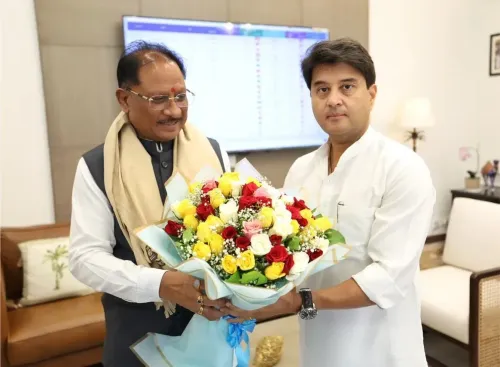
Chhattisgarh CM Vishnu Deo Sai publicly thanked Union Communications Minister Jyotiraditya Scindia for sustained cooperation on digital infrastructure, reaffirming the state's commitment to extending modern connectivity to every citizen under PM Modi's Digital India vision.
Key Takeaways
CM Vishnu Deo Sai thanked Union Minister Jyotiraditya Scindia on 31 July 2026 for continuous cooperation on digital connectivity.
Sai pledged that modern communication facilities will reach 'the last person' in Chhattisgarh .
The post cites coordinated Centre-state efforts under PM Narendra Modi 's leadership as the driver of rapid digital expansion.
BharatNet , India's broadband-to-gram-panchayat project, is the primary infrastructure vehicle for last-mile connectivity in states like Chhattisgarh.
Chhattisgarh's large tribal and rural population makes it a key test case for Digital India inclusion targets.
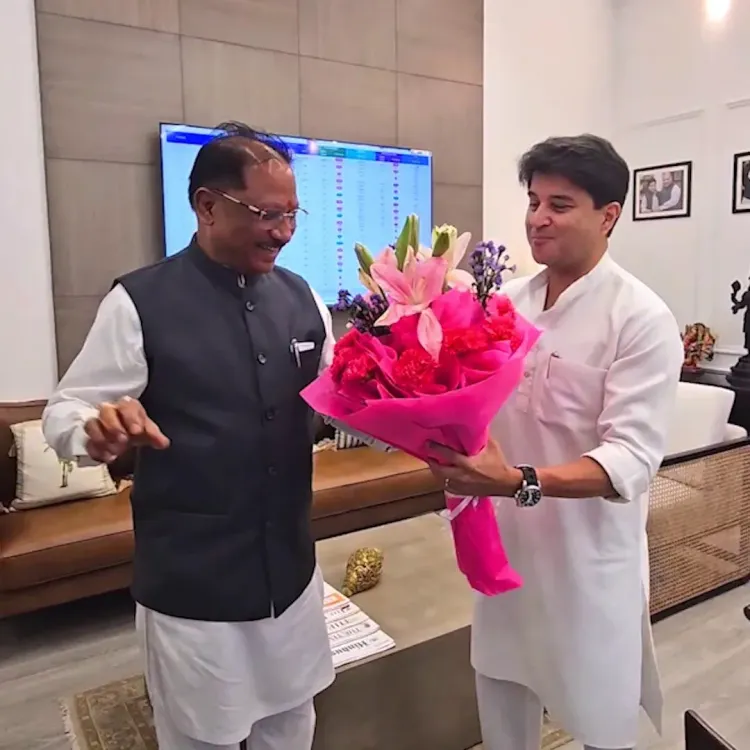
Wireless towers are rising in forests, fibre cables are threading through tribal hamlets, and Chhattisgarh Chief Minister Vishnu Deo Sai wants the last resident of the state's most remote village to feel the difference. On Friday, 31 July 2026, Sai publicly thanked Union Communications Minister Jyotiraditya Scindia for sustained cooperation, signalling an active centre-state partnership on digital infrastructure.
Posting in Hindi, the Chief Minister wrote: 'निरंतर सहयोग के लिए हार्दिक आभार' ('heartfelt gratitude for your continuous cooperation'), and added that under Prime Minister Narendra Modi's leadership, digital connectivity in Chhattisgarh is expanding rapidly through coordinated efforts between the Centre and the state. 'Our resolve,' he declared, 'is that the benefits of modern communication facilities reach the last person in the state.'
BharatNet and the Long Road to Last-Mile Connectivity
The phrase 'last person' is not accidental — it is a deliberate echo of the Digital India programme, launched in 2015, and its backbone infrastructure project, BharatNet, which has been rolling out broadband to gram panchayats across the country since its earlier incarnation in 2011. Chhattisgarh, a state with a large tribal population spread across dense forests and difficult terrain, represents one of the harder tests for that ambition. Reaching its interior districts demands more than policy intent — it demands the kind of centre-state synchronisation that Sai's post is publicly affirming. Scindia, as Union Minister of Communications, controls spectrum allocation, telecom licensing, and the national rollout architecture that state governments must plug into. A warm public exchange between a state chief minister and the communications minister typically precedes or follows a joint review, a fresh tranche of BharatNet funding, or a 4G saturation push in underserved blocks — though the specific trigger for this interaction has not been confirmed.Why Chhattisgarh Is a Bellwether for Rural Digital India
Beyond the political optics, Chhattisgarh carries genuine strategic weight in the Digital India story. Its rural and tribal belts — where connectivity gaps have historically been the widest — are precisely the populations that flagship programmes like BharatNet Phase III and 4G saturation drives are designed to serve. Progress here is a signal of whether national digital inclusion targets are translating into ground-level reality. The coordinated messaging between Raipur and New Delhi also fits a broader pattern seen across BJP-governed central and eastern states, where chief ministers have been publicly aligning with central ministries to accelerate infrastructure timelines and demonstrate governance delivery ahead of political cycles. The real measure of this resolve will come in district-level connectivity data — how many gram panchayats in Chhattisgarh's interior have live broadband links, and how many still wait.Point of View
Positioning Chhattisgarh's rural and tribal belts as active beneficiaries rather than afterthoughts. The real test, however, is whether district-level BharatNet and 4G data back up the rhetoric.
NationPress
15 Sept 2026
Frequently Asked Questions
What did CM Vishnu Deo Sai say about digital connectivity in Chhattisgarh?
CM Sai thanked Union Minister Jyotiraditya Scindia for continuous cooperation and stated that digital connectivity in Chhattisgarh is expanding rapidly through coordinated Centre-state efforts, with a resolve to reach the 'last person' in the state.
What is BharatNet and how does it affect Chhattisgarh?
BharatNet is India's national project to provide broadband connectivity to gram panchayats. For Chhattisgarh, with its large tribal and rural population in difficult terrain, BharatNet is the primary vehicle for delivering last-mile internet access.
What is Jyotiraditya Scindia's role in digital connectivity?
Jyotiraditya Scindia is India's Union Minister of Communications, responsible for telecom policy, spectrum allocation, and overseeing national digital connectivity programmes including BharatNet.
What is the Digital India programme?
Digital India is a flagship government programme launched in 2015 aimed at delivering digital infrastructure as a core utility to every citizen, covering broadband, e-governance, and digital literacy.
Why is Chhattisgarh significant for India's digital inclusion goals?
Chhattisgarh has a large tribal population spread across forested and remote areas, making it one of the harder tests for last-mile connectivity. Progress in the state is seen as an indicator of whether national digital inclusion targets are being met on the ground.