CM Saini calls natural farming a pledge for future generations
Synopsis
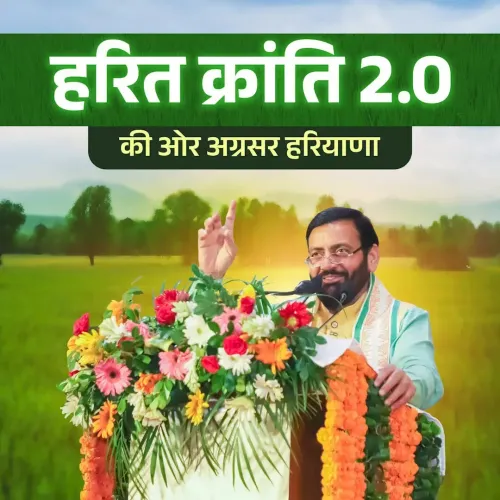
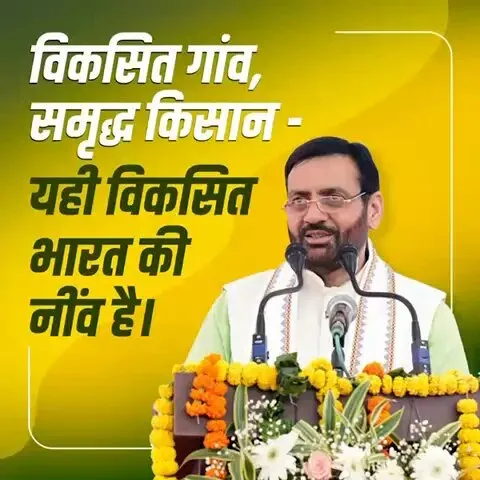
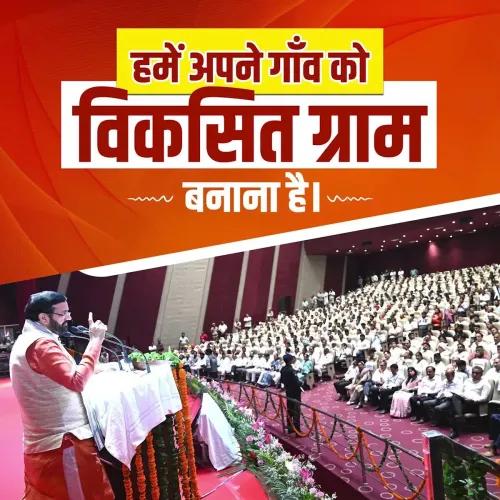
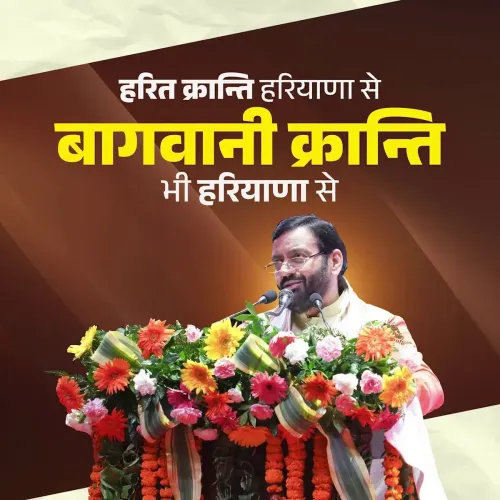
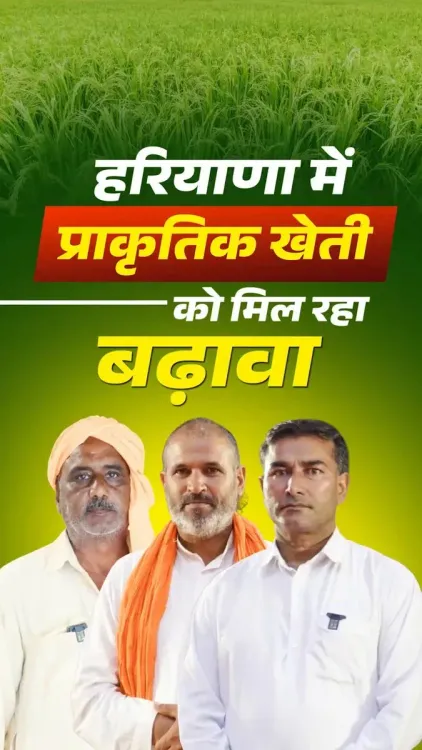
Haryana Chief Minister Nayab Singh Saini on 9 July 2026 called natural farming a pledge for the earth and future generations, urging citizens to transform 'Harit Kranti 2.0' into a mass movement as the state seeks to move beyond the chemical-intensive legacy of the original Green Revolution.
Key Takeaways
Haryana Chief Minister Nayab Singh Saini on 9 July 2026 publicly called for making natural farming a jan-andolan (people's movement).
He branded the initiative 'Harit Kranti 2.0' (Green Revolution 2.0), invoking and contrasting with the chemical-input-driven Green Revolution of the 1960s .
Saini framed natural farming as a pledge for the safety of the earth, the environment, and future generations — not merely an agricultural choice.
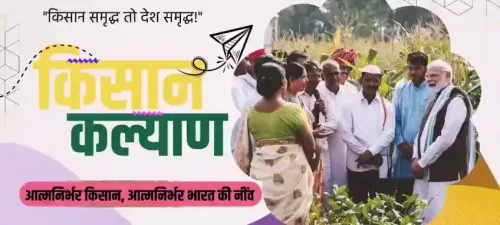
The push aligns with the Union government's Paramparagat Krishi Vikas Yojana , launched in 2015 to promote organic and natural farming clusters.
Haryana's farming community, which adopted intensive input practices during the original Green Revolution, is the primary target audience for this transition.
Concrete programme details — including budget allocations and pilot cluster announcements — are yet to be disclosed.
Haryana Chief Minister Nayab Singh Saini on Thursday, 9 July 2026 called for turning natural farming into a mass movement, framing it not merely as an agricultural alternative but as a commitment to protecting the earth, the environment, and the future of coming generations. Saini urged citizens to make 'Harit Kranti 2.0' (Green Revolution 2.0) a people's movement to fulfil this pledge.
Context
Posting in Hindi on 9 July 2026, Saini wrote: 'Prakritik kheti kewal kheti ka vikalp nahin, balki hamari dharti, paryavaran aur aane wali peedhiyon ke surakshit bhavishy ka sankalp hai' — 'Natural farming is not merely an alternative to farming, but a pledge for the safe future of our earth, our environment, and the generations to come.' He called on people to join the effort and make Harit Kranti 2.0 a jan-andolan (people's movement).
The framing invokes the legacy of the original Green Revolution of the 1960s, which transformed Haryana and neighbouring states into India's grain basket through high-yield seeds, irrigation expansion, and chemical inputs. Saini's messaging positions the new initiative as a corrective course — one that prioritises soil health, reduced chemical dependency, and environmental sustainability.
Policy Backdrop
The first Green Revolution, while dramatically raising foodgrain output, left a documented trail of soil degradation, depleting water tables, and pesticide residues — problems that have been acutely felt in Haryana's agricultural belt over subsequent decades. The Union government acknowledged these pressures as early as 2015, when it launched the Paramparagat Krishi Vikas Yojana (PKVY) to scale organic and natural farming clusters across the country.
Since then, several Indian states have introduced dedicated natural farming programmes. Central policy documents have consistently emphasised reducing chemical fertiliser use while sustaining productivity. Haryana's current messaging aligns with this gradual national pivot toward low-external-input agriculture, reinforcing a broader policy consensus that has been building for over a decade.
Stakeholders and Impact
Haryana's farmers — many of whom have practised input-intensive cultivation since the 1960s — stand at the centre of this proposed transition. Shifting to natural farming typically involves changes in soil preparation, pest management, and input sourcing, which can affect short-term yields and income if not supported by adequate training and market linkages.
Consumer health advocates and environmental groups have long pushed for reduced pesticide loads in the food supply, and Saini's framing explicitly ties the initiative to intergenerational environmental responsibility. The emphasis on a jan-andolan suggests the government is seeking community-level adoption rather than a top-down regulatory push.
What's Next
Observers will watch for concrete follow-through: budget allocations for natural farming clusters, pilot programme announcements, and any linkage with revised national guidelines on organic certification under the PKVY framework. Whether the Harit Kranti 2.0 label translates into a formal state scheme or remains a mobilisation campaign will determine its measurable impact on Haryana's approximately 1.6 lakh farming households. The pitch for a mass movement also signals that political messaging around sustainable agriculture is increasingly central to the BJP's outreach in a state with deep agrarian roots.
Point of View
The messaging attempts to build moral and emotional ownership among farmers rather than positioning the state as a regulator. This mirrors a broader BJP strategy of anchoring sustainability goals in cultural and generational language rather than technical mandates. The real test will be whether the movement rhetoric is backed by the financial and institutional architecture — training, certification, and market access — that any large-scale farming transition demands.
NationPress
9 Jul 2026
Frequently Asked Questions
What is Harit Kranti 2.0 that Haryana CM Nayab Singh Saini is promoting?
'Harit Kranti 2.0' or Green Revolution 2.0 is a natural farming initiative that Haryana Chief Minister Nayab Singh Saini is urging citizens to adopt as a mass movement, positioning it as a sustainable alternative to the chemical-intensive farming model introduced during the original Green Revolution of the 1960s.
What is natural farming and how is it different from organic farming?
Natural farming is a low-external-input agricultural practice that avoids synthetic fertilisers and pesticides, relying instead on on-farm biological inputs. While similar to organic farming in reducing chemical use, natural farming typically emphasises local, zero-cost inputs and has been promoted under India's Paramparagat Krishi Vikas Yojana since 2015.
What is the Paramparagat Krishi Vikas Yojana and how does it relate to Haryana's push?
The Paramparagat Krishi Vikas Yojana (PKVY) is a Union government scheme launched in 2015 to create clusters of organic and natural farming across India. Haryana's 'Harit Kranti 2.0' messaging aligns with this national framework, which aims to reduce chemical fertiliser dependency while maintaining agricultural productivity.
Why is natural farming particularly important for Haryana?
Haryana was one of the states most transformed by the Green Revolution of the 1960s, which brought high yields but also long-term soil degradation, falling water tables, and pesticide residue problems. Natural farming is seen as a corrective approach to restore soil health and reduce environmental stress in the state.
Has Haryana announced any specific scheme or budget for natural farming in 2026?
As of CM Saini's post on 9 July 2026, specific budget allocations or pilot programme details for 'Harit Kranti 2.0' have not been publicly disclosed. Observers are watching for formal scheme announcements and linkage with national organic certification guidelines.