CM Dhami's Office: Uttarakhand Farmers Turn Self-Reliant via Beekeeping, Animal Husbandry

Synopsis
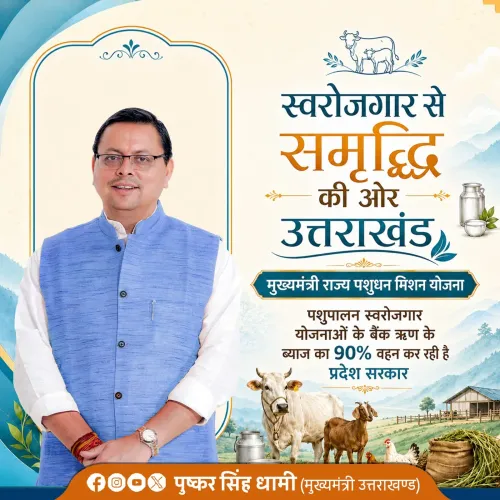
The Uttarakhand Chief Minister's Office on 9 July 2026 said the state's beekeeping and animal husbandry policies are turning farmers and livestock keepers self-reliant, invoking CM Dhami's people-first governance pledge under the Atmanirbhar Bharat framework.
Key Takeaways
The Chief Minister's Office of Uttarakhand posted on 9 July 2026 highlighting farmer self-reliance through state policies.
Beekeeping ( moun palan ) and animal husbandry ( pashu palan ) are the two policy pillars cited in the post.
The initiative aligns with the National Beekeeping and Honey Mission launched under the Atmanirbhar Bharat Abhiyan around 2020 .
Uttarakhand has run state-level animal husbandry and horticulture programmes since the mid-2010s to reduce rural out-migration.
The tagline 'Jan-jan ki sarkar, jan-jan ke dwar' reflects CM Pushkar Singh Dhami's people-first governance philosophy.
Budget allocations and scheme coverage in hill districts remain the key metrics to watch for real-world impact.
The Chief Minister's Office of Uttarakhand on Thursday, 9 July 2026, highlighted how the state government's beekeeping and animal husbandry policies are enabling farmers and livestock keepers across the hill state to achieve self-reliance. The post, shared under the tagline 'Jan-jan ki sarkar, jan-jan ke dwar' ('A government for every person, at every person's doorstep'), underscores the Dhami administration's push to bring welfare schemes directly to rural communities.
Context
The post states that through the state government's beekeeping (moun palan) and animal husbandry (pashu palan) policies, farmers and livestock keepers of Uttarakhand are today becoming self-reliant (atmanirbhar). The message is framed as a direct outreach from the government to every citizen, invoking a people-first governance philosophy that Chief Minister Pushkar Singh Dhami has consistently championed since taking office in 2021.
Policy Backdrop
Uttarakhand's focus on beekeeping and animal husbandry is embedded in a longer policy lineage. The National Beekeeping and Honey Mission, launched by the Central government around 2020 as part of the Atmanirbhar Bharat Abhiyan, earmarked support for apiculture as a supplementary income source for farmers nationwide. Uttarakhand, with its Himalayan flora and large rural population, is considered particularly suited to honey production and allied activities.
The state has also run animal husbandry and horticulture programmes since the mid-2010s, designed specifically to address the economic vulnerabilities of hill farmers and to slow seasonal out-migration from villages. Beekeeping clusters and dairy cooperatives have been promoted as low-capital, high-return options for households in remote terrain where conventional crop farming is constrained by altitude and terrain.
Stakeholders and Impact
The primary beneficiaries are Uttarakhand's farmers and livestock keepers, many of whom live in remote hill districts with limited access to urban markets and formal employment. Beekeeping, in particular, requires minimal land and can be integrated with existing agricultural or forest-based livelihoods, making it a practical diversification tool for marginal farmers.
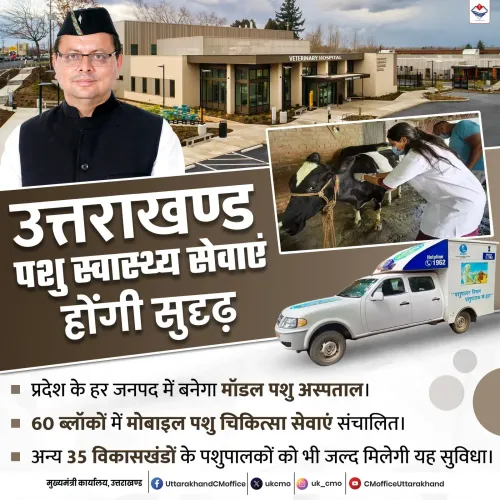
Animal husbandry — covering dairy, poultry and small ruminants — has historically been a backbone of rural income in the hills. State-level support through veterinary services, breed improvement and market linkages directly affects household incomes and nutritional security for tens of thousands of families across the state.
What's Next
Policy watchers will track the next Uttarakhand state budget for specific allocations to beekeeping clusters, animal husbandry infrastructure and scheme coverage in remote hill districts. A mid-term review of how many farmers have been enrolled under these programmes and the income gains recorded would offer a clearer picture of whether the self-reliance narrative is translating into measurable outcomes on the ground.
The broader signal from this communication is that the Dhami government intends to keep rural livelihoods and farmer welfare at the centre of its public messaging — a positioning that carries weight ahead of future electoral cycles in a state where agrarian and pastoral communities form a decisive voter base.
Point of View
Reinforcing CM Dhami's positioning as a pro-farmer administrator. By invoking the phrase 'Jan-jan ke dwar,' the communication signals an intent to demonstrate last-mile delivery of government schemes — a recurring theme in BJP-governed hill states. The emphasis on self-reliance over subsidy dependence also tracks a broader shift in Indian agrarian policy discourse toward income diversification and value-chain integration. How far these policies have actually moved the needle for marginal hill farmers, however, will only become clear when verifiable data on enrolments and income gains is placed in the public domain.
NationPress
9 Jul 2026
Frequently Asked Questions
What are Uttarakhand's beekeeping and animal husbandry policies for farmers?
Uttarakhand supports farmers through state-run beekeeping clusters and animal husbandry programmes covering dairy, poultry and small ruminants, aligned with the Central government's National Beekeeping and Honey Mission launched around 2020 under the Atmanirbhar Bharat Abhiyan.
What is 'Jan-jan ki sarkar, jan-jan ke dwar' in Uttarakhand?
It is a governance tagline used by the Uttarakhand Chief Minister's Office meaning 'A government for every person, at every person's doorstep,' reflecting CM Pushkar Singh Dhami's public outreach and welfare-delivery philosophy.
How does beekeeping help Uttarakhand hill farmers?
Beekeeping requires minimal land and capital, making it well-suited to Himalayan terrain. It provides supplementary income for marginal farmers and can be combined with existing forest-based or agricultural livelihoods.
What is the National Beekeeping and Honey Mission?
The National Beekeeping and Honey Mission is a Central government scheme launched around 2020 to promote apiculture as a supplementary income source for farmers across India, with hill states like Uttarakhand among the key beneficiaries.
Who is the Chief Minister of Uttarakhand in 2026?
Pushkar Singh Dhami has been the Chief Minister of Uttarakhand since 2021 and has led the state's rural self-reliance and farmer welfare initiatives.