CM Saini dares Rahul Gandhi to answer for 1984 at Nov 1 event

Synopsis
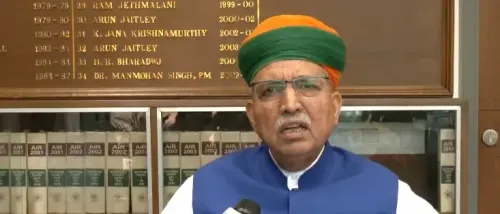
Haryana CM Nayab Singh Saini challenged Rahul Gandhi on X to explain whether Congress's 'Mohabbat ki Dukaan' event on 1 November would also address accountability for the 1984 anti-Sikh riots, as BJP revives its four-decade-old reckoning demand against Congress.
Key Takeaways
Haryana CM Nayab Singh Saini posted on X on 29 October 2026 demanding Rahul Gandhi answer for the 1984 anti-Sikh riots in the context of a Congress event on 1 November .
Saini accused Congress of 'poisoning the country's atmosphere' with its Mohabbat ki Dukaan campaign.
The 1984 anti-Sikh riots erupted immediately after Prime Minister Indira Gandhi's assassination on 31 October 1984 , killing thousands of Sikhs across India.
BJP routinely invokes the 1984 riots whenever Congress raises communal harmony themes, framing it as a demand for historical accountability.
The challenge is timed just two days before the 42nd anniversary of the riots, amplifying its political resonance with the Sikh community.
Congress has not publicly responded to Saini's post as of the time of publication.
A sharp political challenge flew across party lines on Thursday, 29 October 2026, as Haryana Chief Minister Nayab Singh Saini turned a Congress-branded 'love' campaign event into a pointed accountability question — asking whether the opposition's much-publicised Mohabbat ki Dukaan ('shop of love') would also settle the account of 1984.
Posting on X in Hindi, CM Saini wrote: 'Desh ka maahol bigaad rahi Congress! Rahul Gandhi bataaein… 1 November ko Mohabbat ki Dukaan mein 1984 ka hisaab bhi hoga?' — 'Congress is poisoning the country's atmosphere! Let Rahul Gandhi explain… will the Mohabbat ki Dukaan on 1 November also settle the account of 1984?'
The '1984 account' BJP keeps open
The date is not accidental. 31 October 1984 marks the assassination of Prime Minister Indira Gandhi, and the days that followed — particularly 1 and 2 November 1984 — saw the worst anti-Sikh violence in independent India's history, killing thousands across the country. The riots have never been fully prosecuted, and the question of accountability has shadowed Congress for four decades.
BJP leaders have long weaponised that unresolved reckoning whenever Congress raises the banner of communal harmony. The pattern is almost reflexive: Congress invokes social love and brotherhood; BJP responds by asking who was responsible in November 1984. CM Saini's post is the latest, and among the most pointed, iterations of that challenge.
Rahul Gandhi's 'Mohabbat ki Dukaan' in BJP's crosshairs
Rahul Gandhi, who has built a significant part of his recent political identity around themes of love, unity, and non-violence, has used the phrase Mohabbat ki Dukaan as a rhetorical counterpoint to what he describes as a politics of hate. For BJP, that framing is both an opportunity and a provocation — a chance to demand that the Congress leader answer for the most violent chapter associated with his party's rule.
Saini's post charges that Congress is 'poisoning the country's atmosphere' — a combative phrase that frames the opposition's unity narrative as destabilising rather than unifying. Directed squarely at Rahul Gandhi by name, it is a demand for a public reckoning, timed to land just days before the anniversary of the riots themselves.
A 42-year wound, still politically live
The 1984 anti-Sikh riots remain one of Indian democracy's most contested unfinished chapters. Successive governments have acknowledged the violence but prosecutions have been limited and widely criticised as insufficient. For the Sikh community, the anniversary each November is a moment of grief and anger. For BJP, it is a recurring political lever — one that carries genuine historical grievance even as it is deployed in partisan combat.
Whether Congress responds, stays silent, or reframes the exchange ahead of 1 November will itself be a political signal. The calendar has handed BJP a ready-made edge, and Saini has swung it early.
Point of View
Saini attempts to hollow out the opposition's moral authority on communal harmony without engaging the substance of it. The exchange reflects a deeper structural dynamic in Indian politics: Congress's reformulated identity under Rahul Gandhi as a force for love and unity is most vulnerable to this precise historical challenge. Whether BJP's repeated invocation of 1984 still moves undecided voters or has calcified into predictable partisan noise is the strategic question neither side wants to test too openly.
NationPress
29 Oct 2026
Frequently Asked Questions
What did Nayab Singh Saini say about Rahul Gandhi and 1984?
Haryana CM Nayab Singh Saini posted on X asking Rahul Gandhi whether Congress's 'Mohabbat ki Dukaan' event on 1 November would also address accountability for the 1984 anti-Sikh riots, accusing Congress of 'poisoning the country's atmosphere.'
What were the 1984 anti-Sikh riots?
The 1984 anti-Sikh riots were widespread violence targeting the Sikh community across India in the days immediately following the assassination of Prime Minister Indira Gandhi on 31 October 1984, resulting in the deaths of thousands of Sikhs.
What is 'Mohabbat ki Dukaan' in Indian politics?
'Mohabbat ki Dukaan', meaning 'shop of love', is a phrase associated with Rahul Gandhi's campaign to promote social harmony and non-violence as a counterpoint to what Congress describes as divisive politics.
Why does BJP repeatedly bring up 1984 against Congress?
BJP invokes the 1984 anti-Sikh riots as a counter-argument whenever Congress raises communal harmony themes, pointing to the limited prosecutions of those responsible and framing it as Congress's unresolved historical accountability.
Is there a Congress event on 1 November 2026?
CM Saini's post references a 'Mohabbat ki Dukaan' event on 1 November 2026, but specific details of that event could not be independently verified at the time of publication.