CM Saini: Haryana govt stands with daughters at every step
Synopsis
Haryana CM Nayab Singh Saini pledges state support for daughters across every life stage — from birth and education to employment and marriage — framing girls' progress as the foundation of both Haryana's and India's advancement.
Key Takeaways
Haryana CM Nayab Singh Saini posted on 26 September 2026 reaffirming state support for girls at every life stage.
The message spans birth, education, employment, self-reliance, and marriage — mirroring the lifecycle approach of multiple existing welfare schemes.
Haryana was a primary focus state when the national Beti Bachao Beti Padhao campaign launched in 2015 , giving the state particular resonance on girls' welfare.
Saini linked female advancement directly to state and national progress, using the language of aatmanirbhar (self-reliance).
No new scheme or budget allocation was announced; the post signals political priority and sets expectations for future policy moves.
From the moment a girl is born to the day she walks down the aisle — Haryana Chief Minister Nayab Singh Saini has declared that the state government will stand beside her at every milestone in between. In a post on X on Saturday, 26 September 2026, Saini framed girls' advancement not merely as a welfare goal, but as the very engine of Haryana's — and India's — forward march.
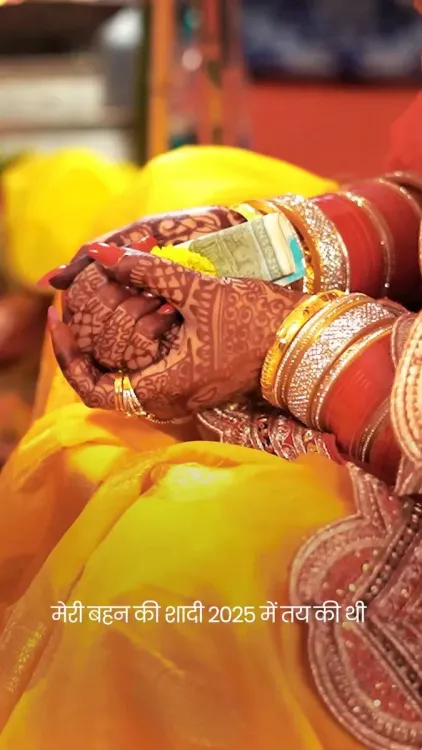
Posting in Hindi, the Chief Minister wrote: 'जन्म से लेकर पढ़ाई, रोजगार और आत्मनिर्भर बनने से लेकर शादी तक, हर कदम पर हरियाणा सरकार अपनी बेटियों के साथ खड़ी है' — 'From birth to education, employment and self-reliance to marriage, the Haryana government stands with its daughters at every step.' He followed that with a crisp chain of causality: 'When daughters progress, Haryana progresses; and when Haryana progresses, the country progresses.'A state shaped by the Beti Bachao challenge
Haryana carries a distinct weight in this conversation. The state was among the most affected by a skewed child sex ratio when the national Beti Bachao Beti Padhao campaign was launched in 2015, making it one of the original focal districts for that programme. The campaign targeted the survival, protection, and education of girls — and Haryana has since maintained a sustained institutional focus on female literacy and workforce participation alongside its earlier anti-female-foeticide efforts.
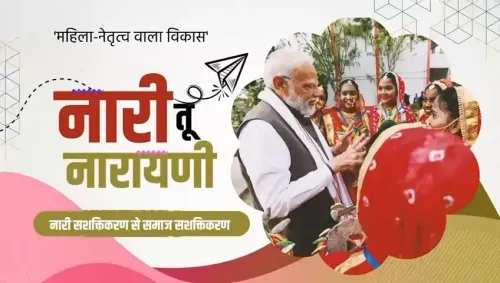
Saini's message sits squarely within that longer arc. The BJP-led state government has consistently used the language of aatmanirbhar (self-reliance) — a term that gained national currency through the central government's economic messaging — and applied it explicitly to women and girls as a development constituency, not just a social welfare one.
The policy arc: birth to marriage
The sequence the Chief Minister laid out — birth, education, employment, self-reliance, marriage — mirrors the lifecycle framing that underpins multiple central and state schemes targeting girls in India. Each stage has historically had its own programmatic intervention: conditional cash transfers at birth, scholarships through school and college, skill-training initiatives for employment, and financial support at the time of marriage for economically weaker families.
By listing all four in a single breath, Saini signals a whole-of-government commitment rather than a single-scheme announcement. No new scheme names or budget figures were attached to Saturday's post, but the framing sets clear expectations for where Haryana's welfare priorities are pointed — and what watchers should track in the next state budget cycle.
The arithmetic Saini offers is simple, and intentionally so: girls who thrive become women who contribute. That contribution feeds the state. The state feeds the nation. It is a bet on human capital dressed in the language of pride — and in a state with Haryana's demographic history, the stakes behind it are anything but symbolic.
Point of View
Making girls' empowerment inseparable from economic progress rather than a charity frame. Haryana's historically poor sex ratio gives this messaging unusual credibility stakes — the state has something to prove, and its government knows it. By listing the full lifecycle rather than a single scheme, Saini positions the government as a long-term partner rather than an election-cycle benefactor. Watchers should read the post as a pre-budget signal: expect announcements on girl-child schemes in the next Haryana fiscal cycle.
NationPress
26 Sept 2026
Frequently Asked Questions
What did Haryana CM Nayab Singh Saini say about daughters?
CM Saini declared that the Haryana government stands with its daughters at every step — from birth and education to employment, self-reliance, and marriage — and linked girls' progress directly to the advancement of both Haryana and India.
What is Beti Bachao Beti Padhao and how does it relate to Haryana?
Beti Bachao Beti Padhao is a national programme launched in 2015 to improve the child sex ratio and promote girls' education and survival. Haryana, which had one of the worst sex ratios in India, was among the primary focus states for the campaign.
Does Haryana have specific schemes for girls' welfare?
Haryana runs multiple programmes targeting girls across their lifecycle, including conditional cash transfers at birth, educational scholarships, skill-training for employment, and financial support at the time of marriage for economically weaker families.
Who is Nayab Singh Saini?
Nayab Singh Saini is the Chief Minister of Haryana and a leader of the Bharatiya Janata Party (BJP), who took office in 2024.
Did CM Saini announce a new scheme for girls in Haryana?
No specific new scheme or budget figure was announced in the post. Saini's statement is a broad policy commitment, with specific programmatic follow-ups expected to emerge in future budget cycles.