CM Saini Marks Tower of Justice Launch in Gurugram
Synopsis
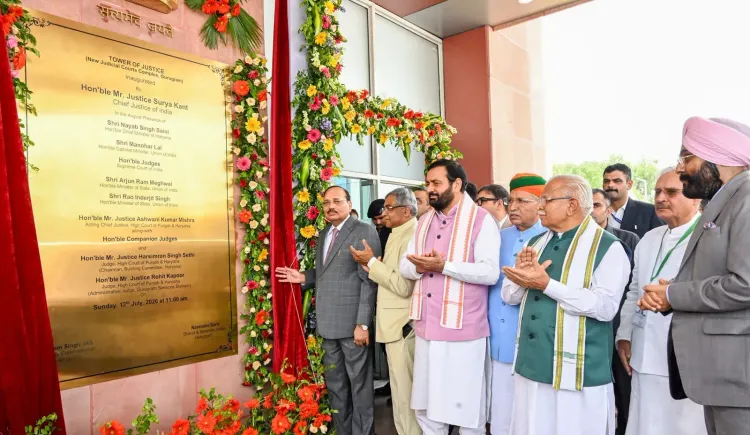
Chief Justice of India Justice Suryakant inaugurated the 'Tower of Justice' in Gurugram on 12 July 2026, while court complexes in Punhana and Nuh were opened digitally. Haryana CM Nayab Singh Saini called it a historic step toward accessible, technology-enabled justice, linking the initiative to PM Modi's 'Ease of Justice' agenda.
Key Takeaways
The Chief Justice of India, Justice Suryakant , inaugurated the 'Tower of Justice' in Gurugram on 12 July 2026 .
New court complexes in Punhana and Nuh were simultaneously inaugurated via digital medium.
CM Nayab Singh Saini framed the project as part of a national 'Ease of Justice' priority, parallel to PM Modi's 'Ease of Doing Business' reforms.
The initiative builds on the e-Courts Mission Mode Project launched in 2007 and expanded through 2023 .
Gurugram's Tower of Justice is intended to serve the city's large litigant base in a major technology and investment hub.
Nuh and Punhana, historically underserved districts, gain modern judicial infrastructure for the first time under this drive.
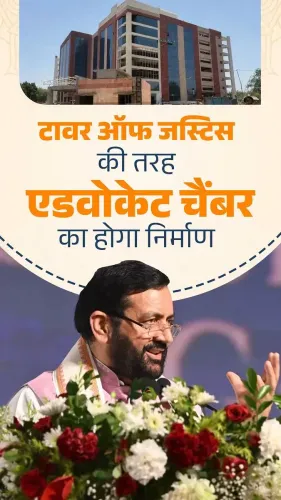
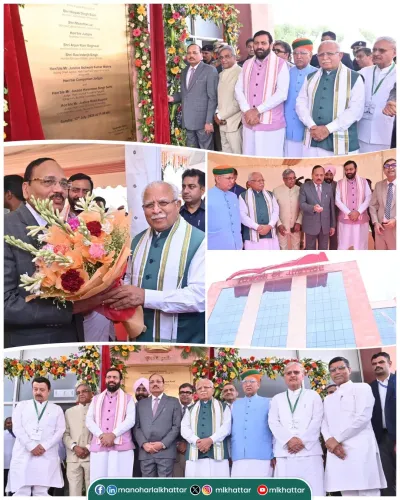
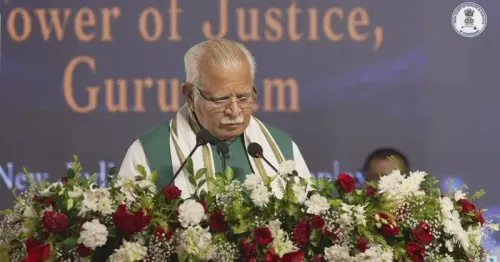
Haryana Chief Minister Nayab Singh Saini on Sunday, 12 July 2026 welcomed the inauguration of the 'Tower of Justice' in Gurugram by the Chief Justice of India, Justice Suryakant, alongside the digital inauguration of newly built court complexes in Punhana and Nuh — marking what the Chief Minister called a historic step toward technology-enabled, accessible justice delivery in Haryana.
Context
Posting in Hindi on X, CM Saini described the occasion as 'ek aitihasik uplabdhi' (a historic achievement), noting that the modern judicial infrastructure would make the justice system 'adhik sulabh, pardarshi, prabhavi aur takneek-saksham' — more accessible, transparent, effective, and technology-capable. The Chief Justice of India, Justice Suryakant, physically inaugurated the Tower of Justice in Gurugram, while the court complexes in Punhana and Nuh were opened through a digital medium on the same day.
Gurugram, already established as a leading centre for knowledge, technology, startups, and global investment, now adds a flagship judicial facility to its civic infrastructure. The simultaneous digital inauguration of complexes in Nuh and Punhana — districts that have historically lagged in institutional infrastructure — signals an effort to extend judicial modernisation beyond Haryana's urban core.
Policy Backdrop
The inauguration fits within a longer arc of court modernisation in India. The e-Courts Mission Mode Project, launched in 2007, set out to computerise and digitise district courts across the country. Subsequent phases between 2014 and 2023 expanded video-conferencing facilities and digital case-management systems to states including Haryana, laying the groundwork for physical infrastructure upgrades like the Tower of Justice.
CM Saini explicitly drew a parallel between Prime Minister Narendra Modi's 'Ease of Doing Business' agenda and an emerging 'Ease of Justice' priority, framing both as complementary pillars of governance reform. 'Just as 'Ease of Doing Business' has been strengthened under the visionary leadership of Prime Minister Modi,' Saini wrote, 'similarly, 'Ease of Justice' is being advanced as a national priority.' The framing positions judicial access as an economic and governance enabler, not merely a welfare measure.
Stakeholders and Impact
The most immediate beneficiaries are Haryana's litigants, particularly those in Nuh and Punhana, where access to formal court infrastructure has historically been limited. Modern court complexes in these areas are expected to reduce travel burden and pendency for local residents. The state judiciary — judges, court staff, and legal practitioners — will also operate in upgraded facilities designed for digital case management.
For Gurugram, the Tower of Justice adds institutional depth to a city that has grown rapidly as a commercial and technology hub. Investors and businesses operating in the region stand to benefit from a more efficient local dispute-resolution ecosystem, reinforcing the city's attractiveness as a destination for domestic and global capital.
What's Next
Attention will now turn to the pace of rollout across remaining Haryana districts and the depth of integration with the national e-Courts portal. The state government's ability to staff and operationalise the new complexes — particularly in Nuh and Punhana — will determine whether the infrastructure translates into measurable reductions in case pendency. Broader national momentum behind 'Ease of Justice' as a policy concept could also prompt similar inaugurations in other states in the months ahead.
Point of View
Nuh, and Punhana reflects a deliberate strategy to pair high-profile urban flagship projects with outreach to underserved districts — a pattern that gives the initiative political breadth beyond its administrative value. By coining 'Ease of Justice' as a companion to 'Ease of Doing Business,' the BJP-led Haryana government is attempting to extend a proven reform narrative into the justice sector, where outcomes are harder to quantify but public demand is acute. The Chief Justice's personal presence at the Gurugram inauguration lends judicial endorsement to what is also a state-government milestone, reinforcing the cooperative federalism framing that both the Centre and state have cultivated. Whether the infrastructure investment translates into reduced case pendency — the metric that most directly affects ordinary litigants — will be the real test of this initiative's legacy.
NationPress
12 Jul 2026
Frequently Asked Questions
What is the Tower of Justice in Gurugram?
The Tower of Justice is a newly inaugurated modern judicial complex in Gurugram, Haryana, designed to make court services more accessible, transparent, and technology-enabled for litigants and legal practitioners.
Who inaugurated the Tower of Justice?
The Chief Justice of India, Justice Suryakant, inaugurated the Tower of Justice in Gurugram on 12 July 2026.
What are the new court complexes in Nuh and Punhana?
Newly built modern judicial complexes in Punhana and Nuh, two Haryana districts, were inaugurated digitally on the same day as the Gurugram Tower of Justice, extending upgraded court infrastructure to areas historically underserved by formal judicial facilities.
What is 'Ease of Justice' and how does it relate to 'Ease of Doing Business'?
'Ease of Justice' is a policy framing used by Haryana CM Nayab Singh Saini to describe efforts to make justice delivery faster, more transparent, and more accessible — analogous to the 'Ease of Doing Business' reforms championed by PM Narendra Modi to reduce regulatory burdens on businesses.
What is the e-Courts Mission Mode Project in India?
The e-Courts Mission Mode Project is a central government initiative launched in 2007 to computerise and modernise district courts across India, with subsequent phases expanding digital case management and video-conferencing to states including Haryana.