CM Saini pays floral tribute to Shaheed Udham Singh in Chandigarh
Synopsis
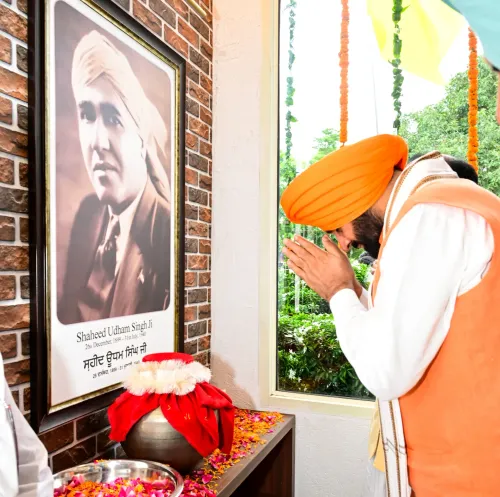
Haryana Chief Minister Nayab Singh Saini paid floral tributes to revolutionary martyr Udham Singh at Sant Kabir Kutir in Chandigarh on his martyrdom anniversary, 31 July 2026, honouring the man who avenged the Jallianwala Bagh massacre by assassinating Michael O'Dwyer in London in 1940.
Key Takeaways
Haryana Chief Minister Nayab Singh Saini paid floral tributes to Shaheed Udham Singh at Sant Kabir Kutir, Chandigarh on 31 July 2026 .
Udham Singh was hanged on 31 July 1940 at Pentonville Prison, London, after assassinating Michael O'Dwyer to avenge the 1919 Jallianwala Bagh massacre .
Saini described Udham Singh's life as 'an immortal example of patriotism' marked by fearlessness, resolve, and dedication to national honour.
India repatriated Udham Singh's remains in 1974 ; he holds the title Shaheed-e-Azam .
The tribute is part of a broader pattern of Indian elected representatives publicly marking independence-era martyrdom anniversaries, especially in states with strong historical ties to Punjab's revolutionary tradition.
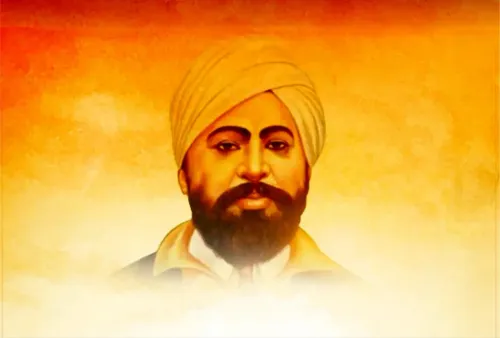
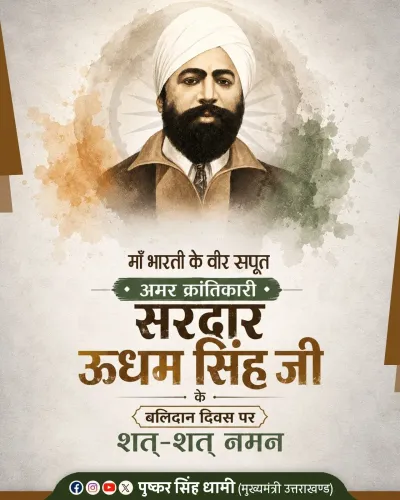
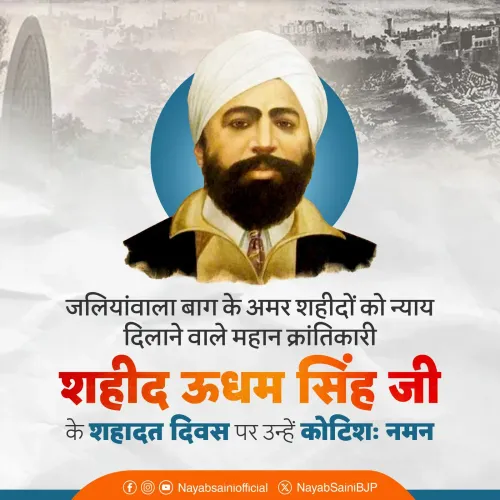
On the martyrdom anniversary of one of India's most fearless revolutionaries, Haryana Chief Minister Nayab Singh Saini offered floral tributes to Shaheed Udham Singh at Sant Kabir Kutir, Chandigarh, on 31 July 2026 — honouring a man who carried the grief of Jallianwala Bagh across continents and answered it with an act that shook the British Empire.
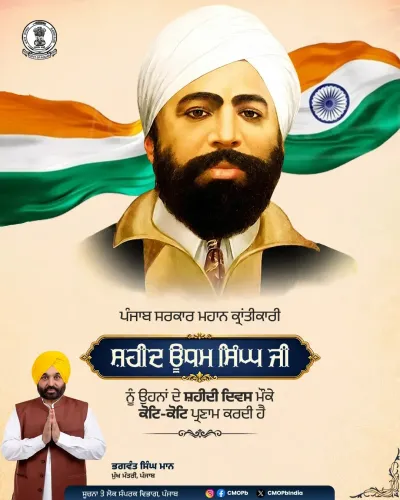
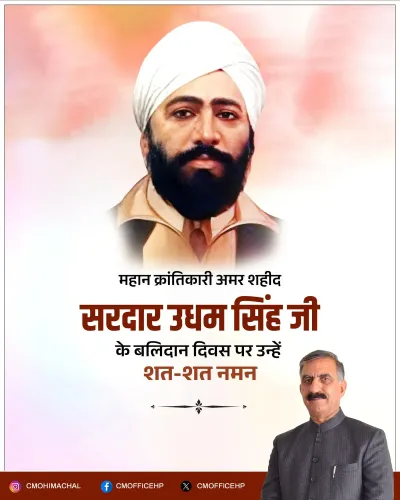
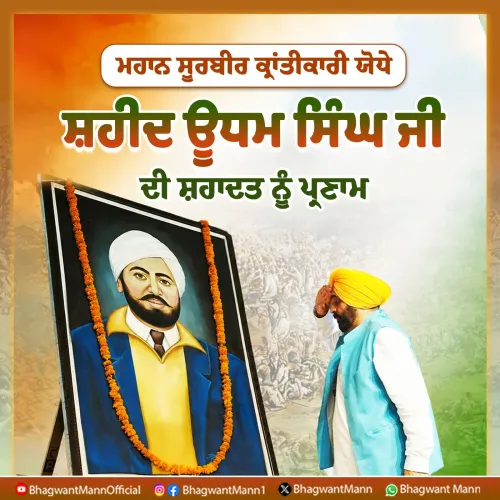
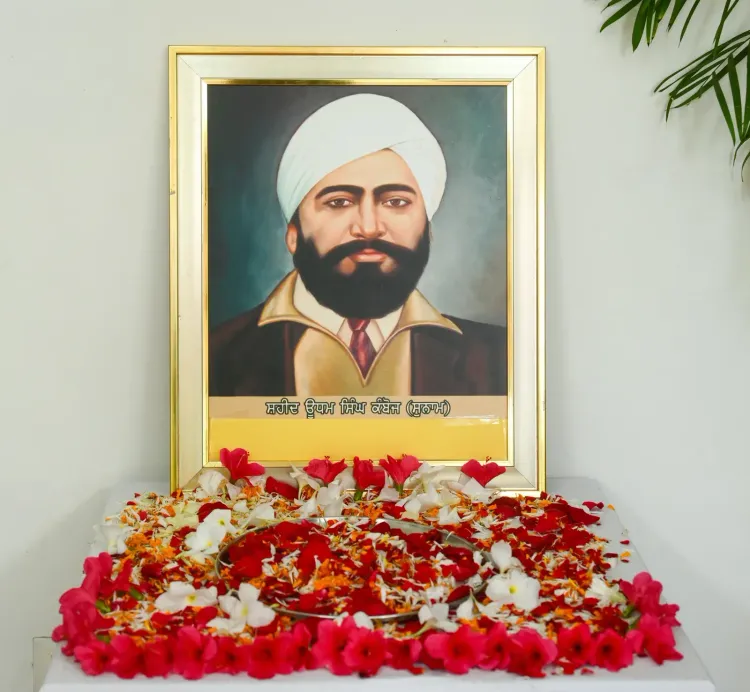
Saini, paying his respects before a portrait of the revolutionary, said Udham Singh's life — marked by fearlessness, unwavering resolve, indomitable courage, and total dedication to national honour — 'sada rashtrabhakti ki amar misal bana rahega' ('will forever remain an immortal example of patriotism').
The man who avenged Jallianwala Bagh
Udham Singh was present at the Jallianwala Bagh massacre of 13 April 1919, when British troops under the command of General Dyer opened fire on an unarmed crowd in Amritsar, killing hundreds. He carried that wound for over two decades. On 13 March 1940, at Caxton Hall in London, he shot and killed Michael O'Dwyer — the former Lieutenant Governor of Punjab who had approved Dyer's action — and surrendered immediately. He was hanged on 31 July 1940, at Pentonville Prison, London.
His last words and composure in court made him a legend. India repatriated his remains in 1974, and he was conferred the title Shaheed-e-Azam. Punjab and Haryana, the states that share the legacy of pre-partition Punjab, hold his memory with particular reverence.
A standard of remembrance that carries political weight
Elected representatives across party lines in India mark the death anniversaries of independence-era figures with public tributes — but in states like Haryana, where the historical and cultural connection to Punjab's revolutionary tradition runs deep, such observances carry added resonance. For Chief Minister Saini, the tribute at Sant Kabir Kutir is both an act of state remembrance and a signal of the values his government wishes to foreground.
Udham Singh's story — patient, principled, and ultimately sacrificial — endures not just as history but as a recurring touchstone in Indian political discourse whenever questions of national dignity and colonial memory surface.
Eighty-six years after the gallows at Pentonville, the revolutionary's portrait received flowers in Chandigarh. The debt, as Saini's tribute makes clear, is still being acknowledged.
Point of View
Aligning the party's leadership with pre-partition Punjab's martyrdom legacy is a consistent strand of political identity-building. Saini's in-person appearance at Sant Kabir Kutir, rather than a mere social media post, signals an intent to embody, not just invoke, that legacy. As Haryana heads deeper into its electoral cycle, such visible acts of historical remembrance serve a dual purpose: genuine commemoration and the reinforcement of a nationalist cultural narrative.
NationPress
31 Jul 2026
Frequently Asked Questions
Who was Udham Singh and why is he remembered?
Udham Singh was a Punjabi revolutionary who assassinated Michael O'Dwyer in London on 13 March 1940 to avenge the Jallianwala Bagh massacre of 1919, in which O'Dwyer had approved the order to fire on unarmed civilians. He was hanged on 31 July 1940 and is revered as Shaheed-e-Azam in India.
Why did Nayab Singh Saini pay tribute to Udham Singh on 31 July 2026?
31 July is the martyrdom anniversary of Udham Singh, the date in 1940 on which he was executed at Pentonville Prison in London. Chief Minister Saini marked the occasion with a floral tribute at Sant Kabir Kutir in Chandigarh.
Where did CM Saini offer the floral tribute to Udham Singh?
The tribute was offered at Sant Kabir Kutir in Chandigarh, where Saini garlanded a portrait of the revolutionary martyr.
What was the Jallianwala Bagh massacre that Udham Singh sought to avenge?
On 13 April 1919, British troops commanded by General Reginald Dyer opened fire on a peaceful gathering at Jallianwala Bagh in Amritsar, killing hundreds of unarmed civilians. Michael O'Dwyer, then Lieutenant Governor of Punjab, had sanctioned the action — and became Udham Singh's target two decades later.
What did CM Saini say about Udham Singh?
Saini said that Udham Singh's fearlessness, unwavering resolve, indomitable courage, and life dedicated to national honour would forever remain an immortal example of patriotism.