Rijiju urges Opposition not to disrupt Parliament, hails anti-paper leak bill
Synopsis
Parliament has cleared the anti-paper leak Bill with stiff new penalties — up to 10 years in jail and ₹10 crore fines for organised rackets — even as the Congress walked out of the Rajya Sabha vote. Rijiju's appeal for Opposition cooperation signals that the government's larger legislative agenda for the session remains at risk of disruption.
Key Takeaways
Kiren Rijiju on 31 July urged the Opposition not to disrupt Parliament and to cooperate on pending legislation.
The Public Examinations (Prevention of Unfair Means) Amendment Bill, 2026 was cleared by the Rajya Sabha on 30 July by voice vote; the Lok Sabha had passed it on 29 July .
Individuals guilty of paper leaks face 5–10 years in prison and fines up to ₹50 lakh ; organised racket operators face a minimum 7 years and fines up to ₹10 crore .
State governments and Union Territory administrations can designate fast-track courts to try offences, with trials to conclude within 3 months of the charge sheet.
The Congress and allied Opposition parties staged a walkout during the Rajya Sabha vote.
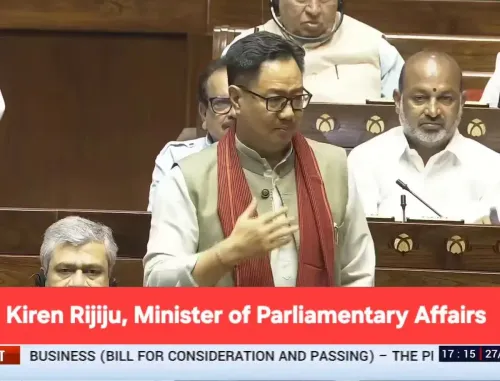
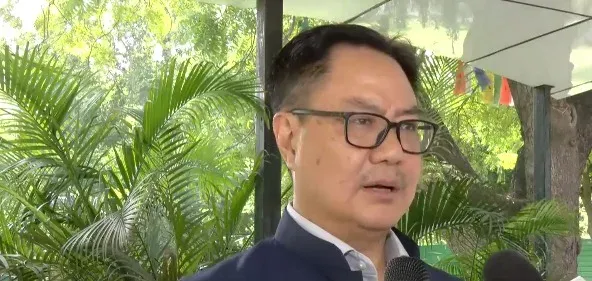
Union Parliamentary Affairs Minister Kiren Rijiju on Friday, 31 July appealed to Opposition parties not to disrupt the legislative process, even as he hailed the passage of the Public Examinations (Prevention of Unfair Means) Amendment Bill, 2026 as a landmark step in protecting students from exam fraud. Speaking to reporters in New Delhi, Rijiju said several key Bills are lined up for parliamentary consideration and urged all parties to cooperate.
Rijiju's Appeal to the Opposition
Addressing the media, Rijiju said, 'Several important Bills are expected to be taken up in Parliament. The Bill related to exam paper leaks has been passed with the support of an overwhelming majority of MPs. There was no opposition to it except from those who opposed it for political reasons. Otherwise, everyone is serious about education and preventing exam paper leaks.'
He added that Friday's parliamentary agenda also includes a Private Member's Bill, and expressed hope that all parties would cooperate to ensure the smooth functioning of both Houses. 'They are free to raise their issues and concerns, but they should not create disruptions that hinder the passage of important legislation,' Rijiju said.
Parliament Clears Anti-Paper Leak Bill
Parliament on Thursday, 30 July completed the legislative process for the anti-paper leak Bill after the Rajya Sabha passed it by a voice vote. The Lok Sabha had approved the Bill on Wednesday, 29 July. Opposition parties led by the Indian National Congress (INC) staged a walkout during the Rajya Sabha proceedings, though the Bill ultimately passed with what the government described as overwhelming cross-party support.
Rijiju also noted that Prime Minister Narendra Modi had thanked all Members of Parliament for supporting the legislation. 'It should now be implemented as soon as possible to safeguard the future of the country's children,' he said.
Key Provisions of the Amended Law
Under the amended legislation, individuals found guilty of paper leaks or other unfair practices in public examinations face five to ten years of imprisonment and a fine of up to ₹50 lakh. For those involved in organised paper leak rackets, the law prescribes a minimum prison term of seven years and a fine of up to ₹10 crore.
The amendment also empowers all state governments and Union Territory administrations to designate any Court of Session as a special fast-track court for offences under the law. These courts are mandated to conduct proceedings on a day-to-day basis and conclude trials within three months of the filing of the charge sheet.
Why This Legislation Matters
The Bill comes against the backdrop of a series of high-profile paper leak scandals in recent years that have disrupted major competitive examinations and derailed the careers of lakhs of aspirants. Critics argue that earlier laws lacked deterrent teeth, making organised cheating syndicates difficult to prosecute effectively. This amendment attempts to close those gaps with stiffer penalties and a dedicated fast-track judicial mechanism.
Notably, the government has sought cooperation from all political parties for effective implementation — a signal that enforcement, not just enactment, will be the real test of the law's impact. With Parliament having now cleared the Bill, attention shifts to how quickly the Centre and states operationalise the fast-track courts.
Point of View
Not just this one Bill. The real accountability question is implementation: India has had examination reform laws before, and fast-track courts have a patchy record of meeting mandated timelines. The three-month trial deadline is ambitious; without judicial capacity-building and state-level follow-through, the law risks becoming another well-intentioned statute that struggles in practice.
NationPress
14 Sept 2026
Frequently Asked Questions
What is the Public Examinations (Prevention of Unfair Means) Amendment Bill, 2026?
It is a law passed by Parliament in July 2026 that introduces stricter penalties to curb paper leaks and cheating in public examinations. Individuals found guilty face 5–10 years in prison and fines up to ₹50 lakh, while those running organised rackets face at least 7 years in jail and fines up to ₹10 crore.
When did Parliament clear the anti-paper leak Bill?
The Lok Sabha passed the Bill on 29 July 2026, and the Rajya Sabha cleared it by voice vote on 30 July 2026, completing the legislative process.
Why did the Congress walk out during the Rajya Sabha vote?
Opposition parties led by the Congress staged a walkout during the Rajya Sabha proceedings. The government characterised their opposition as politically motivated, while the Opposition's specific stated objections were not detailed in official statements.
What are the fast-track court provisions in the amended law?
The amendment empowers state governments and Union Territory administrations to designate any Court of Session as a special fast-track court. These courts must conduct proceedings on a day-to-day basis and complete trials within three months of the filing of the charge sheet.
What did Rijiju say about the Opposition's role in Parliament?
Rijiju said Opposition parties are free to raise concerns but should not create disruptions that hinder the passage of important legislation. He appealed for cooperation to ensure smooth functioning of both Houses, noting that several key Bills remain on the parliamentary agenda.