Puri: OIL, MCD sign CBG MoU to process 800 TPD Delhi waste
Synopsis
Oil India Limited has signed an MoU with the Municipal Corporation of Delhi to set up two CBG plants with a combined waste-processing capacity of 800 TPD, producing 30-32 TPD of Compressed Bio Gas. Union Petroleum Minister Hardeep Singh Puri hailed the move as advancing India's circular economy under SATAT and Swachh Bharat Mission.
Key Takeaways
Oil India Limited (OIL) , a Maharatna CPSE, has signed an MoU with the Municipal Corporation of Delhi (MCD) for two CBG plants.
Combined waste-processing capacity: 800 TPD ( 500 TPD + 300 TPD ).
Expected CBG output: 30 to 32 TPD of Compressed Bio Gas from segregated organic waste.
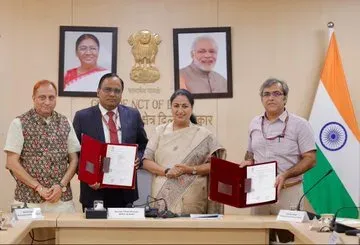
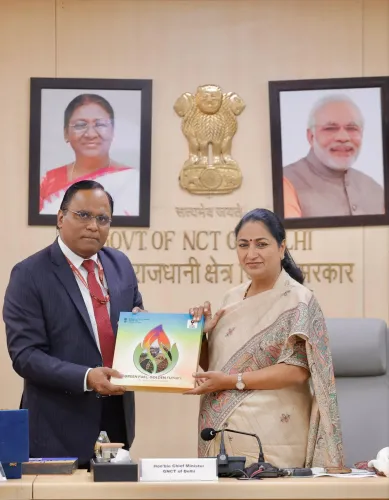
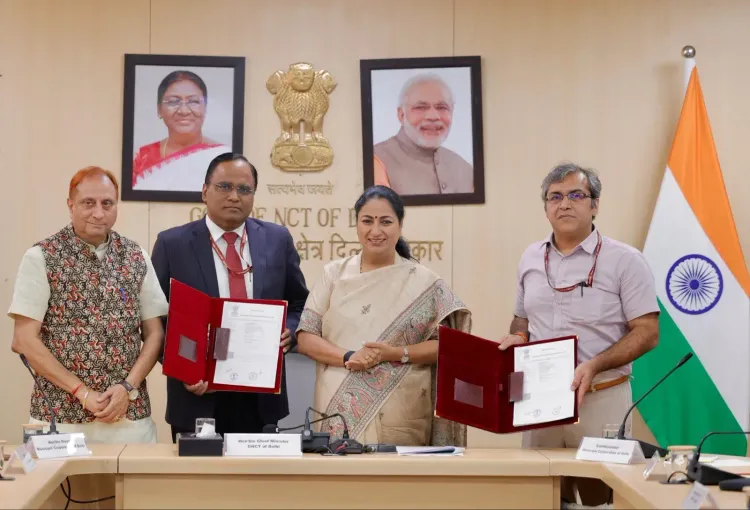
The MoU was signed in the presence of Delhi CM Rekha Gupta and Mayor Pravesh Wahi .
The initiative is anchored under the SATAT scheme (launched 2018) and the Swachh Bharat Mission (launched 2014).
The project supports India's net-zero emissions target by 2070 and reduces landfill dependency in Delhi.
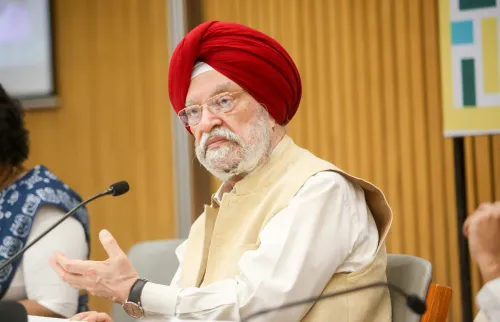
Delhi's mounting waste crisis just met a Maharatna-scale answer. Union Petroleum Minister Hardeep Singh Puri announced on Friday, 31 July 2026 that Oil India Limited (OIL) has signed a landmark MoU with the Municipal Corporation of Delhi (MCD) to build two Compressed Bio Gas (CBG) plants capable of processing a combined 800 tonnes of organic waste per day — and turning it into clean fuel.
Two plants, one city, 800 tonnes a day
The two facilities — sized at 500 TPD and 300 TPD respectively — will together produce 30 to 32 TPD of CBG, a compressed, pipeline-ready biogas derived from segregated organic waste. The signing took place in the presence of Delhi Chief Minister Smt. Rekha Gupta and Mayor Sh. Pravesh Wahi, signalling coordinated political backing from both the civic body and the state government.
For a city that has long battled overflowing landfills at sites like Ghazipur and Okhla, the scale matters. Processing 800 TPD of organic waste directly reduces the volume piling onto those sites — while the CBG output feeds into India's city gas distribution network as a domestically produced alternative to imported natural gas.
OIL's clean-energy pivot and the SATAT backbone
Oil India Limited, a Maharatna Central Public Sector Enterprise under the Ministry of Petroleum and Natural Gas, has increasingly stepped beyond its core exploration-and-production mandate into waste-to-energy projects. This MoU is consistent with a broader pattern of oil-sector PSUs partnering with municipal bodies under the SATAT (Sustainable Alternative Towards Affordable Transportation) scheme, launched in October 2018 by the Ministry of Petroleum and Natural Gas to build a national CBG supply chain from organic waste.
SATAT's logic is straightforward: India generates enormous volumes of agricultural and urban organic waste; CBG converts that liability into a fuel that can substitute compressed natural gas in vehicles and industry, cutting both import bills and greenhouse emissions simultaneously.
Where Swachh Bharat, Net Zero, and circular economy converge
Minister Puri framed the initiative at the intersection of three policy pillars: the Swachh Bharat Mission — the flagship sanitation scheme launched in 2014 — India's net-zero emissions target by 2070 announced at COP26, and Prime Minister Narendra Modi's circular economy vision. The language is deliberate: CBG plants are simultaneously a sanitation intervention (less landfill), an energy intervention (domestic gas supply), and a climate intervention (methane captured rather than emitted).
What to watch next is commissioning timelines — when the two plants move from MoU to operational status, and how quickly their CBG output integrates with Delhi's city gas distribution grid. That transition from signed paper to flowing gas will be the real test of this 'monumental step.'
Point of View
Making domestic CBG production both an energy-security and a fiscal argument. The visible presence of Delhi's Chief Minister and Mayor at the signing also signals that the BJP-governed city administration is keen to align with central schemes — a political dividend as much as a policy one. The harder question is execution: India's CBG ambitions under SATAT have historically outpaced actual commissioned capacity, and Delhi's waste-segregation infrastructure will determine whether 800 TPD of feedstock can actually be delivered consistently.
NationPress
31 Jul 2026
Frequently Asked Questions
What is the OIL-MCD CBG MoU about?
Oil India Limited and the Municipal Corporation of Delhi have signed a memorandum of understanding to set up two Compressed Bio Gas plants in Delhi with a combined organic waste-processing capacity of 800 tonnes per day, producing 30 to 32 TPD of CBG as a clean fuel.
What is CBG and how is it different from CNG?
Compressed Bio Gas (CBG) is biogas — primarily methane — produced from the decomposition of organic waste, then compressed to the same pressure and specifications as Compressed Natural Gas (CNG). It can substitute CNG in vehicles and industry but is produced domestically from waste rather than imported.
What is the SATAT scheme?
SATAT (Sustainable Alternative Towards Affordable Transportation) is a scheme launched in October 2018 by India's Ministry of Petroleum and Natural Gas to promote the production and use of CBG from agricultural and urban organic waste, reducing fossil fuel imports and supporting sanitation goals.
Who was present at the OIL-MCD MoU signing?
Delhi Chief Minister Smt. Rekha Gupta and Mayor Sh. Pravesh Wahi were present at the MoU signing ceremony, alongside officials from Oil India Limited and the Municipal Corporation of Delhi.
How does this project help Delhi's landfill problem?
By diverting and processing 800 tonnes of segregated organic waste per day through the two CBG plants, the project directly reduces the volume of biodegradable material sent to Delhi's already overburdened landfill sites, cutting methane emissions and improving urban sanitation.