Punjab Cabinet Approves CBG Plants in Patiala, Jalandhar
Synopsis
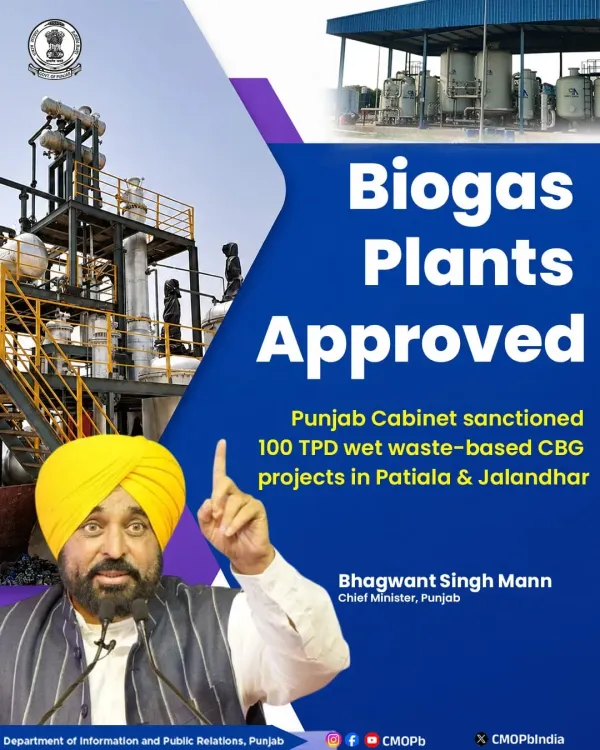
The Punjab Cabinet, led by CM Bhagwant Mann, has approved 100 TPD wet-waste Compressed Biogas plants at Municipal Corporations Patiala and Jalandhar, awarded to HPCL subsidiary HPRGE on a nomination basis, advancing the state's sustainable waste management and renewable energy goals.
Key Takeaways
The Punjab Cabinet approved Compressed Biogas (CBG) projects on 11 June 2026 under Chief Minister Bhagwant Mann .
Each plant will process 100 tonnes per day (TPD) of wet municipal waste — a combined capacity of 200 TPD across both cities.
Projects are located at Municipal Corporation Patiala and Municipal Corporation Jalandhar .
HPCL Renewable and Green Energy Limited (HPRGE) , a subsidiary of HPCL, has been awarded both projects on a nomination basis.
The initiative aligns with the Government of India's SATAT scheme , Swachh Bharat Mission-Urban , and the National Biofuels Policy .
Key next steps include project execution timelines and ensuring source-level waste segregation at both municipal corporations.
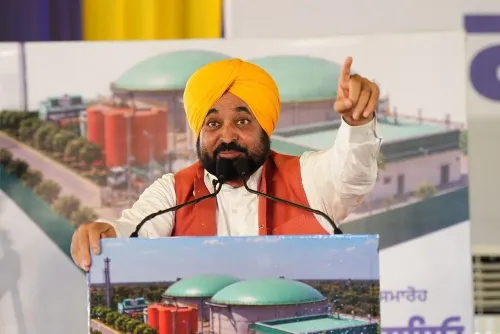
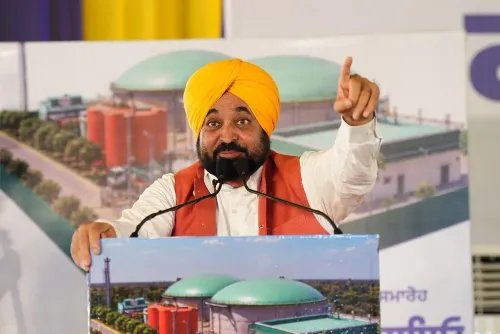
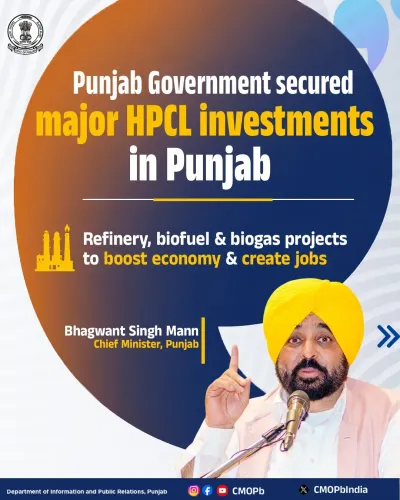
The Chief Minister's Office of Punjab announced on Thursday, 11 June 2026 that the Punjab Cabinet, chaired by Chief Minister Bhagwant Mann, has approved the award of Wet Waste Based Compressed Biogas (CBG) projects — each with a capacity of 100 tonnes per day (TPD) — at Municipal Corporation Patiala and Municipal Corporation Jalandhar to HPCL Renewable and Green Energy Limited (HPRGE) on a nomination basis.
Context
The cabinet decision marks a concrete step toward converting urban wet waste into clean fuel in two of Punjab's largest cities. The projects have been awarded to HPRGE, a subsidiary of Hindustan Petroleum Corporation Limited (HPCL) that specialises in renewable energy and compressed biogas infrastructure. By proceeding on a nomination basis, the state government has opted for a faster award route rather than an open competitive tender, enabling quicker project initiation.
Each plant will process 100 TPD of wet municipal waste, converting organic material — kitchen scraps, vegetable market waste, and other biodegradable matter — into compressed biogas that can be used as a clean transport or industrial fuel. Together, the two facilities will handle 200 TPD of wet waste from Patiala and Jalandhar combined.
Policy Backdrop
The approvals align with the Government of India's SATAT (Sustainable Alternative Towards Affordable Transportation) scheme, launched in October 2018, which targets the establishment of 5,000 CBG plants across the country using municipal and agricultural waste. Under SATAT, oil marketing companies serve as guaranteed offtakers, giving project developers a stable revenue stream and reducing commercial risk.
The Punjab initiative also fits within the broader framework of the Swachh Bharat Mission-Urban and the National Biofuels Policy, both of which encourage states to build offtake-linked waste-processing infrastructure. Multiple states have already awarded similar municipal wet-waste CBG projects to public-sector oil company subsidiaries, and Punjab's twin approvals follow that national pattern. For the Bhagwant Mann government, the move advances dual goals: reducing landfill pressure in major urban centres and contributing to national biofuel blending targets.
Stakeholders and Impact
Residents of Patiala and Jalandhar stand to benefit most directly from improved municipal waste processing, which should reduce open dumping and the associated health and environmental hazards. The two urban local bodies — Municipal Corporation Patiala and Municipal Corporation Jalandhar — will be central to ensuring consistent waste supply to the plants, making source-level segregation of wet and dry waste a practical necessity.
HPRGE gains two project sites that strengthen its compressed biogas portfolio and position it as a key player in Punjab's clean-energy transition. For the broader renewable energy sector, the nomination-based award signals that state governments are willing to fast-track CBG projects through direct allocation to trusted public-sector entities when speed of execution is a priority.
What's Next
Attention will now shift to project execution timelines, including land finalisation, plant construction, and commissioning schedules for both sites. Effective waste segregation at source — a persistent challenge for Indian municipalities — will be critical to ensuring that each plant receives the required daily volumes of clean wet waste. Observers will also watch whether the Punjab government extends similar CBG project awards to other municipal corporations in the state, building on the Patiala and Jalandhar precedents to create a statewide network of urban biogas facilities.
Point of View
The Mann government reduces counterparty risk while aligning with the Centre's SATAT offtake framework. The choice of Patiala and Jalandhar, two of Punjab's most populous cities with substantial organic waste loads, suggests a deliberate sequencing strategy before potential expansion to smaller municipalities. Whether execution matches the pace of approval will be the real test of this policy ambition.
NationPress
20 Sept 2026
Frequently Asked Questions
What is the Punjab Cabinet's CBG project approved in June 2026?
The Punjab Cabinet approved two Wet Waste Based Compressed Biogas projects, each of 100 TPD capacity, at Municipal Corporation Patiala and Municipal Corporation Jalandhar, awarded to HPCL Renewable and Green Energy Limited on a nomination basis.
What is HPCL Renewable and Green Energy Limited (HPRGE)?
HPRGE is a subsidiary of Hindustan Petroleum Corporation Limited (HPCL) that focuses on renewable energy and compressed biogas projects across India.
What is the SATAT scheme and how does this project relate to it?
SATAT (Sustainable Alternative Towards Affordable Transportation) is a Government of India scheme launched in October 2018 to establish 5,000 CBG plants using municipal and agricultural waste, with oil marketing companies as guaranteed offtakers. Punjab's CBG projects align directly with this national framework.
How much wet waste will the Punjab CBG plants process?
Each plant will process 100 tonnes per day of wet municipal waste, for a combined capacity of 200 TPD across the Patiala and Jalandhar sites.
Why were the CBG projects awarded on a nomination basis rather than open tender?
Awarding on a nomination basis allows the state government to fast-track project initiation by directly selecting a trusted public-sector entity, avoiding the longer timelines associated with competitive tendering.