How is India Converting Waste into Clean Energy at Scale?
Synopsis
Discover how India is leading the charge in transforming waste into clean energy at a large scale, as highlighted by Minister Hardeep Singh Puri during India Energy Week 2026. With the rapid expansion of CBG plants, India is set to enhance energy security, promote sustainability, and boost rural incomes.
Key Takeaways
India is rapidly expanding its CBG ecosystem.
133 CBG plants are currently operational.
SATAT scheme aims for 5,000 CBG plants nationwide.
CBG serves as a green alternative to CNG.
Organic manure is produced as a byproduct.
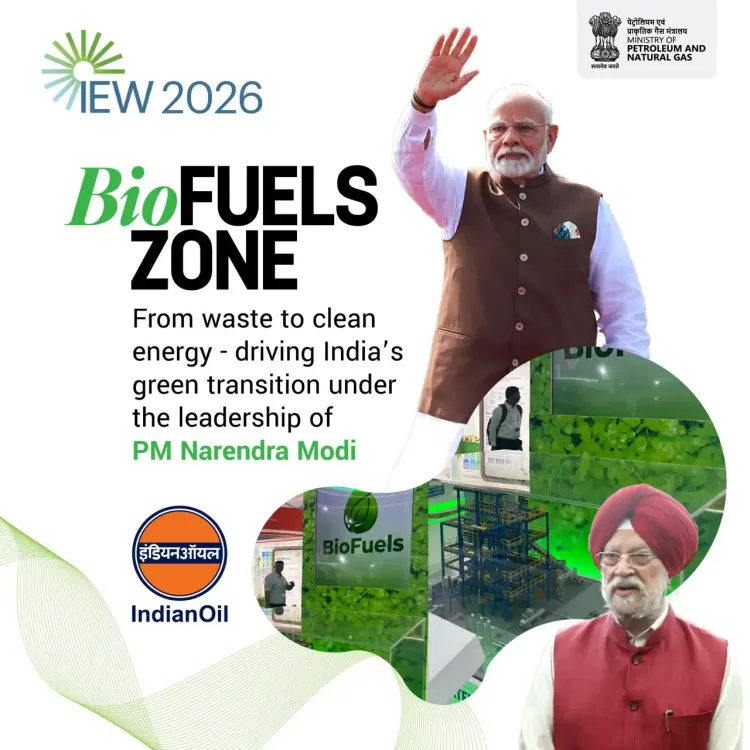
New Delhi, Jan 30 (NationPress) The Minister of Petroleum and Natural Gas, Hardeep Singh Puri, emphasized that the Biofuels Zone at the India Energy Week 2026 is a prime example of how India is effectively converting waste into clean energy on a large scale.
He stated, "With 133 CBG (compressed bio-gas) plants operational, with a total capacity of 926 TPD (tonnes per day), and availability at 410 retail outlets, India’s CBG ecosystem is rapidly growing, thereby enhancing energy security and sustainability."
Currently, an additional 83 CBG plants are in the pipeline, projected to add around 700 TPD capacity. TPD refers to the daily processing capability of waste feedstock, including agricultural residues, to generate compressed biogas and organic fertilizers.
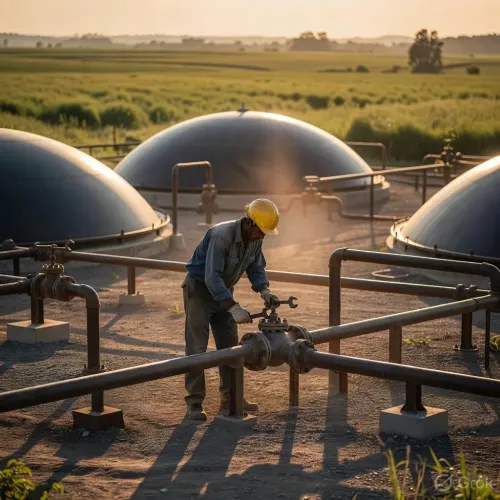
These CBG facilities convert organic waste—such as agricultural remains, manure, municipal solid waste, and sugarcane press mud—into purified and compressed methane. Initiated under the SATAT scheme, these plants aim to minimize pollution and reduce dependency on imports, yielding a renewable fuel with over 90-95 percent methane content. This serves as a direct, environmentally friendly alternative to CNG in both vehicles and industries.
Through anaerobic decomposition, organic waste produces biogas, which is purified to eliminate carbon dioxide, hydrogen sulphide, and water vapor at CBG facilities. CBG matches CNG in calorific value, making it ideal for automotive, industrial, and commercial applications. This initiative not only diminishes dependency on imported natural gas but also promotes waste-to-energy, reduces carbon emissions, and enhances rural incomes. The production of CBG further alleviates reliance on imported natural gas and crude oil.
Moreover, CBG plants create high-quality organic manure as a byproduct, which can be utilized on farms to improve crop yields.
The SATAT (Sustainable Alternative Towards Affordable Transportation) initiative, launched on October 1, 2018, aims to establish 5,000 CBG plants across the country. These facilities significantly contribute to responsible waste management and pollution reduction.
The India Energy Week 2026, India’s premier energy exhibition and conference, is taking place in Goa from January 27 to 30. It has gathered over 75,000 energy professionals, more than 700 global exhibitors from 120 countries, along with international ministers, senior policymakers, industry leaders, innovators, and investors. IEW 2026 spotlights India’s commitment to balancing energy access with decarbonization objectives while fostering discussions on secure, sustainable, and affordable energy through strategic investments, cutting-edge technologies, and global partnerships.
Point of View
India's transition towards clean energy through innovative waste management is commendable. The commitment to enhance energy security and sustainability reflects a proactive approach, aligning with global environmental goals. The SATAT scheme's objectives are not only beneficial for energy independence but also for rural economies, marking a significant step forward in responsible governance.
NationPress
5 Oct 2026
Frequently Asked Questions
What is the SATAT scheme?
The SATAT scheme, or Sustainable Alternative Towards Affordable Transportation, was launched on October 1, 2018, to promote the establishment of 5,000 CBG plants across India, aiming to enhance energy security and reduce pollution.
How does organic waste contribute to clean energy?
Organic waste undergoes anaerobic decomposition to produce biogas, which is then purified at CBG plants to create compressed methane, thus converting waste into viable energy.
How many CBG plants are currently operational in India?
As of now, India has 133 operational CBG plants, with an additional 83 under construction, significantly expanding the country's capacity for clean energy production.
What are the economic benefits of CBG production?
CBG production not only reduces dependency on imported natural gas but also enhances rural incomes by creating jobs and providing high-quality organic manure as a byproduct.