Gadkari inaugurates CBG plant in Satara, calls waste a big opportunity
Synopsis
Union Minister Nitin Gadkari inaugurated Raj Clean Energy's new CBG plant at Ahire, Satara on 30 May 2026, calling compressed biogas a rural income opportunity and highlighting press mud, Napier grass and agri-waste as feedstocks under India's SATAT clean-fuel framework.
Key Takeaways
Union Minister Nitin Gadkari inaugurated Raj Clean Energy 's new CBG plant at Ahire, Satara, Maharashtra on 30 May 2026 .
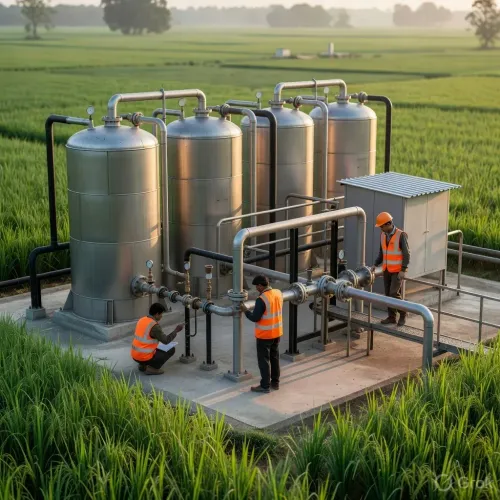
Feedstocks for the plant include press mud, Napier grass, and agricultural waste .
Gadkari described CBG as an additional income source for farmers, not merely an alternative fuel.
The plant aligns with the SATAT scheme (launched 2018), which targets 5,000 CBG plants across India.
The minister congratulated Anil Pise of Raj Clean Energy and the Raj group for the initiative.
Gadkari framed waste as a national opportunity, linking agri-residue monetisation to rural economic growth.
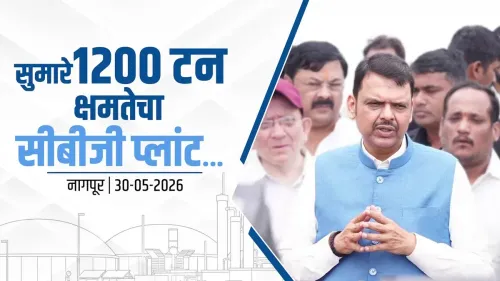
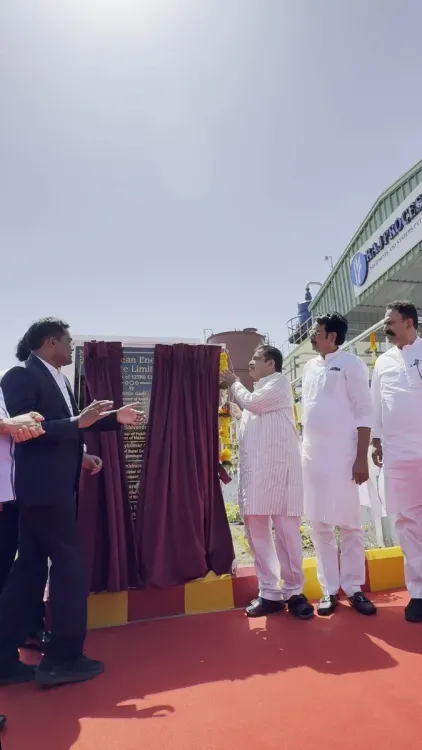
Union Road Transport and Highways Minister Nitin Gadkari on Saturday, 30 May 2026, inaugurated a new Compressed Biogas (CBG) plant of Raj Clean Energy at Ahire, Satara district, Maharashtra, describing CBG as a significant opportunity for the rural economy and an additional income source for farmers.
Posting on X after the inauguration, Gadkari said in Marathi: 'CBG hi gramin arthavyavasthesathi ek moti sandhi ahe' ('CBG is a great opportunity for the rural economy'). He added that waste is not a problem for India but a major opportunity, pointing to the use of press mud, Napier grass, and agri-waste as feedstock for the new plant. He offered his congratulations to Raj Clean Energy's Anil Pise and the entire Raj group for the initiative.
Context
The inauguration at Ahire in Satara places the plant in Maharashtra's agrarian heartland, where sugarcane press mud — a byproduct of sugar mills — is abundantly available as CBG feedstock. Gadkari has consistently positioned CBG as a rural livelihood tool, linking agricultural residue management with clean energy production. His attendance at the plant launch signals continued ministerial momentum behind the biogas sector.
The minister specifically highlighted that CBG is not merely an alternative fuel but an additional revenue stream for farmers — a framing that resonates with India's ongoing effort to raise farm incomes without solely depending on minimum support price mechanisms.
Policy Backdrop
The plant draws on the policy architecture built by the SATAT (Sustainable Alternative Towards Affordable Transportation) scheme, launched in October 2018 by the Ministry of Petroleum and Natural Gas, which set a target of establishing 5,000 CBG plants across India using biomass and agri-residue. The National Policy on Biofuels 2018 further broadened the scope of permissible feedstocks and set indicative blending targets for the transport sector.
Gadkari's Road Transport Ministry has repeatedly cited CBG as one of three long-term pathways — alongside electric vehicles and green hydrogen — for decarbonising India's freight sector. The inauguration of the Ahire plant is consistent with that multi-fuel strategy, with the minister publicly reinforcing the commercial viability of biogas derived from farm and agro-industrial waste.
Stakeholders and Impact
Farmers in Satara and surrounding districts stand to benefit directly if the plant creates a stable offtake market for press mud and crop residue that would otherwise be burned or discarded. Raj Clean Energy, part of the broader Raj group, positions itself as a rural clean-energy entrepreneur at the intersection of waste management and fuel production.
Stubble and agri-waste burning remains a persistent air-quality problem across several Indian states; CBG plants that monetise this residue offer a market-based deterrent to open burning. Rural entrepreneurs and self-help groups engaged in biomass collection could also find new income pathways as feedstock suppliers to such plants.
What's Next
The broader test for India's CBG ambitions lies in whether revised production targets under SATAT are met, and whether upcoming petroleum or rural development policy updates introduce new offtake mandates or viability gap funding to make smaller plants commercially sustainable. Gadkari's continued public association with CBG inaugurations suggests the ministry intends to keep biogas in the mainstream clean-energy conversation alongside the more prominent EV and hydrogen narratives. Progress on feedstock aggregation and gas grid integration will be the metrics to watch in the months ahead.
Point of View
The minister is pitching CBG in the language of rural welfare, a framing with broader electoral resonance in agrarian Maharashtra. The SATAT scheme's slow progress toward its 5,000-plant target means each high-profile inauguration also serves as a signal of policy commitment. Whether that commitment translates into the financing and offtake guarantees smaller plant operators need remains the central unresolved question.
NationPress
14 Oct 2026
Frequently Asked Questions
What is CBG and how is it made from agri-waste?
Compressed Biogas (CBG) is purified biogas compressed for use as a transport fuel, produced by anaerobic digestion of organic materials such as press mud from sugar mills, Napier grass, and agricultural residue. The Ahire plant uses these feedstocks to generate CBG.
What is the SATAT scheme?
SATAT (Sustainable Alternative Towards Affordable Transportation) is a central government scheme launched in October 2018 to establish 5,000 CBG plants across India, promoting compressed biogas as a sustainable fuel from biomass and agri-residue.
How does CBG benefit farmers?
Farmers can sell agricultural residue and press mud as feedstock to CBG plants instead of burning it, creating an additional income stream. The spent slurry from biogas production can also be used as organic fertiliser, further reducing input costs.
Where is the Raj Clean Energy CBG plant located?
The plant is located at Ahire in Satara district, Maharashtra, and was inaugurated by Union Minister Nitin Gadkari on 30 May 2026.