Delhi CM Rekha Gupta seals MoU for CBG plants in Okhla, Tughlakabad
Synopsis
Delhi has signed a landmark MoU pairing the Municipal Corporation with Oil India Limited to build 800 TPD Compressed Bio-Gas plants at two of its most burdened landfill sites. With four of seven NCR legacy dumpsites already remediated and new SWM Rules in force since April 2026, the agreement marks a concrete shift from policy intent to infrastructure action in India's most polluted capital region.
Key Takeaways
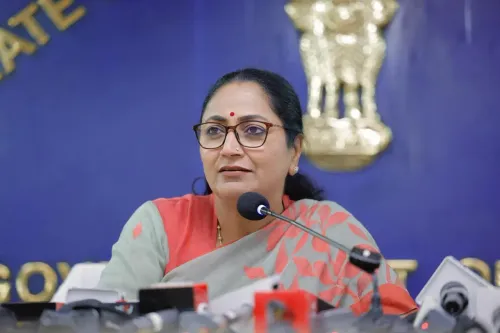
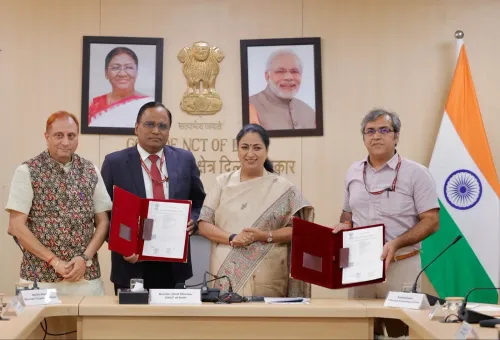
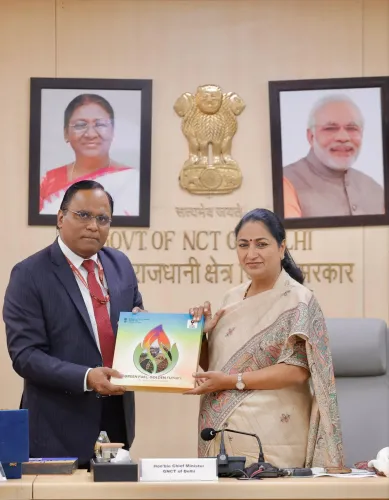
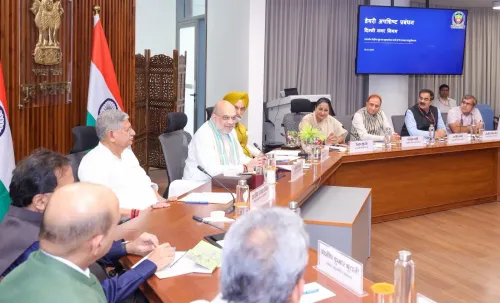
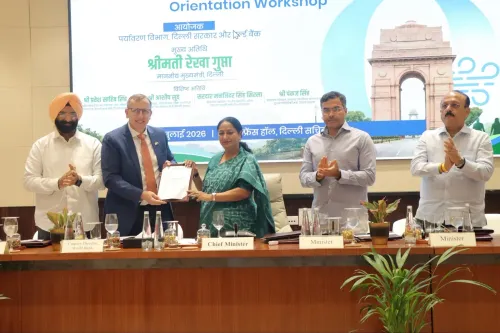
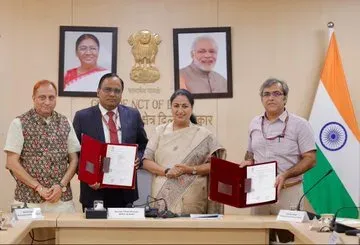
Delhi CM Rekha Gupta oversaw the MoU signing between MCD and Oil India Limited on 30 July for CBG plants at Tughlakabad and Okhla .
The plants will have a combined capacity of 800 tonnes per day (TPD) , converting segregated organic waste into bio-gas.
Mayor Pravesh Wahi was present at the signing ceremony at the Delhi Secretariat.
Of seven legacy waste dumpsites identified in Delhi-NCR, remediation at four has been completed, according to the Ministry of Environment.
The CAQM on 3 June 2025 directed NCR agencies to act on legacy waste, citing serious air pollutants including PM2.5 and dioxins from open burning.
The Solid Waste Management Rules, 2026 — superseding the 2016 rules — came into force on 1 April 2026 , providing the updated legal framework.
Delhi Chief Minister Rekha Gupta on Thursday, 30 July oversaw the signing of a Memorandum of Understanding between the Municipal Corporation of Delhi (MCD) and Oil India Limited (OIL) for the establishment of Compressed Bio-Gas (CBG) plants at Tughlakabad and Okhla, according to officials. The plants, each with a combined capacity of 800 tonnes per day (TPD), will convert segregated organic waste into clean energy, advancing Delhi's long-running battle against its overflowing landfills.
What the MoU Covers
Under the agreement, bio-gas will be produced from segregated organic waste at the two sites. In a post on X, Chief Minister Rekha Gupta said, 'Today, at the Delhi Secretariat, an MoU was signed between the Municipal Corporation of Delhi and Oil India Limited for the establishment of Compressed Bio-Gas plants with 800 TPD capacity in Tughlakabad and Okhla.' She added that the plants would 'reduce the mountains of waste, increase the production of clean energy, and further strengthen our resolve for a Clean Delhi.' Mayor of the Municipal Corporation of Delhi Pravesh Wahi and senior officials were present at the signing ceremony.
Legacy Waste Remediation: Where Delhi-NCR Stands
The MoU is part of a broader push by both the Delhi government and the Centre to dismantle the region's notorious waste mountains. Minister of State for Environment, Forest and Climate Change Kirti Vardhan Singh recently informed Parliament that out of seven legacy waste dumpsites identified in the Delhi-National Capital Region (NCR), remediation at four has already been completed. The seven sites span three locations in Delhi and one each in Gurugram, Noida, Greater Noida, and Ghaziabad.
Regulatory Push Behind the Drive
The regulatory backdrop has been building for years. The Central Pollution Control Board (CPCB) issued a direction on 27 January 2021 under Section 5 of the Environment (Protection) Act, 1986, mandating all State Pollution Control Boards and Pollution Control Committees to pursue biomining and bio-remediation of legacy dumpsites. More recently, the Commission for Air Quality Management in NCR and Adjoining Areas (CAQM) on 3 June 2025 directed agencies across the NCR to take appropriate action on legacy waste at sanitary landfill sites. The CAQM flagged that open burning of municipal solid waste generates PM10, PM2.5, NO2, SO2, CO, dioxins, and furans — all serious air quality hazards for the region.
New Solid Waste Rules Now in Force
Underpinning these efforts is a fresh legal framework. The Central government has notified the Solid Waste Management (SWM) Rules, 2026, superseding the earlier SWM Rules, 2016, with strengthened provisions for the management of municipal solid waste, including sanitary landfills. The revised rules came into force on 1 April 2026. The Tughlakabad-Okhla CBG agreement is among the first major on-ground partnerships to be signed under this updated regulatory regime, signalling that institutional momentum is beginning to translate into concrete infrastructure commitments.
Point of View
But the real test lies in execution timelines — Delhi's landfill crisis has seen no shortage of announcements. The fact that remediation is complete at only four of seven NCR dumpsites, years after the CPCB's 2021 directive, underscores how slowly ground-level progress has moved. Bringing in a central PSU like Oil India Limited adds financial muscle and accountability that purely municipal efforts have lacked, but the 800 TPD capacity figure needs to be benchmarked against actual organic waste volumes at both sites before it can be called transformative. The new SWM Rules 2026 sharpen legal obligations — whether enforcement matches the language will define whether this MoU becomes a model or a footnote.
NationPress
15 Sept 2026
Frequently Asked Questions
What is the MoU signed between MCD and Oil India Limited in Delhi?
It is an agreement signed on 30 July for the establishment of Compressed Bio-Gas plants with an 800 TPD capacity at Tughlakabad and Okhla in Delhi. The plants will convert segregated organic waste into bio-gas, aiming to reduce landfill burden and boost clean energy production.
Why are CBG plants being set up at Tughlakabad and Okhla?
Both sites host large legacy waste dumps that contribute to air pollution through open burning of municipal solid waste. The CBG plants are intended to process organic waste into usable energy, reducing the volume of waste at these landfills and cutting harmful emissions including PM2.5 and dioxins.
How many Delhi-NCR dumpsites have been remediated so far?
According to the Ministry of Environment, four of seven identified legacy waste dumpsites in the Delhi-NCR have completed remediation. The seven sites include three in Delhi and one each in Gurugram, Noida, Greater Noida, and Ghaziabad.
What are the Solid Waste Management Rules 2026 and when did they take effect?
The SWM Rules 2026 are updated Central government regulations for managing municipal solid waste, superseding the earlier SWM Rules 2016. They came into force on 1 April 2026 and include strengthened provisions for sanitary landfills and waste processing.
What role did the CAQM play in pushing for legacy waste action in Delhi-NCR?
The Commission for Air Quality Management in NCR and Adjoining Areas directed agencies across the region on 3 June 2025 to take action on legacy waste at landfill sites. It highlighted that open burning of municipal solid waste generates PM10, PM2.5, NO2, SO2, CO, dioxins, and furans — all serious air quality hazards.