CM Saini Raises Haryana Sugarcane Price to ₹430, Then ₹450
Synopsis
Haryana CM Nayab Singh Saini has announced sugarcane State Advised Prices of ₹430 per quintal for 2026-27 and ₹450 per quintal for 2027-28 — a ₹35 per quintal rise projected to add up to ₹11,500 per acre per season for cane farmers.
Key Takeaways
Haryana CM Nayab Singh Saini announced a two-year sugarcane State Advised Price (SAP) revision on 29 October 2026 .
SAP set at ₹430 per quintal for the 2026-27 crushing season.
SAP will rise further to ₹450 per quintal for the 2027-28 season.
The cumulative increase amounts to ₹35 per quintal over two years.
The government projects a farmer income gain of ₹10,000 to ₹11,500 per acre per season .
The move aims to encourage cane cultivation and ensure steady raw material supply to Haryana's sugar mills .
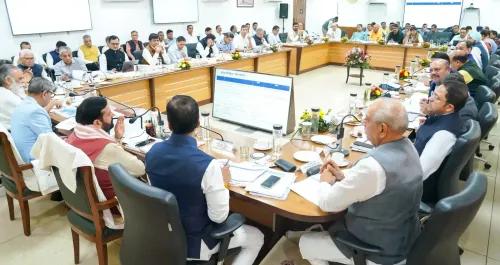
A direct income boost for Haryana's sugarcane farmers landed on Thursday, 29 October 2026, as Haryana Chief Minister Nayab Singh Saini announced a two-season State Advised Price (SAP) revision — ₹430 per quintal for the 2026-27 crushing season and ₹450 per quintal for 2027-28.
Posting in Hindi on X, CM Saini called it a 'big gift' (badi saugaat) for the state's cane growers. The numbers are specific: a cumulative rise of ₹35 per quintal over two years, which the government projects will add between ₹10,000 and ₹11,500 per acre per season to farmer incomes.
Why a Two-Year Price Announcement Matters
Most state governments announce sugarcane SAPs season by season, leaving farmers guessing about next year's returns when they decide how much area to plant. By locking in two seasons simultaneously, the Haryana government is signalling planning certainty — the kind of forward visibility that influences acreage decisions well before the sowing window opens. The announcement also serves the supply chain. CM Saini explicitly flagged that higher prices are expected to 'encourage sugarcane production and ensure adequate supply to sugar mills' — acknowledging the two-way pressure that state governments face: keep farmers planting cane, and keep mills running at viable capacity.SAP versus FRP: How Haryana's Move Fits the National Picture
India's sugarcane pricing operates on two tiers. The central government sets a Fair and Remunerative Price (FRP) — a floor below which no mill can pay. States then layer a higher State Advised Price on top, particularly in major producing states such as Uttar Pradesh, Maharashtra, and Haryana. It is this SAP that directly determines what a Haryana farmer actually receives at the weighbridge. Haryana's SAP revision follows a pattern seen across the cane belt: states periodically step up prices to prevent farmers from switching to less water-intensive or more profitable competing crops, which would starve mills of raw material and destabilise the local agrarian economy.What Haryana's Cane Farmers Stand to Gain
The government's own projection puts the per-acre per-season income gain at up to ₹11,500 by 2027-28. For smallholder farmers — who make up the bulk of Haryana's cane growers — that increment on even two or three acres can meaningfully offset rising input costs for fertiliser, water, and labour. The real test, as always, will come at the mill gate: whether payments arrive on time, and whether the revised SAP holds through both seasons without revision downward. The crushing season for 2026-27 is now the first checkpoint to watch. For Haryana's farmers, the numbers are set. Now the calendar starts.Point of View
Providing planning certainty that could tangibly influence acreage decisions — a structural nudge as much as a price signal. It fits within a broader BJP-governed state pattern of deploying agricultural pricing as both welfare policy and political consolidation, particularly ahead of periods when rural support is electorally consequential. The explicit linkage to sugar mill supply security reveals the twin pressure that state governments navigate: farmer welfare and agro-industrial continuity are inseparable in the cane economy. Whether timely mill payments back up the announced SAP will ultimately determine whether the income projections translate into real gains on the ground.
NationPress
29 Oct 2026
Frequently Asked Questions
What is the new sugarcane price in Haryana for 2026-27?
The Haryana government has set the sugarcane State Advised Price at ₹430 per quintal for the 2026-27 crushing season, as announced by Chief Minister Nayab Singh Saini.
What will Haryana sugarcane SAP be in 2027-28?
The SAP for 2027-28 has been fixed at ₹450 per quintal , representing a further ₹20 per quintal increase over the 2026-27 rate.
By how much has Haryana increased sugarcane price in two years?
The total increase across the two announced seasons is ₹35 per quintal , with the base price rising from the previous rate to ₹430 in 2026-27 and then ₹450 in 2027-28.
How much extra income will Haryana sugarcane farmers earn per acre?
The Haryana government projects that the revised prices will add between ₹10,000 and ₹11,500 per acre per season to farmer incomes over the two-year period.
What is the difference between SAP and FRP for sugarcane?
The central government's Fair and Remunerative Price (FRP) is a national floor price that mills must pay. A State Advised Price (SAP) , set by state governments like Haryana, is typically higher than the FRP and is the actual rate farmers in that state receive.