CM Saini reaffirms Haryana's commitment to Vimukt Jati welfare
Synopsis
Haryana Chief Minister Nayab Singh Saini has publicly reaffirmed his government's commitment to protecting and empowering Vimukt Jati communities — Denotified Tribes historically stigmatised under the colonial-era Criminal Tribes Act, repealed in 1952 but whose socio-economic exclusion persists.
Key Takeaways
CM Nayab Singh Saini on 2 August 2026 pledged Haryana government's commitment to Vimukt Jati protection and empowerment.
Vimukt Jatis are communities denotified after the repeal of the British-era Criminal Tribes Act in 1952 , but remain among India's most socio-economically marginalised groups.
No specific scheme, budget allocation, or programme was announced alongside the statement.
The pledge aligns with the BJP 's established outreach to OBC and backward communities in Haryana.
Follow-up policy action — scholarships, skill programmes, or budget allocations — will determine the statement's real impact.
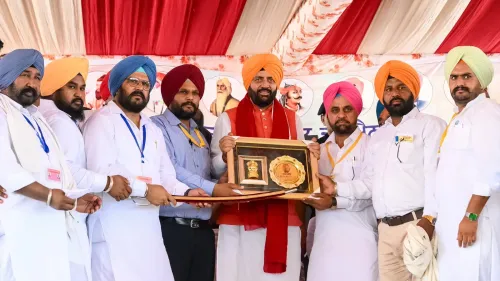
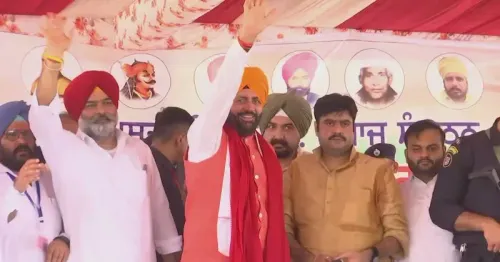
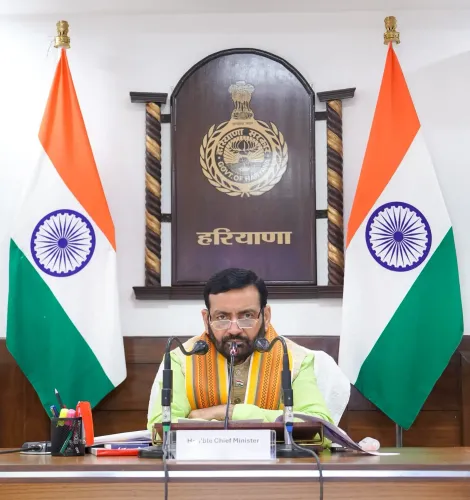
A community that once lived under the shadow of colonial-era criminality laws is now at the centre of a fresh political pledge. Haryana Chief Minister Nayab Singh Saini on Sunday, 2 August 2026 declared that the state government remains committed to the protection and empowerment of the Vimukt Jati — the Denotified Tribes — communities long marginalised by history and policy alike.
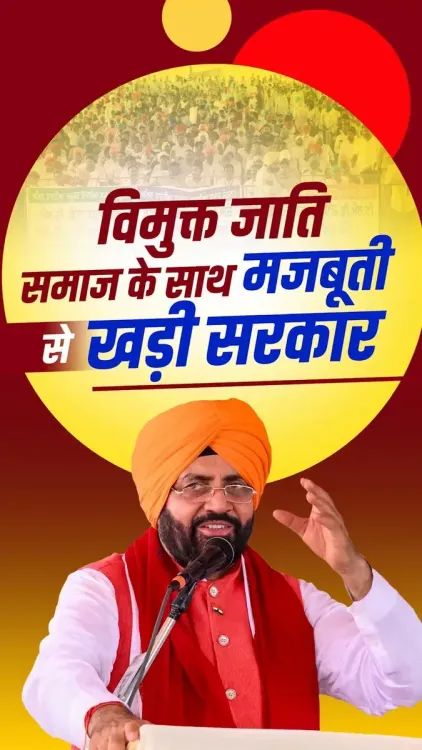
In his post, CM Saini stated: 'Haryana sarkar Vimukt Jati samaj ke sanrakshan aur sashaktikaran ke liye pratibaddh hai' — 'The Haryana government is committed to the protection and empowerment of the Vimukt Jati community.'
Who are the Vimukt Jatis — and why does the pledge matter?
The Vimukt Jatis are communities that were branded as 'born criminals' under the British-era Criminal Tribes Act, which subjected entire groups to surveillance, forced settlement, and restricted movement. When the Act was repealed in 1952, these communities were officially 'denotified' — but the stigma, and the socio-economic exclusion it produced, did not disappear overnight.
Across India, Denotified Tribes continue to rank among the most vulnerable populations: low literacy rates, limited land ownership, and persistent discrimination in employment and housing. In Haryana, several such communities fall under this classification, and welfare outreach to them has historically been patchy and under-resourced.
BJP's broader OBC and backward-community outreach in Haryana
The timing of the statement fits a recognisable pattern. State governments — particularly those led by the BJP — have periodically issued public commitments to Vimukt Jati development, often linking such messaging to education, housing, and livelihood programmes. These declarations tend to intensify ahead of assembly sessions and electoral cycles, signalling to a constituency that has often felt overlooked by mainstream welfare architecture.
CM Saini, who took office in March 2024, has positioned his administration around inclusive development for OBC and other backward communities — a core plank of the BJP's social coalition in the state. A follow-through on this pledge could take the form of targeted scholarships, skill-development schemes, or dedicated budget lines in upcoming Haryana assembly sessions.
The statement is a commitment on record. What converts it into consequence is the policy detail that follows — and Haryana's Vimukt Jati communities will be watching for exactly that.
Point of View
Which limits its immediate policy weight but keeps the political door open. For the Haryana government, converting this commitment into measurable welfare delivery — scholarships, housing, skill programmes — before the next electoral cycle will be the real test of intent. The post also reflects a wider national pattern of state governments using social-media affirmations to build credibility with historically excluded communities, a strategy that works only when followed by institutional action.
NationPress
2 Aug 2026
Frequently Asked Questions
Who are Vimukt Jatis in India?
Vimukt Jatis, or Denotified Tribes (DNTs), are communities that were labelled as 'born criminals' under the British-era Criminal Tribes Act and subjected to severe restrictions. After the Act was repealed in 1952, these groups were 'denotified,' but many continue to face social stigma and economic marginalisation.
What did Haryana CM Nayab Singh Saini say about Vimukt Jati communities?
On 2 August 2026, CM Saini posted that the Haryana government is committed to the protection and empowerment of the Vimukt Jati community, though no specific scheme or budget allocation was announced alongside the statement.
When was the Criminal Tribes Act repealed in India?
The Criminal Tribes Act was repealed in 1952 after India's independence, after which the affected communities were reclassified as Denotified Tribes or Vimukt Jatis.
What welfare schemes exist for Vimukt Jatis in Haryana?
State governments including Haryana have periodically announced education, housing, and livelihood programmes for Denotified Tribes. CM Saini's latest statement signals continued intent, but specific new schemes had not been announced as of this post.
Who is Nayab Singh Saini?
Nayab Singh Saini is the Chief Minister of Haryana and a senior BJP leader who assumed office in March 2024. His administration has focused on outreach to OBC and other backward communities as a central political and policy priority.