CM Saini Releases 9th Instalment Under Lado Lakshmi Yojana
Synopsis
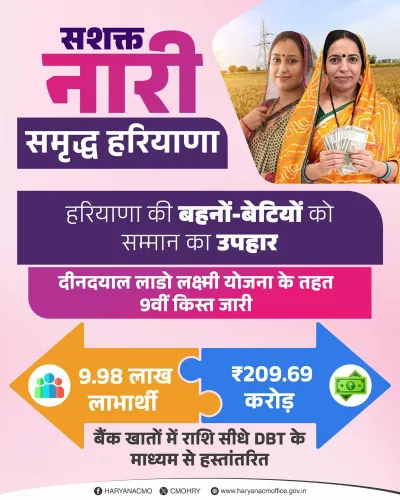
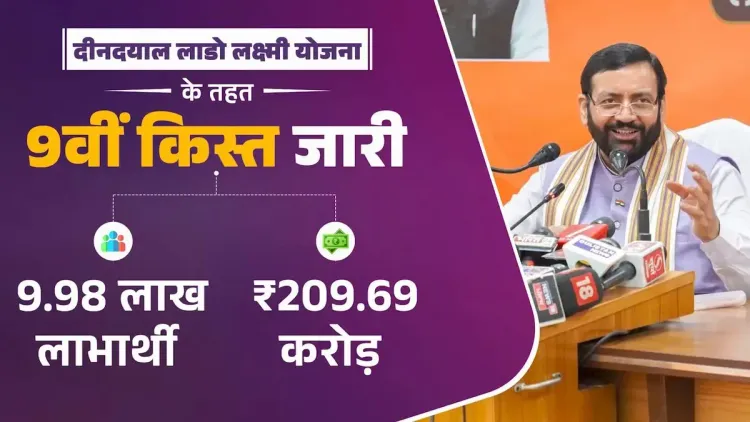
Haryana Chief Minister Nayab Singh Saini released the ninth instalment of the Deen Dayal Lado Lakshmi Yojana on 10 July 2026, continuing the state's pledge of non-stop ₹2,100 cash transfers to women and girls across Haryana under the BJP government's direct-benefit programme.
Key Takeaways
Haryana CM Nayab Singh Saini announced the release of the 9th instalment of the Deen Dayal Lado Lakshmi Yojana on 10 July 2026 .
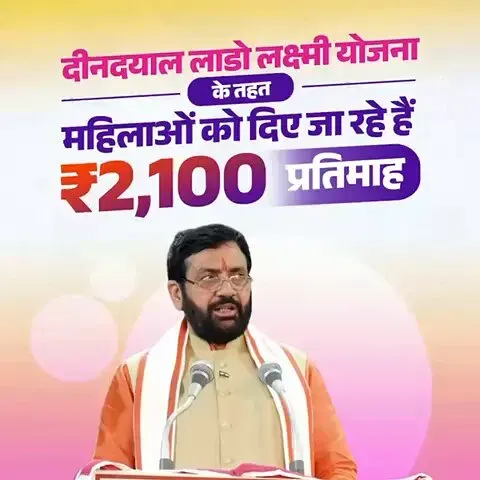
Each instalment under the scheme delivers ₹2,100 to eligible women and girls in Haryana .
The government has framed the disbursements as a 'non-stop' commitment, signalling intent for uninterrupted delivery.
The scheme continues a long lineage of Haryana girl-child and women-support programmes, including the earlier Apni Beti Apna Dhan initiative.
The announcement mirrors a broader pattern of state-level women-focused cash-transfer schemes in BJP -governed states, most notably Madhya Pradesh's Ladli Behna Yojana .
Future state budget allocations and beneficiary audit disclosures will determine the scheme's long-term sustainability and reach.
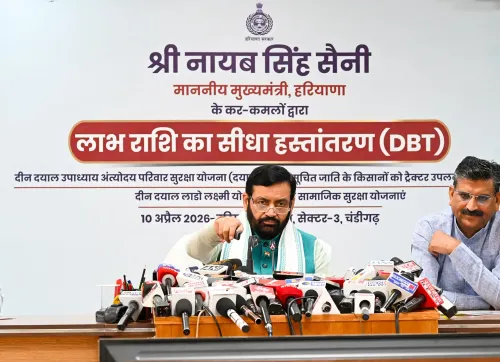
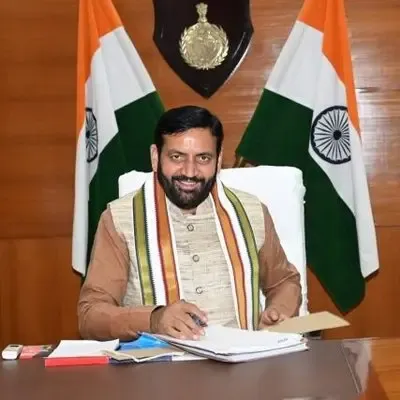
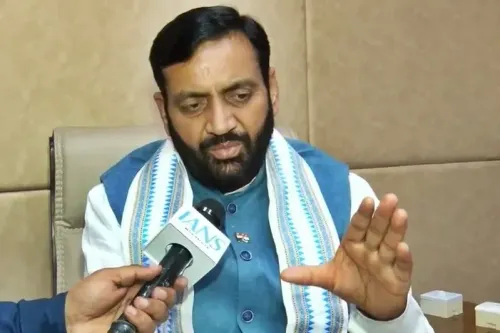
Haryana Chief Minister Nayab Singh Saini on Friday, 10 July 2026 announced the release of the ninth instalment of the Deen Dayal Lado Lakshmi Yojana, reaffirming the state government's pledge to deliver uninterrupted financial assistance of ₹2,100 to the women and girls of Haryana.
Context
In a post on X, CM Saini wrote: 'हरियाणा की बहनों-बेटियों को नॉन-स्टॉप ₹2100 के संकल्प के तहत, दीनदयाल लाडो लक्ष्मी योजना की 9वीं किस्त जारी' — translated as: 'Under the resolve of non-stop ₹2,100 for the sisters and daughters of Haryana, the 9th instalment of the Deen Dayal Lado Lakshmi Yojana has been released.' The phrase 'non-stop' signals the government's stated commitment to sustaining disbursements without interruption.
The announcement was accompanied by a video, indicating an official ceremony or a visual presentation of the transfer. The scheme targets women and girls across the state, with direct-benefit transfers forming the core delivery mechanism.
Policy Backdrop
Haryana has maintained a long lineage of girl-child and women-support programmes stretching back to the early 2000s, including the earlier Apni Beti Apna Dhan initiative. The Deen Dayal Lado Lakshmi Yojana continues that tradition under the BJP government, with periodic cash instalments delivered directly to eligible beneficiaries.
CM Saini, who took office in March 2024 succeeding Manohar Lal Khattar, has maintained and extended women-centric welfare programmes that were a hallmark of the previous administration. The ₹2,100 per-instalment figure has been positioned as a firm, recurring commitment rather than a one-time benefit.
The scheme fits a broader pattern visible across several BJP-governed states. Madhya Pradesh's Ladli Behna Yojana is the most widely cited example of state-level monthly cash-transfer programmes aimed at women, combining welfare delivery with direct outreach to female voters and households.
Stakeholders and Impact
The primary beneficiaries are women and girls in Haryana, particularly those in rural and semi-urban households who depend on direct-benefit transfers for supplementary income. Each instalment of ₹2,100 is channelled through the scheme's disbursement framework, reducing the role of intermediaries.
For the broader political economy of the state, regular instalment releases serve as visible proof-of-delivery moments for the ruling party, demonstrating administrative continuity. Civil-society groups tracking women's welfare have consistently noted that sustained, predictable cash transfers have a measurable impact on household spending on education and health.
What's Next
Attention will now turn to the Haryana state budget and whether future allocations will sustain or expand the scheme's coverage. Questions around digitised beneficiary audits and the total number of women enrolled remain areas to watch, as the government has not yet announced a formal review of the scheme's reach.
The release of the ninth instalment also sets an implicit benchmark: any delay in subsequent instalments would be measured against the 'non-stop' pledge made publicly by CM Saini, making the government's follow-through on future disbursements a key accountability marker.
Point of View
Visible welfare delivery to women. By publicly branding the disbursements as 'non-stop,' the Chief Minister is creating a self-imposed accountability standard that will be scrutinised with each future instalment. This approach mirrors a state-level playbook that has proved electorally significant in other BJP-governed states, where direct cash transfers to women have reshaped the terms of political competition. The broader question is whether Haryana's fiscal headroom can sustain the pledge through successive budget cycles without crowding out other development expenditure.
NationPress
10 Jul 2026
Frequently Asked Questions
What is the Deen Dayal Lado Lakshmi Yojana in Haryana?
The Deen Dayal Lado Lakshmi Yojana is a Haryana government scheme that provides periodic financial assistance of ₹2,100 to eligible women and girls in the state through direct-benefit transfers, continuing a long tradition of women-centric welfare programmes in Haryana.
How much money is given under the Deen Dayal Lado Lakshmi Yojana?
Each instalment under the Deen Dayal Lado Lakshmi Yojana amounts to ₹2,100, delivered directly to eligible women and girls in Haryana.
Which instalment of Lado Lakshmi Yojana was released in July 2026?
Haryana Chief Minister Nayab Singh Saini released the 9th instalment of the Deen Dayal Lado Lakshmi Yojana on 10 July 2026.
Who is eligible for the Deen Dayal Lado Lakshmi Yojana?
The scheme targets women and girls in Haryana, with a focus on rural and semi-urban households that benefit from direct cash transfers; detailed eligibility criteria are governed by the state government's scheme guidelines.
How does Haryana's Lado Lakshmi Yojana compare to Madhya Pradesh's Ladli Behna Yojana?
Both are state-level direct cash-transfer schemes targeting women, introduced under BJP-governed state governments; Madhya Pradesh's Ladli Behna Yojana is the most widely cited example of this model, while Haryana's Deen Dayal Lado Lakshmi Yojana follows a similar approach with a stated per-instalment amount of ₹2,100.