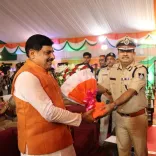
CM Sai's Chhattisgarh: Bastar Villages Hoist Tricolour Again
Synopsis
On Independence Day 2026, the Chhattisgarh CMO declared that Bastar's long-troubled tribal villages are celebrating with pride as schools reopen and the Tricolour flies again — a milestone the Sai government is presenting as proof of its Sushasan Sarkaar governance model taking root.
Key Takeaways
The Chief Minister's Office of Chhattisgarh marked Independence Day, August 15, 2026 by highlighting school reopenings and development delivery in Bastar .
Bastar spent decades affected by left-wing extremism that shut schools and disrupted governance in its predominantly tribal villages.
CM Vishnu Deo Sai , elected in December 2023 , has branded his administration the 'Sushasan Sarkaar,' with Bastar as a flagship test case.
NITI Aayog's Aspirational Districts Programme (2018) had identified Bastar as a priority zone for education, health, and infrastructure interventions.
The state's dual-track approach — security operations paired with school and road delivery — mirrors patterns seen in other LWE-affected states.
The government's #ViksitChhattisgarh and #NewBastar messaging aligns with the Centre's broader 'Viksit Bharat' development framework.
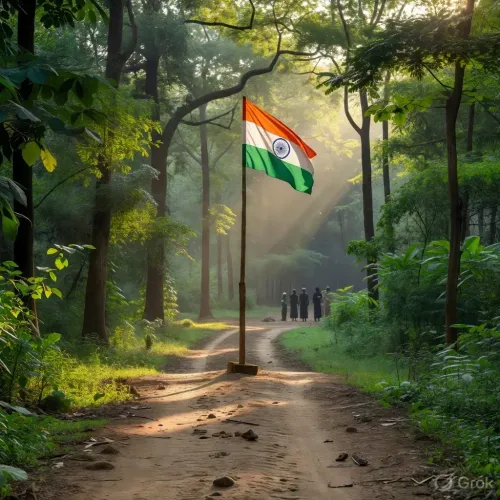
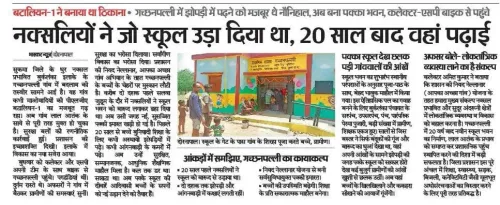
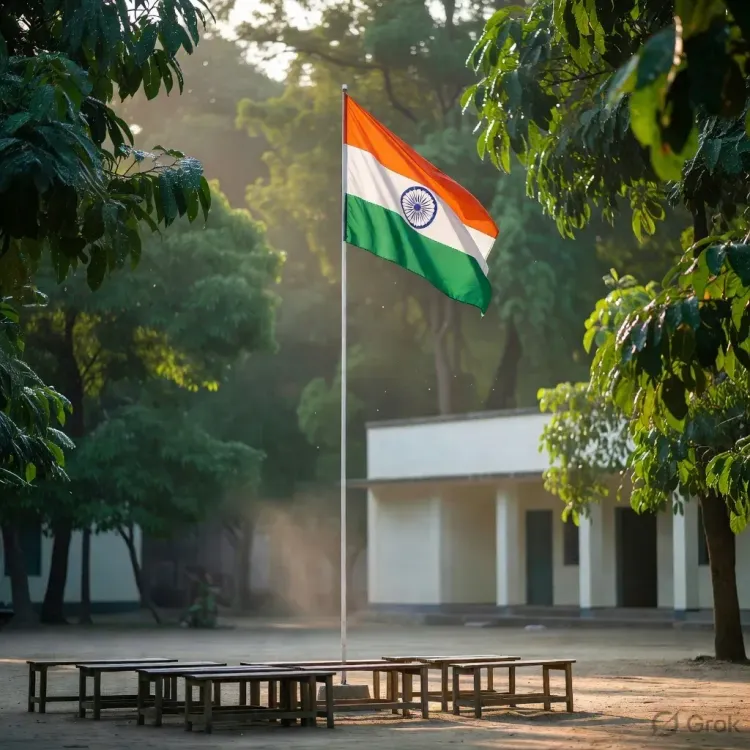
For villages in Bastar that once watched Independence Day pass in silence — schools shuttered, roads absent, the Tricolour a distant symbol — August 15, 2026 carried a different weight. The Chief Minister's Office of Chhattisgarh marked the occasion by declaring that Bastar's villages are celebrating with pride again, as schools reopen and development finally reaches the last mile.
Decades of disruption, one flag-hoisting at a time
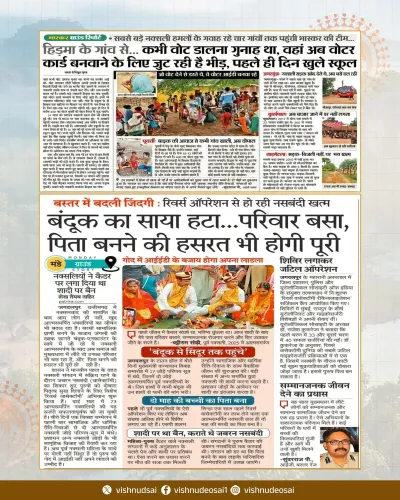
Bastar — a sprawling, predominantly tribal region in southern Chhattisgarh — spent the better part of two decades in the grip of left-wing extremism. Naxal violence forced schools to shut, administrators to retreat, and public institutions to hollow out. Flag-hoisting on Independence Day, a routine act everywhere else in India, became an act of defiance in many of these villages. The CMO's post captures exactly that reversal: 'deshabhakti ka jashn' — the celebration of patriotism — returning to places that had been cut off from it.
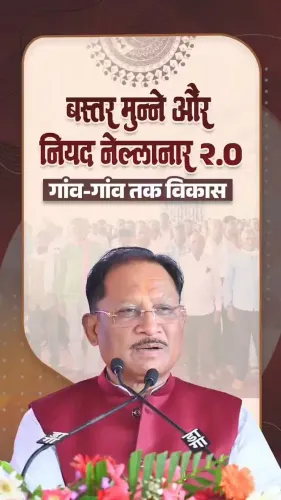
Chief Minister Vishnu Deo Sai, who led the Bharatiya Janata Party to victory in Chhattisgarh's December 2023 assembly elections, has anchored his administration around the 'Sushasan Sarkaar' model — a governance-first pitch centred on service delivery, development, and administrative reach. Bastar is its most consequential test.
The dual-track push: security and schools together
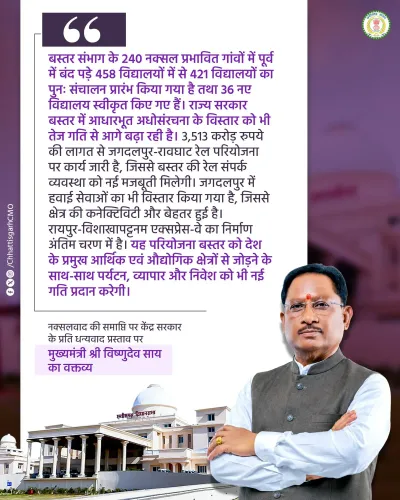
The approach is not new to Chhattisgarh. State governments here have long run a dual-track strategy — security operations to push back Naxal influence, paired with schools, roads, and welfare schemes to fill the vacuum. What the current administration has done is sharpen the branding and, according to its own account, accelerate the pace.
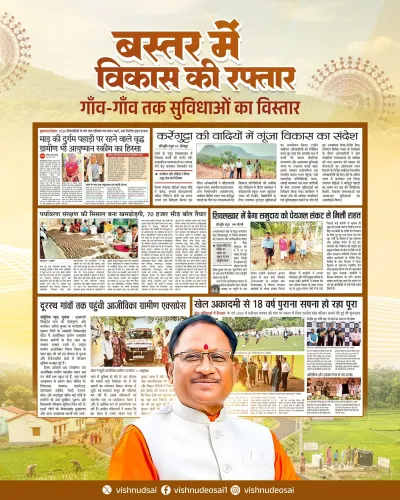
NITI Aayog's Aspirational Districts Programme, launched in 2018, had already identified Bastar as a priority zone requiring focused interventions in education, health, and infrastructure. The incoming BJP government in 2023 announced a renewed push to extend administration into former Naxal-affected pockets — and the Independence Day imagery of schools open and Tricolours flying is the political proof-of-concept it wants the country to see.
What 'Viksit Chhattisgarh' looks like on the ground
The hashtags the CMO deployed — #ViksitChhattisgarh and #NewBastar — are not just social-media shorthand. They signal a deliberate alignment with the Centre's 'Viksit Bharat' framework, positioning Chhattisgarh's tribal heartland as evidence that India's development story is reaching its most remote and historically troubled corners.
For the tribal students now sitting in reopened classrooms, and for the villagers who can hoist the flag without fear, the politics are secondary. The moment is its own measure. Whether the administration can sustain and deepen that reach — through road connectivity, teacher postings, and continued security gains — is the question that will define whether Bastar 2026 is a turning point or a photo opportunity.
A new Bastar is rising, the CMO says. The Tricolour flying over its villages is the opening frame. The rest of the story is still being written.
Point of View
And flag-hoisting visuals from tribal villages serve as the most legible political proof of that claim. The framing tracks a well-worn template in LWE-affected states: security gains are converted into development optics, which are then converted into electoral narrative. What distinguishes the current moment is the explicit alignment with 'Viksit Bharat,' tying a state-level achievement to the Centre's macro ambition. The durability of this narrative will depend on whether school enrolments, road connectivity, and security indices in Bastar hold — metrics that will become politically consequential well before the next election cycle.
NationPress
15 Aug 2026
Frequently Asked Questions
Why was Independence Day not celebrated in Bastar villages for so many years?
Left-wing extremism in Bastar forced schools to close and administrators to withdraw from large parts of the region, making public flag-hoisting events dangerous or impossible in many villages for extended periods.
Who is Vishnu Deo Sai and when did he become Chief Minister of Chhattisgarh?
Vishnu Deo Sai is a Bharatiya Janata Party leader who became Chief Minister of Chhattisgarh following the party's victory in the December 2023 state assembly elections .
What is Sushasan Sarkaar in Chhattisgarh?
'Sushasan Sarkaar' is the governance slogan adopted by the Chhattisgarh BJP government to describe its model of administration focused on development, service delivery, and reaching marginalised communities.
What is the Aspirational Districts Programme and how does it relate to Bastar?
The Aspirational Districts Programme was launched by NITI Aayog in 2018 to focus resources on India's most underdeveloped districts; Bastar was identified as one such district requiring priority interventions in education, health, and infrastructure.
What does Viksit Chhattisgarh mean?
'Viksit Chhattisgarh' translates to 'Developed Chhattisgarh' and is the state government's development vision, aligned with the Centre's 'Viksit Bharat' framework, emphasising last-mile delivery of governance and welfare to tribal and remote areas.