CM Sai's Chhattisgarh to Mark Janjatiya Gaurav Diwas in Dharamjaigarh
Synopsis
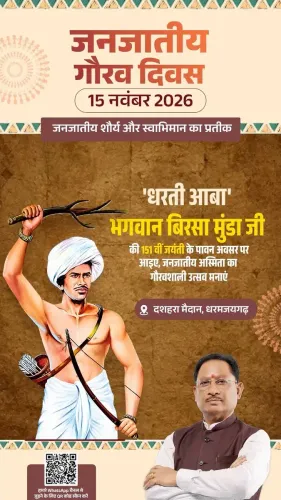
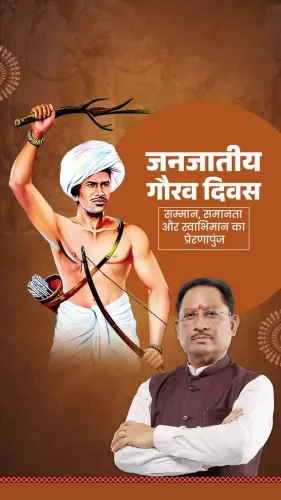
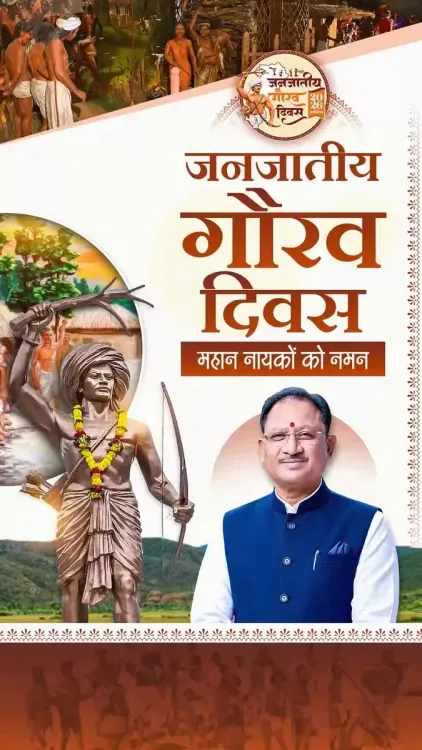
Chhattisgarh will host a state-level Janjatiya Gaurav Diwas on 15 November 2026 in Dharamjaigarh, Raigarh district, to mark the 151st birth anniversary of tribal freedom fighter Bhagwan Birsa Munda and honour the heritage of the state's Adivasi communities.
Key Takeaways
The Chief Minister's Office of Chhattisgarh announced a state-level Janjatiya Gaurav Diwas celebration for 15 November 2026 .
The event will be held in Dharamjaigarh, Raigarh district — a town in one of Chhattisgarh's most significant tribal belts.
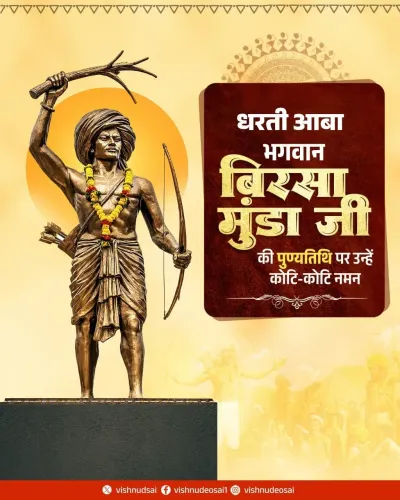
The day marks the birth anniversary of Bhagwan Birsa Munda , the tribal freedom fighter born on 15 November 1875 .
Janjatiya Gaurav Diwas was formally instituted by the Government of India in 2021 to honour Scheduled Tribe communities.
Chief Minister Vishnu Deo Sai , himself from a tribal community, has been in office since December 2023 .
Chhattisgarh has one of India's highest proportions of Scheduled Tribe population , giving the event substantial civic and cultural significance.
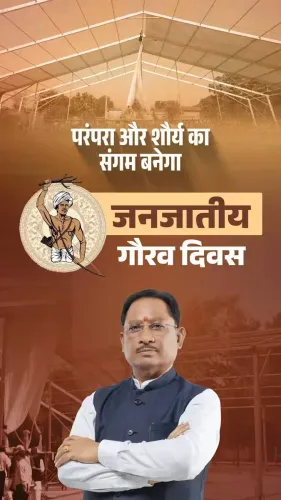
On the birth anniversary of Bhagwan Birsa Munda — the warrior-sage who shook British rule in the Chotanagpur plateau — Chhattisgarh prepares to stage its grandest salute to tribal heritage. The Chief Minister's Office of Chhattisgarh announced on Saturday, 14 November 2026 that a state-level Janjatiya Gaurav Diwas celebration will be held on 15 November in Dharamjaigarh, Raigarh district.
Birsa Munda's legacy, centre-stage in Raigarh
The CMO's post calls the occasion 'janajatiya asmita, gauravshali virasat aur shauryapurn itihas ke utsav' — a festival of tribal identity, glorious heritage, and valorous history. Birsa Munda, born on 15 November 1875, led the Ulgulan (Great Tumult) uprising against British land-grab policies in the Munda tribal belt. His legacy was formally elevated to national observance when the Government of India instituted Janjatiya Gaurav Diwas in 2021, designating his birth anniversary as a day to honour the contributions of Scheduled Tribe communities across the country.
The selection of Dharamjaigarh — a town embedded within one of Chhattisgarh's most significant tribal belts — signals the state's deliberate intent to bring the commemoration to indigenous heartland rather than limit it to the capital.
Chhattisgarh's tribal fabric and the weight of this event
Chhattisgarh holds one of the highest proportions of Scheduled Tribe population among Indian states, making events like this more than ceremonial — they are a direct address to a substantial share of the electorate and citizenry. Chief Minister Vishnu Deo Sai, who assumed office in December 2023, is himself from a tribal community, lending the observance a pointed personal resonance.
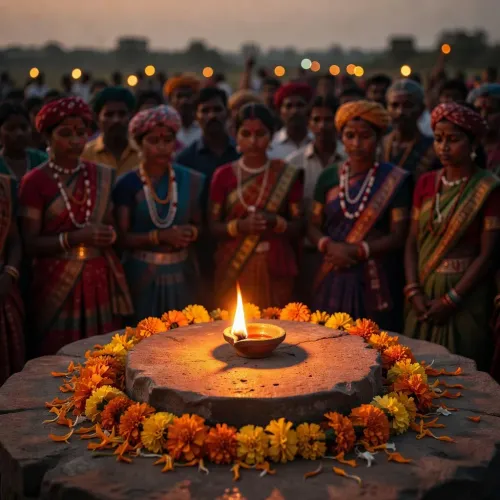
Successive state governments have used district-level cultural programmes to decentralise recognition of indigenous history. This year's choice of Dharamjaigarh fits that pattern while simultaneously anchoring the event closer to the tribal communities it honours. Cultural performances, tributes to jan nayaks (people's heroes), and participation from tribal groups across the state are typical features of such gatherings, though specific programme details for the 2026 edition remain to be confirmed.
A movement now embedded in India's official calendar
What began as a grassroots demand to recognise tribal contributions to India's freedom struggle has, since 2021, become an annual state occasion replicated across BJP-governed states and beyond. The CMO's post explicitly invites citizens to participate — 'aiye, is utsav mein sahbhagi banein' (come, become a part of this celebration) — framing the day as both a cultural homecoming and a civic moment.
The hashtags #JanjatiyaGauravDiwas, #TribalPride, and #Chhattisgarh accompanying the post suggest a coordinated digital push alongside the on-ground event in Dharamjaigarh.
When the sun rises over Raigarh on 15 November, Chhattisgarh will be watching — and participating in — a reminder that the story of India's freedom did not begin or end on the plains.
Point of View
With its large ST population and a Chief Minister from a tribal background, is a natural showcase for this agenda. Hosting the event in Dharamjaigarh rather than Raipur signals an intent to reach tribal constituencies directly, reinforcing the governing party's outreach beyond urban centres. How the day translates into concrete policy announcements — if at all — will determine whether the commemoration carries development weight or remains primarily symbolic.
NationPress
14 Nov 2026
Frequently Asked Questions
What is Janjatiya Gaurav Diwas and why is it celebrated on 15 November?
Janjatiya Gaurav Diwas is an annual national observance on 15 November, the birth anniversary of tribal freedom fighter Bhagwan Birsa Munda. The Government of India formally instituted it in 2021 to honour the contributions of Scheduled Tribe communities to India's history and freedom struggle.
Where is the 2026 Janjatiya Gaurav Diwas event in Chhattisgarh being held?
The state-level celebration will be held in Dharamjaigarh, a town in Raigarh district, Chhattisgarh, on 15 November 2026.
Who was Bhagwan Birsa Munda?
Bhagwan Birsa Munda was a tribal leader and freedom fighter born on 15 November 1875. He led the Ulgulan (Great Tumult) uprising against British land-grab policies in the Chotanagpur plateau region and is revered as a folk hero across tribal communities in India.
Who is the Chief Minister of Chhattisgarh in 2026?
Vishnu Deo Sai, a BJP leader who assumed office in December 2023, is the Chief Minister of Chhattisgarh. He is himself from a tribal community.
Why does Chhattisgarh play a prominent role in Janjatiya Gaurav Diwas?
Chhattisgarh has one of the highest proportions of Scheduled Tribe population among Indian states, making it a natural focal point for national tribal heritage observances. The state has consistently held public events celebrating indigenous culture and historical figures.