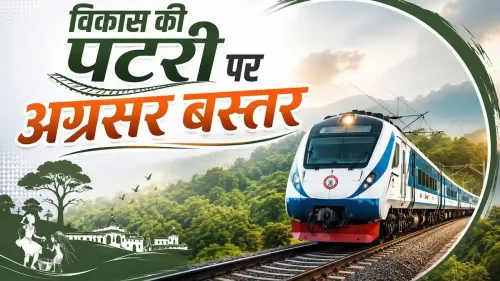
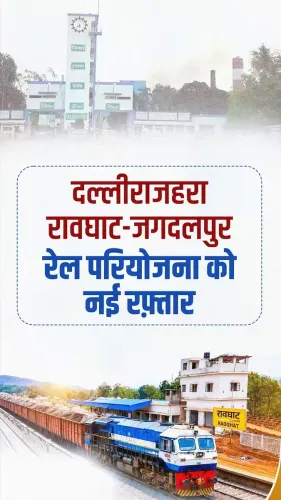
CM Sai's CMO backs Tadoki–Rawghat rail line for Bastar
Synopsis
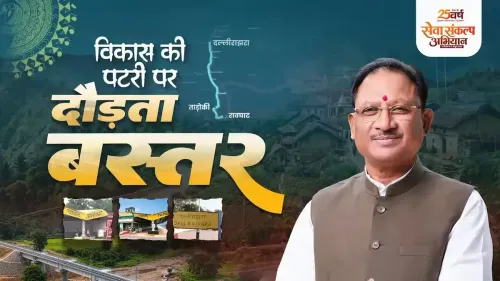
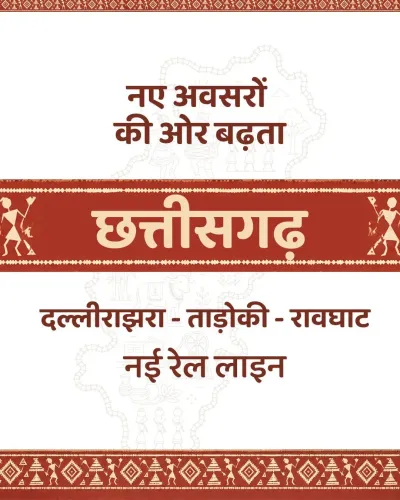
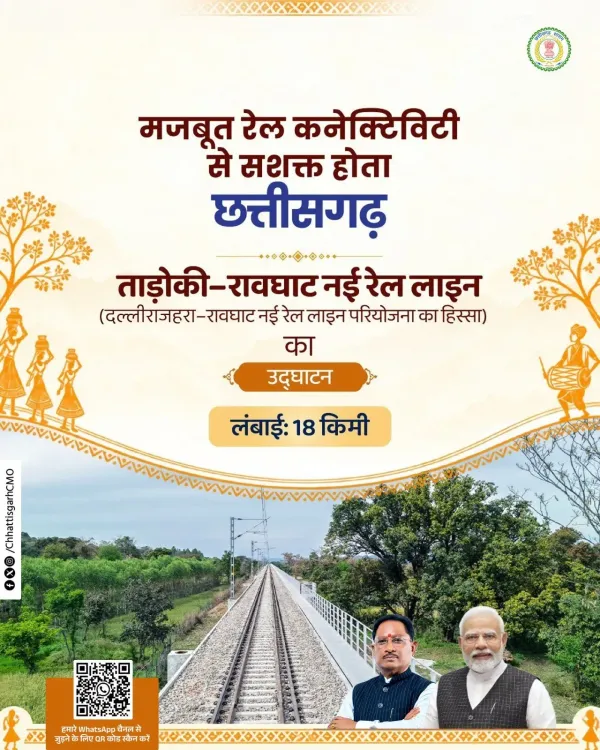
The Chief Minister's Office of Chhattisgarh has highlighted the Tadoki–Rawghat new rail line as a connectivity breakthrough for Bastar's tribal communities, promising easier movement, regional development, and new trade and employment opportunities in the state's historically underserved south.
Key Takeaways
The Chhattisgarh CMO publicly endorsed the Tadoki–Rawghat new rail line on 20 October 2026 , tagging the Ministry of Railways directly.
The project aims to extend rail connectivity into the Bastar region , home to a large tribal population with historically limited infrastructure access.
CM Vishnu Deo Sai has prioritised infrastructure in tribal districts since taking office in December 2023 .
Indian Railways has been pursuing new rail corridors in Chhattisgarh's southern tribal belt since the 2010s as part of a national connectivity push.
Anticipated benefits include easier movement for tribal communities, lower logistics costs for traders, and new employment opportunities in the region.
Construction timelines and funding details for the Tadoki–Rawghat line remain unconfirmed; the next Union Rail Budget is a key milestone to watch.
A new rail corridor is being positioned as the spine of Bastar's economic future. The Chief Minister's Office of Chhattisgarh on Tuesday, 20 October 2026 spotlighted the Tadoki–Rawghat new rail line, calling it a transformative step that will extend rail connectivity deep into the state's tribal south and unlock trade, employment, and easier movement for communities that have long lived at the edge of India's infrastructure map.
What the Tadoki–Rawghat corridor promises Bastar
The CMO's post — tagged directly to @RailMinIndia — frames the project in unambiguous terms: 'जनजातीय अंचलों तक आवागमन सुगम होगा' ('movement to tribal areas will become easier') and 'regional development, trade and employment opportunities will gain momentum.' For Bastar, a sprawling southern division of Chhattisgarh with a predominantly tribal population, those words carry real weight. Historically, the region's dense forests, difficult terrain, and decades of insurgency-related security challenges kept large-scale rail infrastructure at arm's length.
Chief Minister Vishnu Deo Sai, who has led the state since December 2023, has made infrastructure expansion in tribal districts a visible priority. Tagging the Railway Ministry publicly signals the state government is pushing for central partnership and accountability on the project — a common but pointed move in Centre-state infrastructure negotiations.
Chhattisgarh's longer rail push into its tribal south
The Tadoki–Rawghat line does not emerge from nowhere. Indian Railways has been pursuing new line projects in Chhattisgarh's southern tribal districts since the 2010s, part of a broader national focus on integrating central and eastern India into the rail grid. State governments across the political spectrum have consistently partnered with the Ministry of Railways on these corridors, treating rail access as both an economic lever and a long-term answer to the isolation that insurgency has exploited.
Rail projects in this belt are frequently framed as tools of 'inclusive growth' — shorthand for the idea that connectivity itself disrupts the conditions that allow conflict and economic exclusion to persist. The Tadoki–Rawghat alignment, if completed, would add a new artery to that ambition.
What traders, tribal communities, and planners are watching
For local traders and businesses in Bastar, a rail link means lower logistics costs and access to wider markets. For tribal communities, it means shorter journeys to hospitals, markets, and government services. For planners, it means that minerals, agricultural produce, and forest goods can move out of the region more efficiently — a double-edged outcome that development economists and tribal-rights advocates will scrutinise closely.
The critical variables remain unresolved: construction timelines, land acquisition progress, and project funding have not been officially confirmed. The next Union Rail Budget will be a key moment to watch for budgetary allocations or formal project status announcements tied to the Tadoki–Rawghat corridor.
A railway line through Bastar's forests is both an engineering challenge and a political statement. The question is how quickly the tracks follow the announcement.
Point of View
Making them politically potent for both the state and the Centre. The post fits a wider pattern of BJP-governed states using infrastructure announcements in tribal districts to consolidate support among Adivasi communities, a demographic that both national parties are actively courting. Whether the project clears land acquisition and funding hurdles will determine whether this remains a political signal or becomes genuine transformation.
NationPress
21 Oct 2026
Frequently Asked Questions
What is the Tadoki–Rawghat rail line?
The Tadoki–Rawghat rail line is a proposed new railway corridor in Chhattisgarh designed to extend train connectivity into the Bastar region, improving access for tribal communities and enabling trade and economic development in the state's southern districts.
Why is rail connectivity important for Bastar?
Bastar has a large tribal population and has historically suffered from limited infrastructure due to difficult terrain and insurgency-related security challenges. A rail link would reduce travel times, lower logistics costs, and connect communities to markets, hospitals, and government services.
Who is Vishnu Deo Sai?
Vishnu Deo Sai is the Chief Minister of Chhattisgarh, in office since December 2023. He has made infrastructure expansion in the state's tribal districts a key priority of his administration.
When will the Tadoki–Rawghat rail line be completed?
Specific construction timelines and completion dates for the Tadoki–Rawghat line have not been officially confirmed. Progress on land acquisition and budgetary allocation in the next Union Rail Budget will be key indicators of the project's pace.
How does the Chhattisgarh government plan to develop Bastar?
The Chhattisgarh government has been partnering with the Ministry of Railways and other central agencies to improve rail and road infrastructure in Bastar. These efforts are framed as tools for economic integration, tribal development, and long-term regional stability.