CM Sai's Govt Pledges Modern Education via AI, Drones
Synopsis
The Chief Minister's Office of Chhattisgarh on 16 July 2026 reaffirmed the Sushasan Sarkar's resolve to provide children with modern education, spotlighting the SciencePathshala initiative that integrates AI and drone modules into government school curricula under CM Vishnu Deo Sai.
Key Takeaways
The Chief Minister's Office of Chhattisgarh posted on 16 July 2026 reaffirming commitment to modern, technology-driven school education.
The SciencePathshala programme is the state's flagship initiative integrating AI and drone training into government school curricula.
Chief Minister Vishnu Deo Sai , in office since December 2023 , has positioned technology-enabled learning as central to the Sushasan Sarkar agenda.
The initiative aligns with the National Education Policy 2020 , which mandates AI, coding, and drone integration from middle school onward.
Chhattisgarh's approach mirrors similar experiential STEM lab programmes launched in Madhya Pradesh and Telangana after 2022 .
District-level rollout timelines and Chhattisgarh Board of Secondary Education curriculum notifications remain the key milestones to watch.
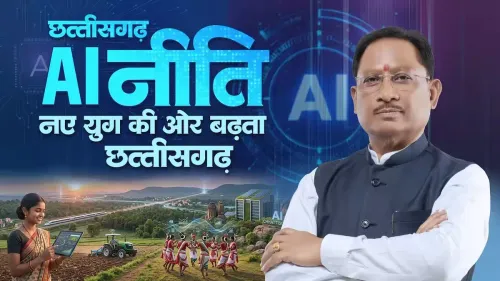
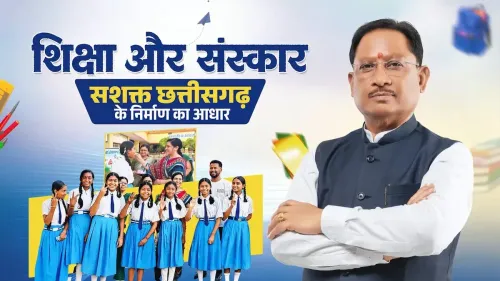
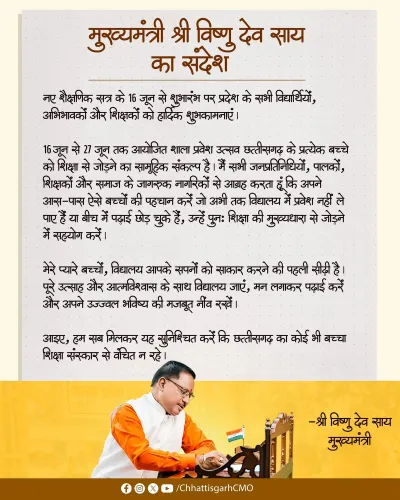
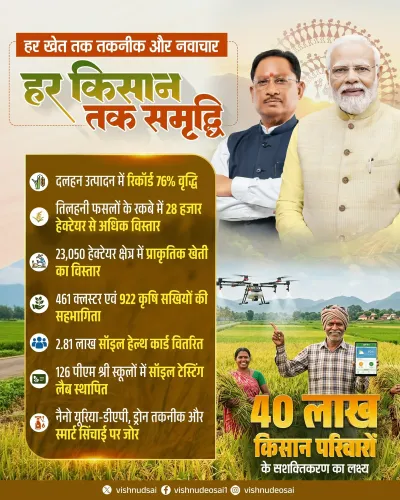
The Chief Minister's Office of Chhattisgarh reaffirmed on Thursday, 16 July 2026 that the state government remains committed to equipping children with modern education and a better future, highlighting technology-driven initiatives including artificial intelligence, drones, and the SciencePathshala programme under Chief Minister Vishnu Deo Sai.
Context
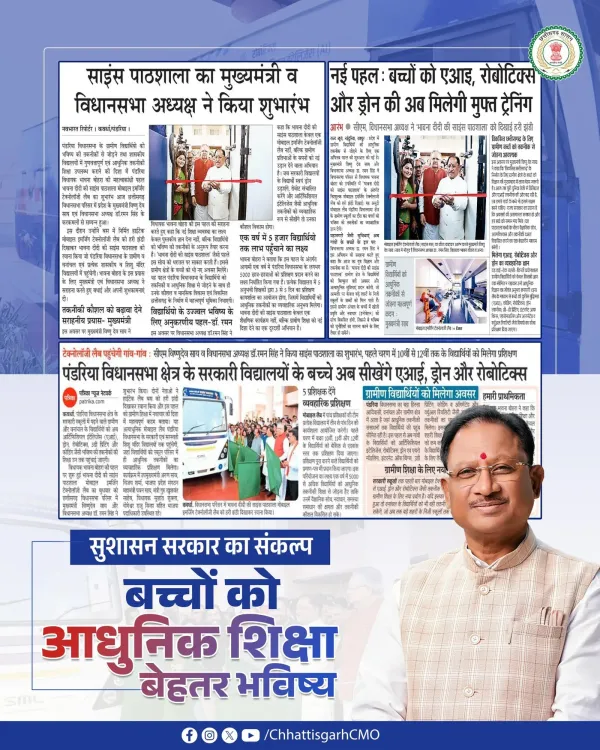
The post, shared under the Sushasan Sarkar (Good Governance Government) banner, states: 'The Sushasan Sarkar is committed to giving children modern education and a better future.' The hashtags #AI, #Drone, and #SciencePathshala signal the specific pillars of this push, alongside #Vishnudeosai, identifying the initiative directly with the Chief Minister's governance agenda.
Vishnu Deo Sai has led Chhattisgarh since December 2023, when the Bharatiya Janata Party returned to power in the state. His administration has consistently framed technology-enabled schooling as a cornerstone of the 'good governance' promise made to voters.
Policy Backdrop
The SciencePathshala initiative is a Chhattisgarh state programme designed to bring hands-on science learning — incorporating AI tools and drone modules — directly into school settings. It draws its policy mandate from the National Education Policy 2020, which directs all states to integrate coding, artificial intelligence, and vocational technologies including drones into curricula from the middle school stage onward.
The NEP 2020 framework has accelerated STEM and emerging-technology programmes across Indian government schools, with states competing to demonstrate measurable improvements in learning outcomes and future employability. Chhattisgarh's emphasis on AI and drone-based experiential learning aligns with parallel efforts in states such as Madhya Pradesh and Telangana, which introduced similar experiential labs after 2022.
Stakeholders and Impact
The primary beneficiaries of the SciencePathshala programme are school students across Chhattisgarh, particularly those in government schools in rural and semi-urban districts where access to advanced STEM resources has historically been limited. Teachers form the second critical stakeholder group, as successful integration of AI and drone modules requires training and sustained pedagogical support.
Broader employability gains are the long-term goal: exposure to drone operation and AI concepts at the school level is intended to improve the pipeline of technically skilled youth entering the workforce from a state that has traditionally relied on agriculture and mining as economic anchors.
What's Next
Observers and education policy watchers will be tracking state budget allocations dedicated to the SciencePathshala rollout, as well as any district-wise expansion timelines announced by the government. Curriculum notifications from the Chhattisgarh Board of Secondary Education formalising AI and drone modules will be a key indicator of how deeply the programme is being institutionalised beyond pilot phases.
As Indian states prepare for the next cycle of school-level assessments under the NEP 2020 framework, Chhattisgarh's ability to scale experiential science learning across its diverse geography will be a closely watched benchmark for technology-in-education policy in central India.
Point of View
Tying the 'Sushasan Sarkar' identity directly to future-ready education at a time when states are competing on NEP 2020 implementation metrics. By foregrounding AI and drones — technologies with high visibility among aspirational parents and young voters — the Sai government is signalling a break from the state's historically extractive-economy image. The move fits a broader BJP pattern of using technology-in-education announcements to consolidate middle-class and rural-aspirational support ahead of local and state electoral cycles. Whether the SciencePathshala programme achieves meaningful scale will depend on teacher training pipelines and budget follow-through, both of which remain to be publicly detailed.
NationPress
16 Jul 2026
Frequently Asked Questions
What is SciencePathshala in Chhattisgarh?
SciencePathshala is a Chhattisgarh state government initiative that brings hands-on science education — including artificial intelligence tools and drone training modules — into government school settings, aligned with the National Education Policy 2020.
Who is the Chief Minister of Chhattisgarh in 2026?
Vishnu Deo Sai is the Chief Minister of Chhattisgarh, having assumed office in December 2023 after the BJP's victory in the state assembly elections.
What is Sushasan Sarkar in Chhattisgarh?
'Sushasan Sarkar,' meaning 'Good Governance Government,' is the branding adopted by the Vishnu Deo Sai-led BJP administration in Chhattisgarh to describe its governance philosophy and public welfare commitments.
How is Chhattisgarh integrating AI in schools?
Through the SciencePathshala programme, Chhattisgarh is introducing AI and drone modules into government school curricula, following the NEP 2020 mandate for states to embed emerging technologies from the middle school level onward.
Which other Indian states have similar school drone and AI programmes?
States including Madhya Pradesh and Telangana have introduced experiential STEM and technology labs in government schools since 2022 , making Chhattisgarh part of a broader national trend accelerated by NEP 2020.