CM Samrat Choudhary at NDRF 12th Battalion Launch in Arunachal

Synopsis
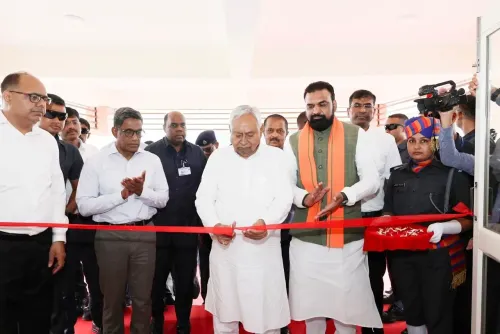
Bihar Chief Minister Samrat Choudhary joined Union Home Minister Amit Shah at the inauguration of the NDRF 12th Battalion premises in Arunachal Pradesh on 22 November 2026, marking a significant expansion of India's permanent disaster response infrastructure in the Northeast.
Key Takeaways
Bihar CM Samrat Choudhary attended the inauguration of the NDRF 12th Battalion campus in Arunachal Pradesh on 22 November 2026 .
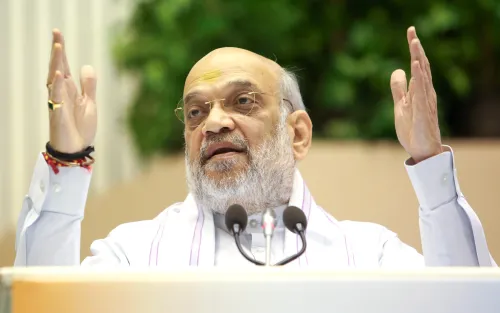
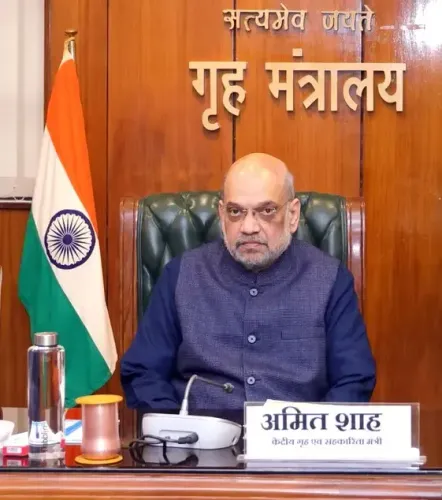
Union Home Minister Amit Shah presided over the ceremony, reflecting the Centre's direct focus on northeastern disaster infrastructure.
The NDRF was established under the Disaster Management Act, 2005 and formally raised in 2006 , now comprising over a dozen battalions.
Arunachal Pradesh faces high seismic activity, flash floods, and landslides, making a locally-stationed NDRF battalion a critical operational upgrade.
The expansion fits the Home Ministry's broader shift from ad-hoc disaster deployments to permanent infrastructure in border and high-risk states.
India's disaster response spine just got stronger in its most seismically volatile corner. Bihar Chief Minister Samrat Choudhary joined the inauguration ceremony of the National Disaster Response Force's 12th Battalion premises in Arunachal Pradesh on Sunday, 22 November 2026, an event presided over by Union Home and Cooperation Minister Amit Shah.
Posting live from the ceremony, CM Choudhary shared that the Honourable Union Minister of Home Affairs and Cooperation, Shri Amit Shah, was present at the inauguration of the NDRF 12th Battalion campus in Arunachal Pradesh — signalling the Centre's attention to disaster infrastructure in the strategically critical Northeast.Why Arunachal, Why Now
Arunachal Pradesh sits in one of the world's most disaster-prone geographies — high seismic activity, flash floods, landslides, and a long international border with China combine to make it a priority zone for the Ministry of Home Affairs. For years, northeastern states relied on battalions stationed far away, stretching response times during emergencies. A permanent, locally-based NDRF unit changes that calculus fundamentally. The NDRF, established under the Disaster Management Act, 2005 and formally raised in 2006, is India's frontline specialised agency for disaster response and relief, operating directly under the Ministry of Home Affairs. Its expansion from a handful of battalions at inception to over a dozen today reflects successive governments' recognition that disaster risk cannot be managed from a distance.The Northeast's Expanding Disaster Shield
The inauguration of the 12th Battalion premises fits a clear pattern: the Home Ministry has steadily moved from ad-hoc deployments toward permanent infrastructure in border and high-risk states. For a region as geographically complex as the Northeast — where terrain can cut off access within hours of a disaster — having trained NDRF personnel embedded locally is a strategic and humanitarian upgrade simultaneously. The presence of Amit Shah, who holds direct oversight of both internal security and disaster management portfolios, underlines the political weight the Centre attaches to this expansion. NDRF personnel stationed across northeastern states form both a humanitarian safety net and an institutional signal of the Centre's long-term commitment to the region's resilience. With the Northeast's disaster profile showing no signs of easing and the Union Budget expected to draw scrutiny on NDRF's sanctioned strength, today's inauguration is less a ribbon-cutting and more a marker of direction — permanent capacity, closer to the crisis.Point of View
Rather than depend on reactive deployments from distant postings. For the BJP-led Centre, high-visibility events anchored by Amit Shah in the Northeast also serve a dual purpose — institutional reinforcement and political signalling in a region that has seen intensive outreach. Watch the next Union Budget for signals on whether NDRF's sanctioned battalion strength is set to increase further, which would confirm this as a sustained policy trajectory rather than a one-off addition.
NationPress
22 Nov 2026
Frequently Asked Questions
What is the NDRF 12th Battalion and where is it located?
The NDRF 12th Battalion is a unit of the National Disaster Response Force inaugurated in Arunachal Pradesh. It provides locally-stationed, specialised disaster response capacity for one of India's most seismically active and flood-prone regions.
Why was the NDRF battalion set up in Arunachal Pradesh?
Arunachal Pradesh is highly vulnerable to earthquakes, flash floods, and landslides. A permanent NDRF unit reduces response times significantly compared to deploying personnel from distant states during an emergency.
Who inaugurated the NDRF 12th Battalion premises?
Union Home and Cooperation Minister Amit Shah presided over the inauguration ceremony. Bihar Chief Minister Samrat Choudhary was among the dignitaries present at the event.
How many NDRF battalions does India have?
India now has over a dozen NDRF battalions. The force was formally raised in 2006 under the Disaster Management Act, 2005, and has expanded steadily, with increasing focus on northeastern and border states.
What is Amit Shah's role in the NDRF?
As Union Minister of Home Affairs, Amit Shah has direct oversight of the NDRF, which functions under the Ministry of Home Affairs and is India's primary agency for specialised disaster response and relief operations.