CM Samrat Choudhary Cites President Murmu on India's Health Gains
Synopsis
Bihar CM Samrat Choudhary shared President Draupadi Murmu's assessment that India's decade of health investment is delivering results, with Ayushman Arogya Mandir carrying primary care to villages and high-end services now reaching Tier 2 and Tier 3 cities.
Key Takeaways
Bihar Chief Minister Samrat Choudhary posted on 20 November 2026 sharing remarks attributed to President Draupadi Murmu on India's healthcare expansion.
President Murmu credited the government's decade-long effort for visible far-reaching results across primary to tertiary healthcare.
Ayushman Arogya Mandir , part of the Ayushman Bharat programme launched in 2018 , is cited as the vehicle delivering primary health services to rural villages.
High-level healthcare has expanded beyond metros to Tier 2 and Tier 3 cities , according to the quoted presidential remarks.
President Draupadi Murmu is India's first woman from a tribal community to hold the office, having assumed the presidency in July 2022 .
Bihar's own Ayushman Arogya Mandir rollout will be a key indicator of whether the national decentralisation model is delivering at state level.
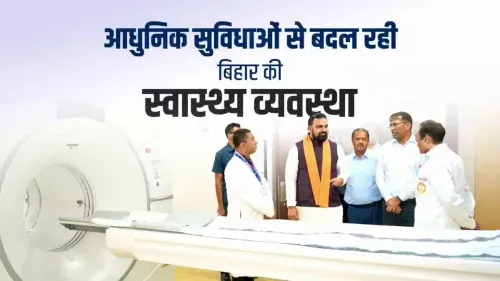
A decade of sustained federal investment in public health is now showing results that reach far beyond city hospitals — and Bihar Chief Minister Samrat Choudhary wants that story told. On Friday, 20 November 2026, Choudhary shared on X a pointed observation attributed to President Draupadi Murmu on India's expanding healthcare footprint, from village-level primary care all the way up to tertiary services now accessible in smaller towns.
What President Murmu Said — and Why It Matters
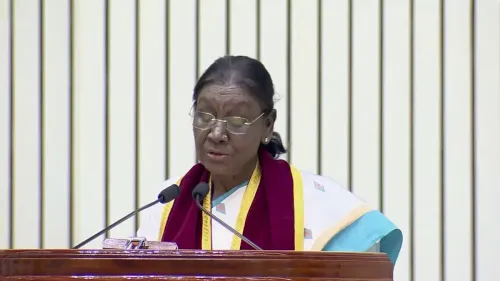
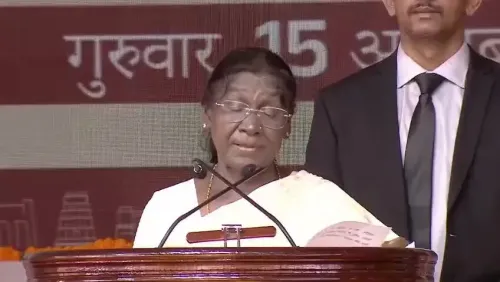
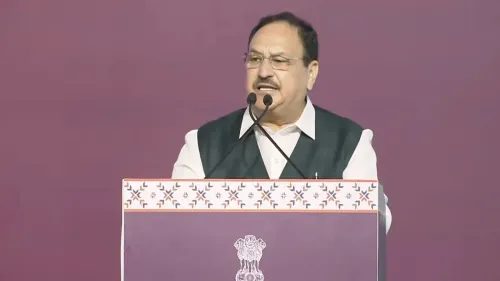
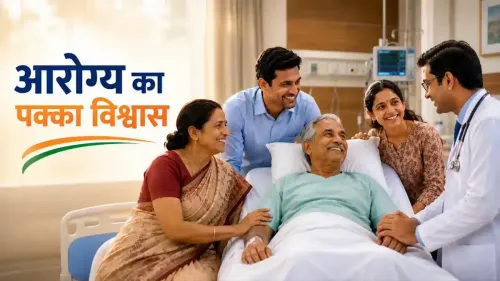
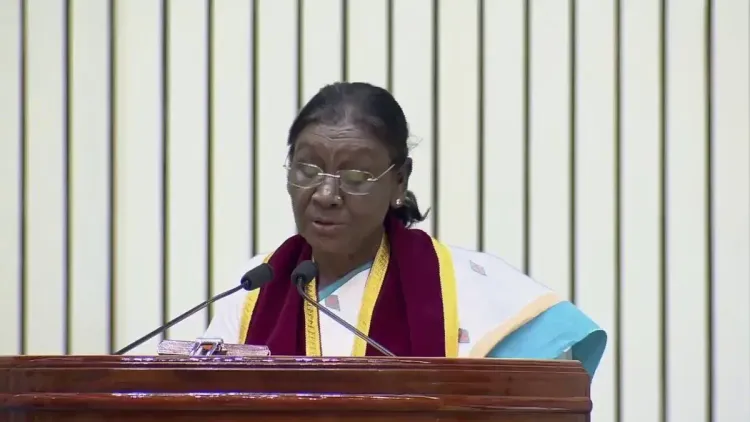
The quoted remarks, attributed to 'महामहिम राष्ट्रपति श्रीमती द्रौपदी मुर्मु जी' ('Her Excellency President Smt. Draupadi Murmu'), state that 'the far-reaching results of efforts made by the Government of India in the health sector over the last decade are now visible.' She credited the expansion of health facilities across the primary-to-tertiary spectrum, noting that 'Ayushman Arogya Mandir' is delivering primary health services to villages, and that high-level care is no longer confined to metros but has extended to Tier 2 and Tier 3 cities.
President Murmu has been a consistent voice for welfare access in rural and tribal India since taking office in July 2022, making her the first woman from a tribal community to hold the country's highest constitutional post. Her framing of health infrastructure as a measure of democratic reach carries particular symbolic weight.
Ayushman Arogya Mandir: The Village-Level Engine
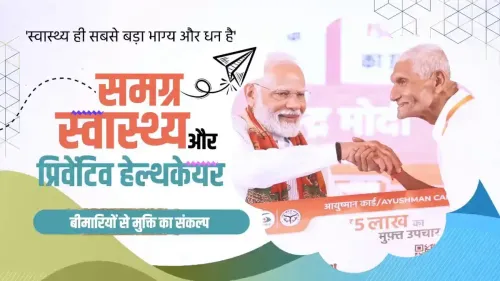
Ayushman Arogya Mandir — the rebranded Health and Wellness Centres under the Ayushman Bharat programme — form the primary-care backbone of this push. Launched in 2018, Ayushman Bharat was designed around two pillars: upgrading sub-centres and primary health centres into comprehensive wellness hubs, and providing secondary and tertiary insurance coverage through PM-JAY (Pradhan Mantri Jan Arogya Yojana). The Arogya Mandir network is specifically meant to push screenings, maternal care, mental health support, and non-communicable disease management into villages that previously had little beyond a bare dispensary.
The logic is deliberate decentralisation: if primary care catches illness early at the village level, the burden on district hospitals and metro super-specialists drops. It is a system-design bet that takes years to show results — which is precisely the 'decade-long' arc the presidential quote underlines.
Bihar's Stake in the National Health Narrative
Bihar has historically ranked among states with the most acute gaps in health infrastructure — high infant mortality, low institutional delivery rates, and a shortage of specialists outside Patna. For Chief Minister Choudhary, amplifying a presidential endorsement of the Centre's health record is both a political signal and a programmatic one: it frames the BJP-led government's welfare agenda as producing measurable, ground-level change in precisely the states that need it most.
The post arrives as the Union Health Ministry and state governments continue to expand Arogya Mandir coverage, with Bihar's own rollout metrics for the network being a live indicator of whether the decentralisation promise is converting into clinical reality. The next Union Health Budget and parliamentary health committee deliberations will be watched for how firmly the Centre doubles down on this architecture.
Point of View
CM Choudhary is doing double political work: aligning Bihar's BJP government with a welfare narrative that plays well in a state with historically weak health infrastructure, and using the constitutional authority of the President's voice to insulate the claims from partisan challenge. The Ayushman Bharat architecture — coupling village-level wellness centres with insurance-backed tertiary cover — represents one of the more structurally ambitious attempts at health decentralisation in independent India, and its results, if they hold under scrutiny, would mark a genuine policy inflection. The harder question, which this post sidesteps, is whether Bihar's own on-ground numbers match the presidential optimism. That gap between national narrative and state-level delivery will define how durable this messaging actually is.
NationPress
20 Nov 2026
Frequently Asked Questions
What is Ayushman Arogya Mandir?
Ayushman Arogya Mandir is the network of Health and Wellness Centres under the Ayushman Bharat programme, launched in 2018, designed to deliver comprehensive primary healthcare — including screenings, maternal care, and non-communicable disease management — directly in villages and small towns.
What did President Draupadi Murmu say about India's healthcare?
President Murmu stated that the far-reaching results of the Indian government's decade of health-sector efforts are now visible, with Ayushman Arogya Mandir carrying primary services to villages and high-level care now extending to Tier 2 and Tier 3 cities beyond metros.
Who is Bihar Chief Minister Samrat Choudhary?
Samrat Choudhary is the Chief Minister of Bihar and a senior BJP leader who has been vocal about highlighting central government welfare schemes, including health programmes, in the context of Bihar's development.
What is Ayushman Bharat and when was it launched?
Ayushman Bharat was launched in 2018 as a two-pronged national health programme — upgrading primary health centres into Ayushman Arogya Mandirs and providing secondary and tertiary insurance coverage through PM-JAY (Pradhan Mantri Jan Arogya Yojana).
Why is President Draupadi Murmu significant for tribal and rural India?
President Draupadi Murmu, who assumed office in July 2022, is the first woman from a tribal community to serve as President of India, giving her voice on rural and welfare issues particular constitutional and symbolic weight.