CM Samrat Choudhary: FTAs Open Global Doors for Bihar
Synopsis
Bihar Chief Minister Samrat Choudhary has highlighted India's recent free trade agreements — including pacts with the UAE and Australia — as a gateway for Bihar's makhana producers, artisans, farmers, and MSMEs to access global markets, linking the state's growth to the Viksit Bharat vision.
Key Takeaways
Bihar CM Samrat Choudhary posted on 9 August 2026 connecting India's FTAs to direct economic benefits for Bihar's producers.
Key beneficiaries identified: Bihar's farmers, makhana growers, handicraft artisans, and MSME sector .
India signed landmark trade agreements with the UAE and Australia in 2022 , reducing tariffs on Indian goods including agricultural produce.
Choudhary argued that global market access would drive employment, investment, and export growth in Bihar.
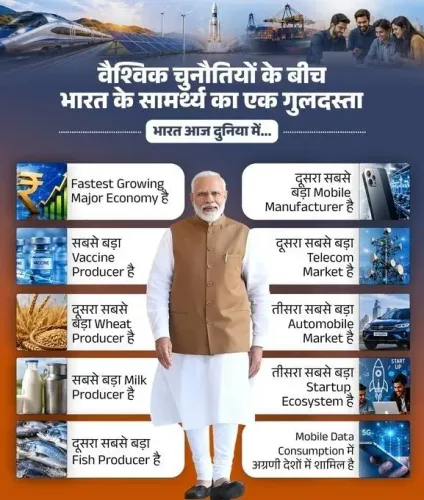
Bihar was framed as a 'strong partner' in the central government's Viksit Bharat 2047 development goal.
State-level export facilitation — logistics, certification, GI-tag promotion — remains the critical next step for translating policy into producer-level gains.
Bihar's makhana farmers and handicraft artisans may soon find their products on shelves from Dubai to Sydney — and Bihar Chief Minister Samrat Choudhary wants the state to claim that opportunity now. On Sunday, 9 August 2026, Choudhary posted on X, framing India's recent free trade agreements as a direct economic lifeline for the state's producers and MSME sector.
Writing in Hindi, Choudhary declared: 'The path to world markets is becoming easier for Bihar's products and entrepreneurs.' He credited the agreements signed under Prime Minister Narendra Modi's leadership, arguing they would deliver concrete gains to Bihar's farmers, artisans, small entrepreneurs, and micro, small and medium enterprises — seedha labh (direct benefit), as he put it.
From Makhana Fields to Global Markets
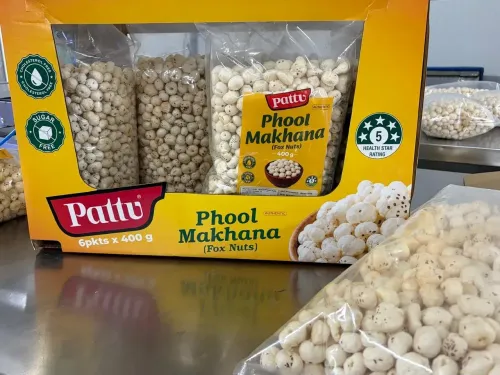
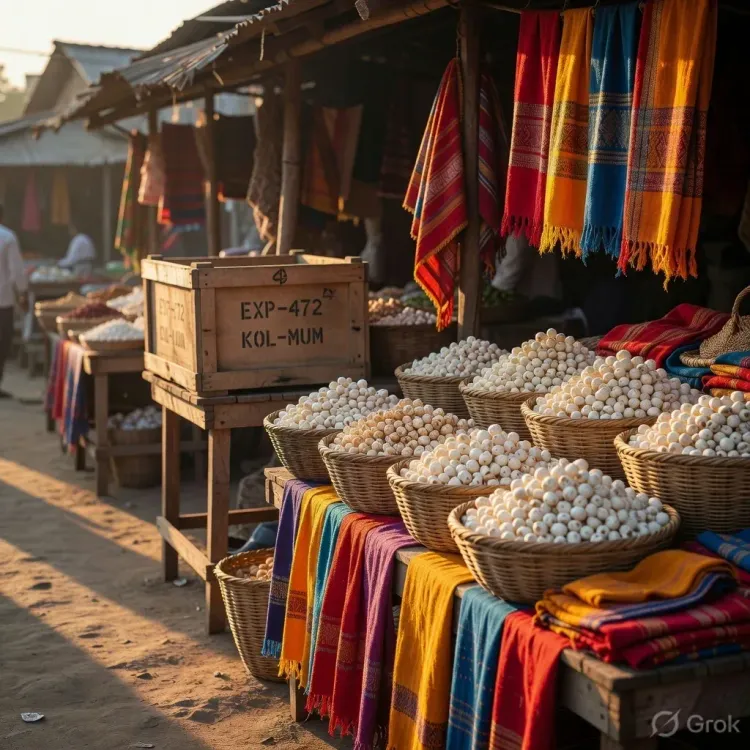
Bihar is India's dominant producer of makhana (fox nuts), a crop that has seen rising global demand as a health snack. The state also has a significant handicrafts tradition — Madhubani paintings, Sikki grass products, Bhagalpuri silk — that has historically struggled to break into premium export channels. Choudhary's post singles out agricultural produce, makhana, handicrafts, and local goods as the specific beneficiaries of expanded market access.
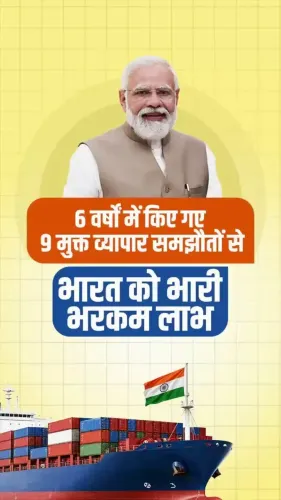
The policy architecture he is pointing to is real. India signed the India-UAE Comprehensive Economic Partnership Agreement in 2022 and the India-Australia Economic Cooperation and Trade Agreement, also in 2022, both of which reduced or eliminated tariffs on a range of Indian goods. Together, they opened two high-value markets to Indian exporters, including those in the agricultural and artisanal sectors.
The MSME Angle: Jobs, Investment, Exports
Choudhary tied market access directly to the employment and investment agenda. 'When Bihar's talent and hard work get the opportunity of a global market,' he wrote, 'employment, investment, and exports will also gain new momentum.' The MSME sector is the connective tissue here — it accounts for the bulk of Bihar's non-farm employment and is the segment most likely to scale if export facilitation improves.
India's broader trade strategy has been to use FTAs to integrate state-level producers into global supply chains, raising the country's share of world merchandise trade. Bihar, which has lagged behind more industrialised states in export volumes, stands to benefit disproportionately if state-level facilitation — warehousing, logistics, quality certification — catches up with the policy openings the central government has created.
Bihar as a 'Viksit Bharat' Partner
Choudhary closed with an explicitly political framing, positioning Bihar as a 'strong partner' in the Viksit Bharat (Developed India) vision — the Modi government's headline goal of making India a developed nation by 2047. The rhetorical move is deliberate: it ties Bihar's economic trajectory to the national narrative, and it signals that the state's BJP leadership sees trade policy as a campaign-worthy achievement, not just a technocratic matter.
The next test is execution. Export facilitation measures at the state level — dedicated export hubs, GI-tag promotion for makhana, artisan cluster development — will determine whether the FTA openings translate into actual revenue for Bihar's producers. The agreements have unlocked the door; Bihar still has to walk through it.
Point of View
Artisans, and small business owners. It also positions the state BJP leadership as active architects of Bihar's economic rise, not mere beneficiaries of Delhi's policy. The Viksit Bharat hook is significant: it ties Bihar's fortunes to a 2047 national narrative that the BJP intends to campaign on for years. The real political test, however, will come when — and if — makhana exporters and MSME owners actually see higher earnings; until then, the post is a promissory note, not a receipt.
NationPress
9 Aug 2026
Frequently Asked Questions
How will India's free trade agreements benefit Bihar?
India's FTAs with countries like the UAE and Australia have reduced tariffs on Indian goods, giving Bihar's agricultural products — including makhana — and handicrafts preferential access to high-value foreign markets, which could boost export earnings and rural incomes.
What is makhana and why is it important for Bihar?
Makhana, or fox nuts, is a water-crop of which Bihar is India's dominant producer. Global demand for makhana as a health snack has grown significantly, making it one of Bihar's most promising export commodities.
Which free trade agreements has India signed recently?
India signed the Comprehensive Economic Partnership Agreement with the UAE and the Economic Cooperation and Trade Agreement with Australia, both in 2022. These are among the most significant FTAs India has concluded in recent years.
What is Viksit Bharat and how does Bihar fit into it?
Viksit Bharat — meaning 'Developed India' — is the Modi government's goal of making India a fully developed nation by 2047. Bihar CM Samrat Choudhary has positioned Bihar's growing export capacity as a direct contribution to this national vision.
What does Bihar's MSME sector export?
Bihar's MSME sector covers a range of goods including agricultural products, processed foods, Madhubani paintings, Bhagalpuri silk, and Sikki grass handicrafts. These sectors are expected to gain from reduced tariffs and improved market access under India's FTAs.