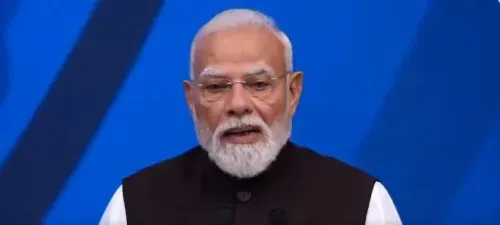
CM Yogi Flags 2.5x Rise in MBBS Seats Under Modi

Synopsis
The UP Chief Minister's Office, citing CM Yogi Adityanath, says MBBS seats have surged from 51,348 before 2014 to 1,28,926 today, and PG seats from 31,185 to 85,822 — crediting PM Modi's push to expand India's medical education infrastructure.
Key Takeaways
MBBS seats in India have grown from 51,348 (pre-2014) to 1,28,926 — a rise of over 150 percent.
Postgraduate (MD/MS) seats have nearly tripled, from 31,185 to 85,822 .
The number of medical colleges in India has grown from 387 to over 700 since 2014.
New AIIMS campuses and expanded phases of the Pradhan Mantri Swasthya Suraksha Yojana have driven much of the infrastructure growth.
The Medical Council of India was replaced by the National Medical Commission to ease regulatory approvals.
CM Yogi Adityanath credited PM Narendra Modi with the expansion in a statement posted by the UP CMO on 9 August 2026.
India's medical education landscape has been reshaped — and the numbers are stark. Quoting figures that span more than a decade of central policy, the Chief Minister's Office of Uttar Pradesh on Sunday, 9 August 2026, shared a statement from Chief Minister Yogi Adityanath crediting Prime Minister Narendra Modi with a sweeping expansion in medical seats across the country.
The post states that before 2014, India had a total of 51,348 MBBS seats. Today, that figure stands at 1,28,926 — a jump of more than 150 percent. Postgraduate seats tell a similar story: MD and MS admissions have climbed from 31,185 before 2014 to 85,822 — nearly tripling the opportunity for specialist training. 'The efforts of the Prime Minister have expanded opportunities in medical education for the youth,' the statement reads, in the Chief Minister's own words.
From 387 Colleges to Over 700 — The Infrastructure Behind the Numbers
The seat surge did not happen in a vacuum. Since 2014, the central government has more than doubled the number of medical colleges in India — from 387 to over 700 — through a combination of new government institutions, expanded private approvals, and successive phases of the Pradhan Mantri Swasthya Suraksha Yojana, which funded new AIIMS campuses across underserved states. The replacement of the Medical Council of India with the National Medical Commission also streamlined regulatory approvals, removing a long-standing bottleneck that had kept seat counts artificially constrained for years.The Specialist Shortage India Is Racing to Fix
The postgraduate expansion carries particular urgency. India's doctor-patient ratio has long lagged global benchmarks, but the specialist gap — in disciplines like cardiology, oncology, and neurology — has been the sharper crisis, concentrated in smaller cities and rural districts. By nearly tripling PG seats, the policy aims to push trained specialists beyond the metros. The UP CMO's amplification of this central data point signals that state governments are now weaving this national narrative into their own political communication — framing healthcare access as a deliverable, not a distant promise. The question the numbers leave open: whether seat expansion has kept pace with the quality of infrastructure and faculty to fill them — and whether the graduates reaching smaller towns are choosing to stay.Point of View
Multi-institutional expansion, which is standard political messaging but worth reading critically. The deeper policy question the post sidesteps is quality and distribution: seat numbers are an input metric, not an outcome — India's specialist-to-population ratio and rural retention rates are the harder tests of whether this expansion is translating into better healthcare on the ground.
NationPress
9 Aug 2026
Frequently Asked Questions
How many MBBS seats are there in India in 2026?
According to the Chief Minister's Office of Uttar Pradesh, India now has 1,28,926 MBBS seats, up from 51,348 before 2014.
How many PG medical seats (MD/MS) are there in India now?
The UP CMO states that 85,822 postgraduate (MD and MS) seats are now available in India, compared to 31,185 before 2014.
How many medical colleges are there in India in 2026?
India has over 700 medical colleges as of recent years, up from 387 in 2014, driven by new government institutions and expanded private approvals.
What is the Pradhan Mantri Swasthya Suraksha Yojana?
The Pradhan Mantri Swasthya Suraksha Yojana is a central government scheme that has funded the establishment of new AIIMS campuses and upgraded medical institutions across India, contributing to the expansion of medical seats.
Why did India replace the Medical Council of India?
The Medical Council of India was replaced by the National Medical Commission to streamline regulatory approvals for medical colleges and address bottlenecks that had constrained seat growth for years.