CM Samrat Choudhary Hails UNESCO Nod for India's Ancient Texts
Synopsis
Bihar Chief Minister Samrat Choudhary welcomed the reported inscription of Rajatarangini, Mahabharata and Arthashastra in UNESCO's Memory of the World Asia-Pacific Regional Register, crediting PM Modi's leadership and pledging Bihar's own commitment to preserving India's ancient knowledge traditions for future generations.
Key Takeaways
Bihar Chief Minister Samrat Choudhary praised the inclusion of three ancient Indian texts in UNESCO's Memory of the World Asia-Pacific Regional Register .
The three texts cited are the Rajatarangini , the Mahabharata , and the Arthashastra — spanning history, epic literature, and statecraft.
India's earlier milestone in this programme was the inscription of the Rigveda in the UNESCO Memory of the World Register in 2007 .
Choudhary credited Prime Minister Narendra Modi with elevating India's cultural heritage on global platforms.
The Bihar government pledged its own commitment to preserving historical monuments and ancient knowledge traditions for future generations.
The development fits a broader pattern of India using UNESCO heritage nominations as an instrument of civilisational soft power.
Three pillars of India's ancient intellectual tradition — the Rajatarangini, the Mahabharata, and the Arthashastra — have drawn fresh global attention after being cited for recognition in UNESCO's Memory of the World Asia-Pacific Regional Register, and Bihar Chief Minister Samrat Choudhary wants the country to pause and absorb what that moment means.
Posting on Friday, 6 November 2026, Choudhary framed the development not merely as an international honour but as a civilisational statement — 'wैश्विक स्वीकार्यता' (global acceptance) of India's rich intellectual and historical splendour. 'India's ancient knowledge tradition and cultural heritage is not just our pride but our priceless legacy,' he wrote, calling the UNESCO inclusion a formal acknowledgement of that legacy before the world.
From Sanskrit scrolls to a world register
UNESCO's Memory of the World programme, launched in 1992, exists precisely to rescue documentary heritage from obscurity, deterioration, or loss. India first broke into this global conversation in 2007, when the Rigveda was inscribed in the international register — a milestone that signalled the growing appetite within Indian cultural diplomacy to pursue systematic nominations of classical manuscripts. The Asia-Pacific Regional Register is a complementary tier, spotlighting texts of regional civilisational significance.
The three texts now in focus carry immense weight. The Rajatarangini, composed by the 12th-century Kashmiri scholar Kalhana, is considered one of the earliest examples of historical writing in the Indian subcontinent. The Mahabharata is among the longest epic poems in world literature, encoding millennia of philosophical, legal, and ethical thought. The Arthashastra, attributed to Kautilya (Chanakya), laid out a comprehensive theory of statecraft and economics centuries before comparable works emerged elsewhere. Together, they represent breadth — history, epic, governance — not just antiquity.
Modi's cultural diplomacy, and Bihar's own pledge
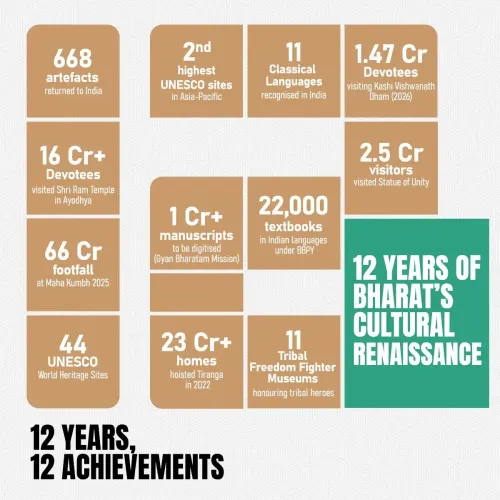
Choudhary was explicit in crediting Prime Minister Narendra Modi with creating the conditions for this recognition, writing that under Modi's leadership India's cultural heritage is 'gaining new identity and prestige on the global stage.' It is a framing that fits a wider pattern: over the past decade, India has pursued heritage nominations, museum revivals, and civilisational branding as deliberate instruments of soft power, threading domestic cultural pride into international forums.
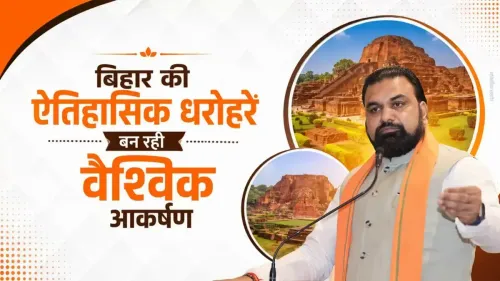
But the Bihar CM did not stop at applauding the centre. He made a pointed local commitment — that his government is 'dedicated to the preservation and promotion of our rich cultural heritage, historical monuments, and ancient knowledge traditions.' The promise to carry this legacy to future generations, so they remain connected to their roots, reads as a governance directive as much as a rhetorical flourish. Bihar, home to Nalanda and Bodh Gaya and one of the cradles of Indian intellectual history, has obvious institutional stakes in manuscript digitisation and heritage conservation.
Why the global stamp matters domestically
UNESCO recognition does something domestic proclamations alone cannot: it creates an internationally legible credential that can unlock funding, tourism, and academic collaboration. For texts that live primarily in specialist libraries and university syllabi, a world-register listing is a form of mainstreaming — a signal to younger generations, in Choudhary's own words, to stay connected to their history. The challenge, as heritage scholars consistently note, is converting the symbolism into the hard work of digitisation, translation, and open access. That is the next mile.
Point of View
Crediting Modi at the top and then pivoting to a state-level pledge, is a studied balancing act between party loyalty and regional agency. For Bihar, a state whose identity is inseparable from Nalanda-era intellectual glory, this framing also serves an economic purpose: UNESCO credentialing can accelerate heritage tourism and manuscript-digitisation funding. The real test of the rhetoric will be measurable outcomes — how many manuscripts digitised, how many sites notified, how many scholars funded.
NationPress
6 Nov 2026
Frequently Asked Questions
Which Indian texts were included in UNESCO's Memory of the World Asia-Pacific Regional Register?
Bihar Chief Minister Samrat Choudhary's post cited the Rajatarangini , the Mahabharata , and the Arthashastra as the texts included in the register.
What is UNESCO's Memory of the World programme?
UNESCO launched the Memory of the World programme in 1992 to preserve and promote documentary heritage — manuscripts, films, maps, and other records — that is at risk of being lost or inaccessible. The Asia-Pacific Regional Register is a tier of this programme focused on the region.
Has India had texts in UNESCO's Memory of the World Register before?
Yes. India secured the inscription of the Rigveda in the UNESCO Memory of the World Register in 2007 , making it one of the earliest recognised ancient Indian manuscripts under this programme.
What did Bihar CM Samrat Choudhary say about India's cultural heritage?
Choudhary described India's ancient knowledge tradition as 'not just our pride but our priceless legacy' and committed the Bihar government to preserving historical monuments and ancient traditions so future generations remain connected to their roots.
What is the Arthashastra and why is it significant?
The Arthashastra is an ancient Indian treatise on statecraft, economic policy, and military strategy, attributed to Kautilya (Chanakya) , advisor to Emperor Chandragupta Maurya. It is considered one of the earliest comprehensive works on governance in world history.