CM Samrat Choudhary: India now world's 2nd largest mobile maker
Synopsis
Bihar CM Samrat Choudhary amplified PM Modi's claim that India is now the world's second-largest mobile phone manufacturer, citing an 11-fold rise in electronics exports and a 50-fold jump in defence exports since 2014 — framing twelve years of industrial policy as a structural transformation.
Key Takeaways
India is now the world's second-largest mobile phone manufacturer , according to PM Modi's quoted statement.
Electronics exports have grown 11 times since 2014 , reflecting a major shift in India's industrial output.
Defence exports have surged 50 times since 2014 , signalling a reversal from India's historical position as a large arms importer.
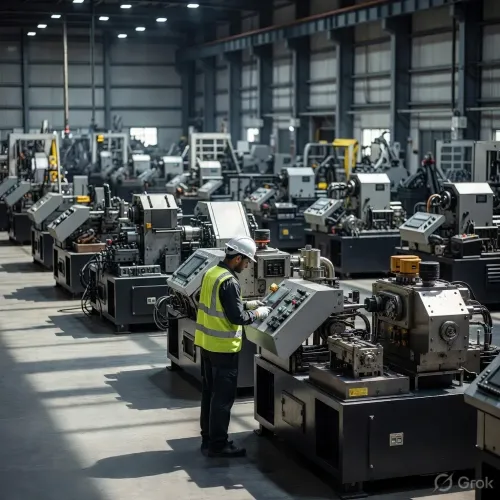
The central government's strategy covers the full production chain — from components and technology to finished goods — across every state.
Bihar CM Samrat Choudhary shared the quote on 11 October 2026 , aligning Bihar's identity with the national manufacturing push.
From a country that once imported almost every circuit board it used, India has quietly rewired its industrial identity — and Bihar Chief Minister Samrat Choudhary put that transformation front and centre on Sunday, 11 October 2026, sharing a pointed quote from Prime Minister Narendra Modi on the nation's electronics and defence export surge.
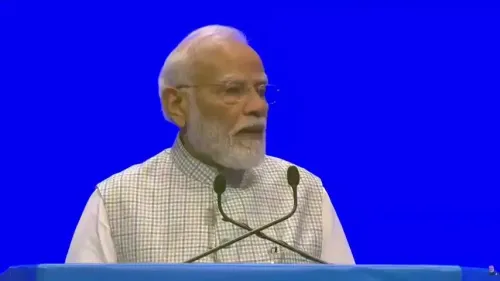
The post, shared from Choudhary's official X account, quotes the Prime Minister directly: 'कंपोनेंट्स से लेकर तकनीक और तैयार उत्पादों तक, केंद्र सरकार हर राज्य में पूरी उत्पादन श्रृंखला को मजबूत कर रही है' — 'From components to technology and finished products, the central government is strengthening the entire production chain in every state.' The payoff line lands hard: India is now the world's second-largest mobile phone manufacturer.
The numbers that made the headline
Two figures anchor the claim. Electronics exports have risen 11 times since 2014, and defence exports have jumped 50 times over the same period. Both metrics, attributed to PM Modi, frame the last twelve years as a deliberate industrial pivot — not an accident of global supply-chain reshuffling, but the result of policy architecture built from the ground up.
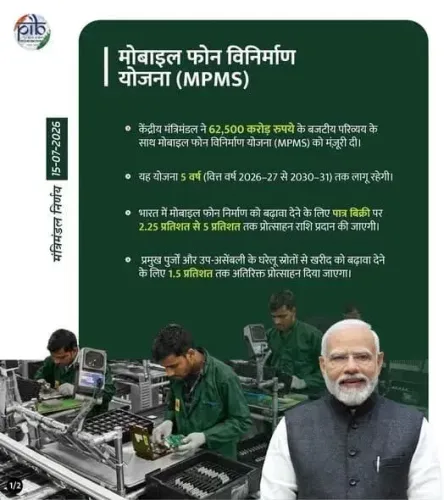
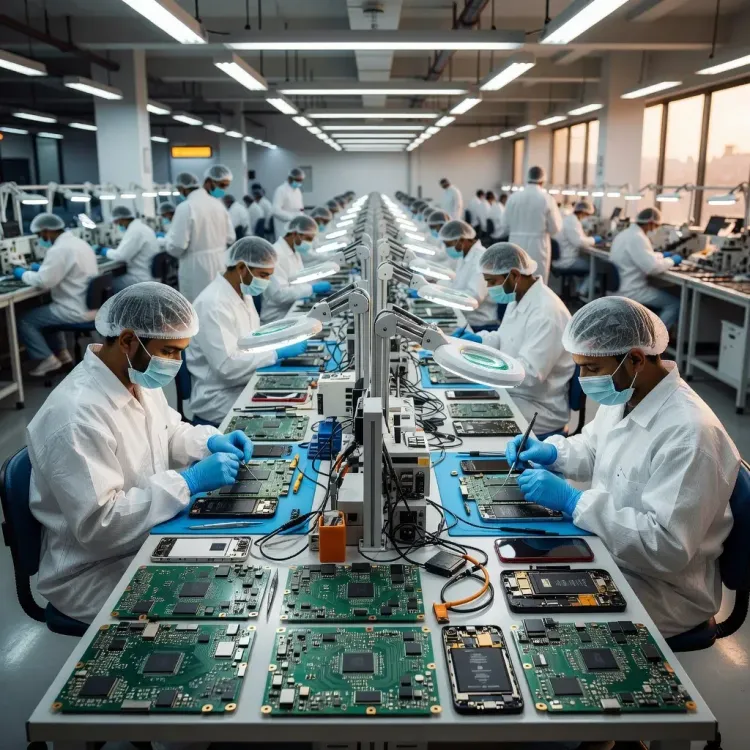
The mobile manufacturing milestone is the most visible symbol of that pivot. A decade ago, India had fewer than two operational handset factories of global scale. Today, global brands assemble flagship devices on Indian soil, and the government's Production Linked Incentive scheme for electronics is widely credited with seeding that shift across states.
Why Bihar's CM is amplifying this message
Choudhary's decision to spotlight this data is itself a political signal. Bihar — historically seen as a manufacturing laggard — is increasingly positioned by the NDA government as a beneficiary of the 'every state' production-chain push the PM's quote specifically names. Amplifying a national industrial success story doubles as a case for Bihar's own investment pitch.
The 50-times growth in defence exports is the sharper of the two statistics. India has long been one of the world's largest arms importers; a fiftyfold export increase, if sustained, signals a structural reversal in that equation — domestic defence manufacturers supplying markets abroad rather than the reverse.
The broader arc is one of deliberate 'China-plus-one' positioning: as global manufacturers diversified away from single-source supply chains post-2020, India built the policy scaffolding — PLI schemes, semiconductor incentives, defence corridors — to catch that wave. The numbers Choudhary shared suggest the wave arrived.
Point of View
Not just welfare transfers. By framing the achievement as pan-India ('every state'), the PM's language pre-empts regional grievances about uneven development. Choudhary's amplification from Bihar is strategically loaded: it ties a historically underindustrialised state to a national success story, building the case for fresh investment flows eastward. The defence export milestone is the most geopolitically consequential claim — if the trajectory holds, India's strategic autonomy argument gains hard economic backing.
NationPress
11 Oct 2026
Frequently Asked Questions
Is India really the second-largest mobile phone manufacturer in the world?
According to a statement attributed to Prime Minister Narendra Modi and shared by Bihar CM Samrat Choudhary on 11 October 2026, India has become the world's second-largest mobile phone manufacturer, driven by Production Linked Incentive schemes and a government focus on building the full electronics production chain domestically.
How much have India's electronics exports grown since 2014?
India's electronics exports have grown 11 times since 2014, according to the statement quoted by Bihar CM Samrat Choudhary, reflecting sustained policy support including PLI schemes that attracted global manufacturers to set up or expand production in India.
How much have India's defence exports increased since 2014?
India's defence exports have increased 50 times since 2014, according to the PM's quote shared by CM Choudhary — a dramatic shift for a country that was historically one of the world's largest arms importers.
Why did Bihar CM Samrat Choudhary share this manufacturing data?
Choudhary, a senior BJP leader and Bihar's Chief Minister, shared PM Modi's quote to highlight the central government's industrial achievements and to associate Bihar with India's broader manufacturing growth story, particularly as the PM's statement specifically mentioned strengthening production chains 'in every state'.
What is India's Production Linked Incentive scheme for electronics?
India's Production Linked Incentive (PLI) scheme for electronics offers financial incentives to manufacturers — domestic and global — based on incremental sales from products manufactured in India. It is widely credited with attracting major handset brands to set up large-scale assembly and manufacturing operations across Indian states.