CM Samrat Choudhary opens DAV festival, backs statewide schools
Synopsis
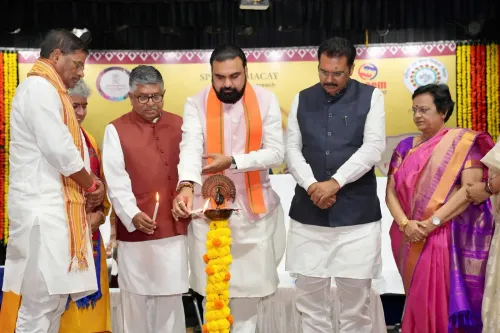
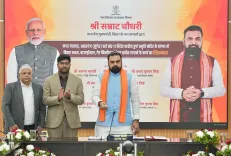
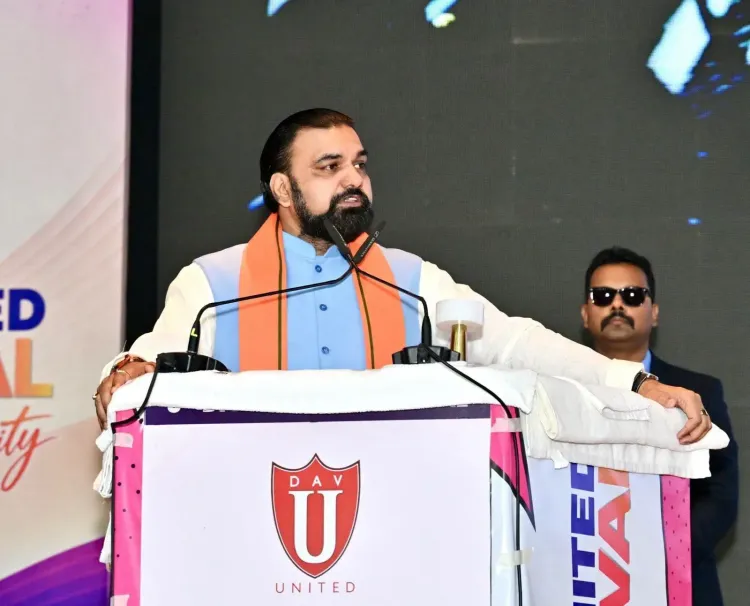
Bihar Chief Minister Samrat Choudhary inaugurated the DAV United Festival 2026 at Patna's Bapu Sabhagar and pressed for DAV schools across police districts. He said the government would offer every possible support so children get quality education inside Bihar.
Key Takeaways
Bihar Chief Minister Samrat Choudhary inaugurated the DAV United Festival -2026 at Bapu Sabhagar in Patna on 28 November 2026.
He emphasised establishing DAV schools in all 40 police districts of Bihar.
The state government will extend every possible support for that expansion, he said.
He called in-state quality education and better academic opportunities a government priority.
His stated resolve was an educated, prosperous and developed Bihar.
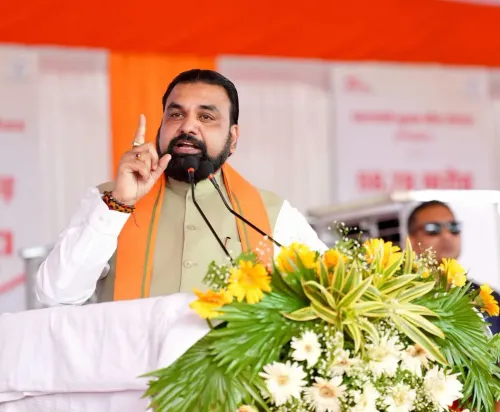
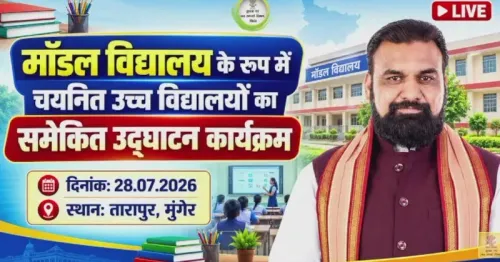
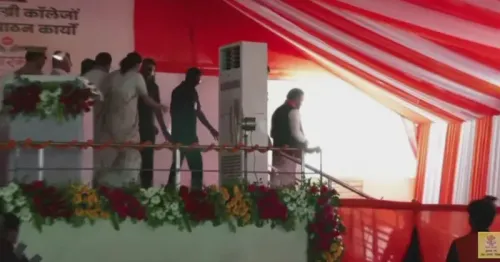
Bihar Chief Minister Samrat Choudhary turned a festival opening in Patna into a statewide schooling brief. On 28 November 2026, at Bapu Sabhagar, he inaugurated the DAV United Festival -2026 and put a public bet on keeping Bihar's children in Bihar's classrooms. The state, he said, would give every possible support to plant DAV schools across its police districts.
After the ceremony he said the occasion had been used to stress the establishment of DAV schools in all 40 police districts of Bihar, and that the state government would extend every possible cooperation. Providing quality education and better academic opportunities to Bihar's children in their own state, he wrote, is the government's priority. The resolve was stated in a single chain: शिक्षित बिहार, समृद्ध बिहार, विकसित बिहार (Educated Bihar, Prosperous Bihar, Developed Bihar).
A DAV school on the police-district map
The Chief Minister's stress on all 40 police districts is an administrative map, not a ceremonial one. Overlaying a school network on that grid is a bid for even coverage rather than clustering campuses only in the capital and a few large towns. DAV institutions, run by the DAV College Managing Committee, already operate a standardised curriculum across several Indian states.
For a government that has long used public-private partnerships to lift enrolment and school quality, inviting that network deeper into Bihar is a familiar tool. This time the aim is a brand many parents already recognise, spread through the same territorial units the state uses to organise the ground.
Keeping Bihar's students inside Bihar
The sharper fact sits behind the festival lights. Families still send children out of Bihar for schooling they consider more reliable. Each departure is a verdict on local classrooms. Choudhary framed the reverse as policy: quality education should be available in the child's own state.
That line continues a human-development argument Bihar governments have made since the mid-2000s, that literacy and learning outcomes are the precondition for any claim of a richer state. School-age children and the state education department are the immediate stakeholders. The longer bet is whether a reputed private network can fill gaps faster than the public system alone.
From the Patna stage to district campuses
Inaugurations are easy. Campuses are not. Land, teachers, affiliations and district-level timelines will decide if the announcement in Patna becomes a school bell across the police-district map. Any memorandum with the DAV managing committee in the coming months will be the first paper trail to watch.
Until then, the Chief Minister has put a public marker down: an educated Bihar as the path to a prosperous and developed one. The next test is geographic, not rhetorical: whether the district map he invoked actually fills with classrooms.
Point of View
Eventually, of talent. Partnering with the DAV network fits a two-decade pattern of using outside institutional brands to compensate for uneven public-school quality. Mapping campuses to police districts is a way to force geographic fairness that a purely urban rollout would never deliver. The political risk is familiar: if district files stall, the slogan of an educated Bihar will look like stagecraft rather than a school map.
NationPress
28 Nov 2026
Frequently Asked Questions
When and where did Samrat Choudhary inaugurate the DAV United Festival 2026?
He inaugurated it on 28 November 2026 at Bapu Sabhagar in Patna. After the event he said the Bihar government would support DAV school expansion across the state's police districts.
What did the Bihar CM say about new DAV schools?
He emphasised setting up DAV schools in all 40 police districts of Bihar and pledged every possible government support. He said giving children quality education inside the state is a priority.
Why is Bihar backing DAV schools now?
The Chief Minister framed it as a way to offer quality education and better academic opportunities within Bihar. The move aligns with a longer state effort to expand access to reputed school networks and reduce the need to migrate for schooling.
What is DAV in the Bihar school plan?
DAV schools are run by the DAV College Managing Committee and are known for a standardised curriculum across several Indian states. Bihar's government has signalled it will cooperate to expand that network inside the state.
What education slogan did Samrat Choudhary use?
He wrote that the resolve is Educated Bihar, Prosperous Bihar, Developed Bihar. The line ties classroom access to the state's wider development claim.