CM Samrat Choudhary Pays Tribute to Patna's Seven Martyrs
Synopsis
Bihar Chief Minister Samrat Choudhary attended the annual Balidan Diwas state ceremony at Patna's Shaheed Smarak on 11 August 2026, honouring the seven students — the Saptmurti — shot dead by British police while hoisting the tricolour at the Patna Secretariat on 11 August 1942 during the Quit India Movement.
Key Takeaways
Seven students — Umakant Prasad Singh, Ramanand Singh, Satish Prasad Jha, Jagpati Kumar, Devipad Choudhary, Rajendra Singh, and Ramgovind Singh — were killed by British police on 11 August 1942 .
They were shot while attempting to hoist the national flag at the Patna Secretariat , three days after Gandhi launched the Quit India Movement.
The martyrs are collectively known as the Saptmurti (Seven Figures).
Bihar CM Samrat Choudhary attended the state ceremony at Shaheed Smarak Parisar, Patna on 11 August 2026 .
Bihar has maintained 11 August as Balidan Diwas with annual official observances across administrations.
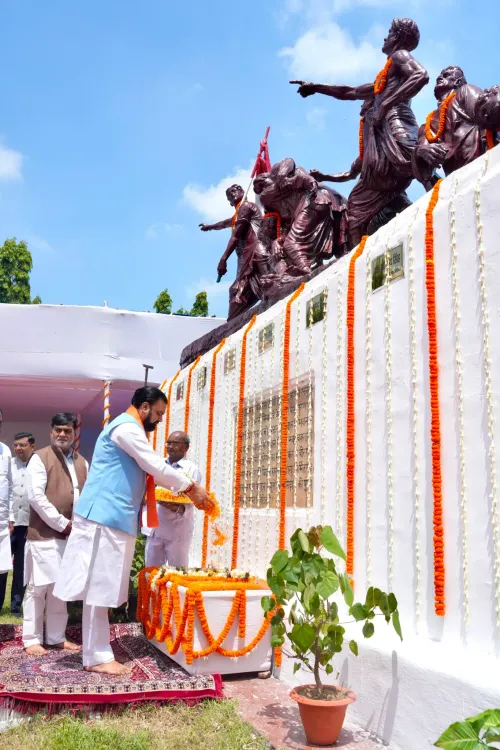
Eighty-four years ago, seven young students walked toward the Patna Secretariat carrying a tricolour — and were shot dead by British police. On Tuesday, 11 August 2026, Bihar Chief Minister Samrat Choudhary stood at the Shaheed Smarak Parisar in Patna to honour those seven lives at a state ceremony marking Balidan Diwas [Martyrdom Day].
The seven martyrs — Umakant Prasad Singh, Ramanand Singh, Satish Prasad Jha, Jagpati Kumar, Devipad Choudhary, Rajendra Singh, and Ramgovind Singh — fell on 11 August 1942, just three days after Mahatma Gandhi launched the Quit India Movement from Bombay on 8 August 1942. Their attempt to plant the national flag atop the secretariat was met with a British police volley. They are remembered collectively as the Saptmurti — the Seven Figures.
The Moment That Defined Bihar's Place in the Freedom Struggle
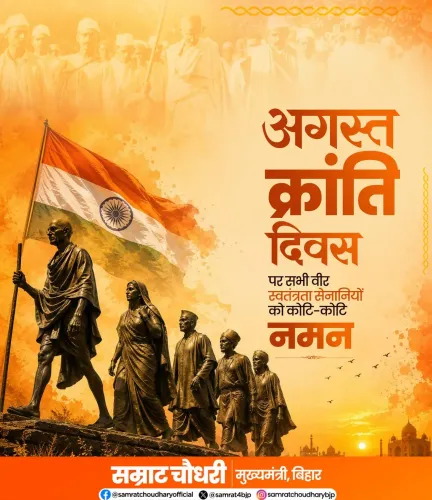
The Patna Secretariat shooting was not a footnote. It was among the earliest and most violent colonial responses to the Quit India call, and it turned seven ordinary students into enduring symbols of resistance. The Shaheed Smarak Parisar, built in their memory in Patna, has since been the site of annual state observances that keep the names — all seven, in full — part of public record.
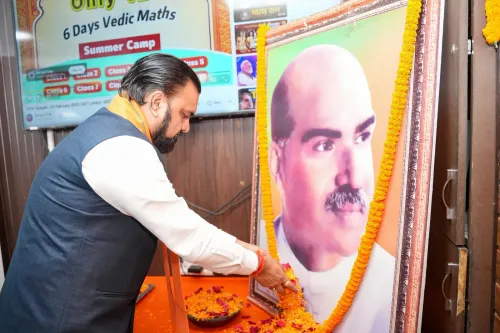
CM Choudhary, posting images from the ceremony, wrote that the sacrifice and patriotism of these brave martyrs would 'always remain a source of inspiration — not just for Bihar, but for the entire country.' The state ceremony, conducted with official honours, underscored that this is not merely a local commemoration but a formal act of state memory.
Bihar's Annual Ritual of Remembrance
Bihar governments across administrations have maintained 11 August as a fixed point in the official calendar — a rare continuity in a state where political transitions have been frequent. The observance at the Shaheed Smarak each year serves a dual purpose: it anchors Bihar's specific contribution to the national freedom struggle, and it reinforces a regional identity built around sacrifice rather than just governance.
In a country where independence-era memory is often filtered through a handful of dominant national narratives, the Saptmurti commemoration insists on particularity — seven names, one secretariat, one morning in August 1942. That specificity is the point.
The tricolour those students carried never made it to the flagpole that day. It does now, every year, at the memorial built where their story is told.
Point of View
Attending the ceremony is also politically legible: the BJP has increasingly invested in reclaiming and foregrounding regional martyrdom stories as part of a broader cultural nationalism project. The Saptmurti commemoration predates the current government, however, giving it a cross-party legitimacy that makes it a durable fixture of Bihar's political calendar. What bears watching is whether the state moves beyond ceremony toward substantive educational or infrastructural investment at the Shaheed Smarak site.
NationPress
11 Aug 2026
Frequently Asked Questions
Who were the seven martyrs of Patna Secretariat in 1942?
The seven martyrs — known collectively as the Saptmurti — were Umakant Prasad Singh, Ramanand Singh, Satish Prasad Jha, Jagpati Kumar, Devipad Choudhary, Rajendra Singh, and Ramgovind Singh. They were students shot by British police on 11 August 1942 while trying to hoist the tricolour at the Patna Secretariat during the Quit India Movement.
What is Balidan Diwas in Bihar?
Balidan Diwas, observed on 11 August each year, marks the day in 1942 when seven students were killed by British police at the Patna Secretariat. The Bihar government holds an annual state ceremony at the Shaheed Smarak Parisar in Patna to honour their sacrifice.
What is the Shaheed Smarak Parisar in Patna?
The Shaheed Smarak Parisar is a memorial complex in Patna dedicated to the seven students — the Saptmurti — who were martyred on 11 August 1942. It is the site of Bihar's annual official Balidan Diwas commemoration.
What was the Quit India Movement and how did Bihar respond?
The Quit India Movement was a mass civil disobedience campaign launched by Mahatma Gandhi on 8 August 1942 demanding immediate British withdrawal from India. Bihar responded immediately: just three days later, students marched on the Patna Secretariat to hoist the national flag and were shot dead by British police.
Why are the Patna Secretariat martyrs called Saptmurti?
'Saptmurti' means 'Seven Figures' in Sanskrit. The term was given to the seven students killed on 11 August 1942 to honour them as a collective symbol of Bihar's resistance during the Quit India Movement. A memorial — the Shaheed Smarak — was built in Patna in their memory.