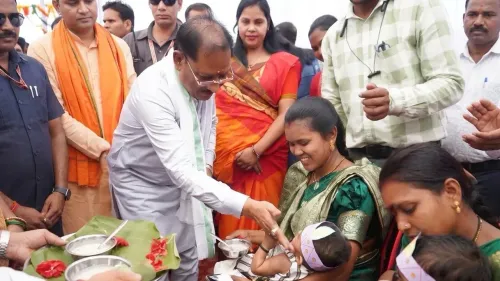
CM Sai's Govt Puts Koriya's Jeeraphool Rice on National Map
Synopsis
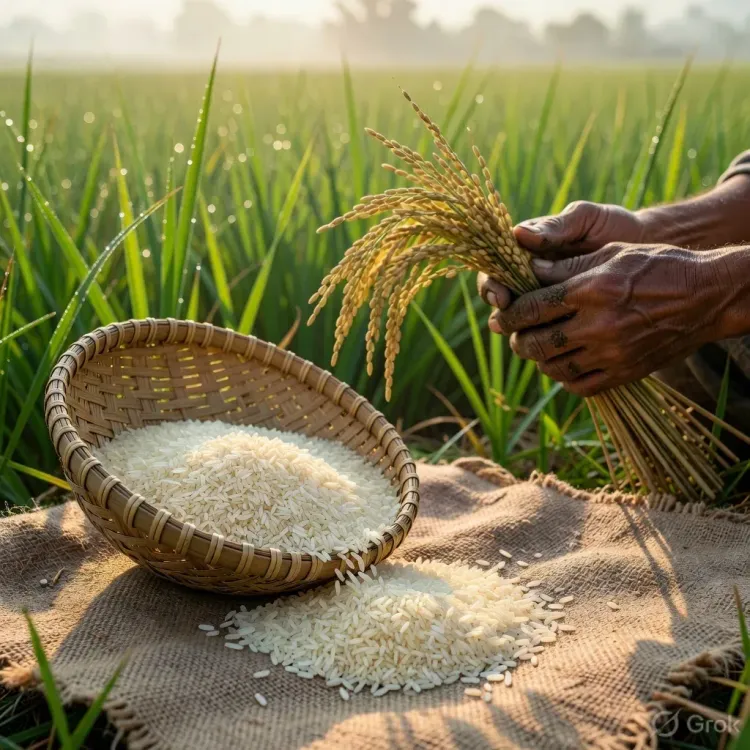
Chief Minister Vishnu Deo Sai's government is spotlighting Jeeraphool, an aromatic indigenous rice from Chhattisgarh's Koriya district, as a national model for natural farming — combining tribal agricultural heritage with state branding to boost farmer incomes.
Key Takeaways
Jeeraphool rice from Koriya district , Chhattisgarh, is being positioned as a national benchmark for natural farming quality.
The Chief Minister's Office credited CM Vishnu Deo Sai's 'Sushasan Sarkar' with pushing recognition of traditional farming knowledge.
Chhattisgarh pursued GI registrations for several local agricultural products between 2018 and 2023 , providing a policy foundation for this effort.
The central government's Paramparagat Krishi Vikas Yojana supports natural farming initiatives of this kind at the national level.
Key next steps include formal GI filing, procurement policy changes, and export linkages to convert recognition into tangible income gains for Koriya farmers .
A grain of rice is quietly rewriting Chhattisgarh's agricultural story. The fragrant Jeeraphool rice, cultivated in the rainfed fields of Koriya district in northern Chhattisgarh, is gaining national recognition — and the state government under Chief Minister Vishnu Deo Sai is making sure that moment counts.
The Chief Minister's Office of Chhattisgarh posted on Tuesday, 11 August 2026, that the 'Sushasan Sarkar' (good-governance government) is "kisanon ki mehnat, paramparik krishi gyan aur prakritik kheti ko nayi pehchaan dene ke liye nirantar kaam kar rahi hai" — 'continuously working to give new recognition to farmers' hard work, traditional agricultural knowledge, and natural farming.' Jeeraphool rice, it said, is now setting a new national benchmark through its natural quality and distinctive identity.
What makes Jeeraphool rice stand apart
Jeeraphool — literally 'cumin flower' in Hindi, named for its slender, aromatic grain — is an indigenous variety grown in the rainfed, largely tribal belt of Koriya. Like Basmati in the north or Gobindobhog in Bengal, it carries a flavour and fragrance profile tied directly to the soil and microclimate where it grows. That specificity is exactly what makes it a candidate for geographical indication protection and premium market positioning.
Chhattisgarh has a track record here. Between 2018 and 2023, the state actively pursued GI registration for several local agricultural products, including indigenous rice varieties. The current BJP government under Sai, in power since December 2023, is building on that foundation — framing natural farming not just as ecology but as economics.
Natural farming as a state branding strategy
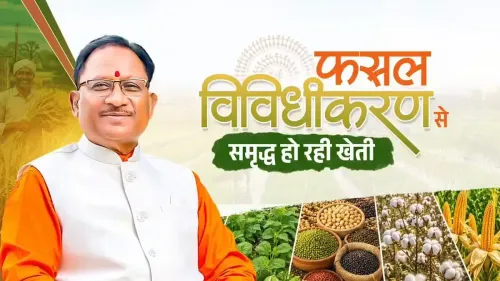
Across India, states have discovered that a GI tag or organic certification can transform a commodity into a premium product — lifting farmer incomes without requiring more land or more inputs. The central government's Paramparagat Krishi Vikas Yojana provides the national scaffolding for exactly this kind of traditional-knowledge-meets-modern-market push. Chhattisgarh's move fits that larger playbook but adds a distinctly local character: tribal farming communities in Koriya have cultivated Jeeraphool for generations without synthetic inputs, making the 'natural farming' label authentic rather than aspirational.
The state's agriculture-dependent economy — where forests, fields, and mining together define livelihoods — gives this push real stakes. For Koriya's farmers, national recognition is not a ceremonial honour. It is a potential price signal.
What comes next for Koriya's farmers
The immediate question is whether recognition translates into reach. GI tags and state-level branding campaigns need procurement linkages, export corridors, and retail shelf space to actually move the needle on farmer incomes. The government's next moves — budget allocations for natural farming produce, procurement policy revisions, or formal GI filing for Jeeraphool — will determine whether this moment becomes a sustained market story or remains a well-intentioned headline.
For now, a fragrant grain from a northern Chhattisgarh district is carrying the weight of a state's agricultural ambition. That is no small thing.
Point of View
GI-style recognition campaigns carry genuine electoral and economic logic. The real test, however, is whether state support moves beyond social media posts to concrete procurement guarantees and market linkages — the gap where many similar initiatives have stalled. Chhattisgarh's prior GI work gives this push more credibility than most, but the distance between 'national recognition' and 'higher farm-gate prices' remains the story to watch.
NationPress
26 Sept 2026
Frequently Asked Questions
What is Jeeraphool rice and where is it grown?
Jeeraphool is a traditional aromatic rice variety named for its slender, cumin-like grain. It is grown in Koriya district in northern Chhattisgarh, primarily in rainfed fields by tribal farming communities.
Why is Jeeraphool rice getting national attention in 2026?
The Chief Minister's Office of Chhattisgarh highlighted Jeeraphool as a model for natural farming and traditional agricultural identity under CM Vishnu Deo Sai's governance push, drawing national-level attention to its quality and distinctiveness.
Does Jeeraphool rice have a GI tag?
Chhattisgarh actively pursued GI registrations for several local agricultural products between 2018 and 2023 . Whether Jeeraphool specifically holds a GI tag at this stage has not been confirmed in official communications.
What is the Paramparagat Krishi Vikas Yojana and how does it relate to this?
Paramparagat Krishi Vikas Yojana is a central government scheme supporting natural and traditional farming practices across Indian states. It provides the national policy framework within which Chhattisgarh's promotion of Jeeraphool and similar indigenous varieties fits.
How does promoting Jeeraphool rice help Chhattisgarh farmers?
National recognition and potential GI certification can allow farmers to command premium prices for Jeeraphool rather than selling it as a generic commodity. The benefit depends on follow-through: procurement linkages, export corridors, and retail market access for Koriya growers.