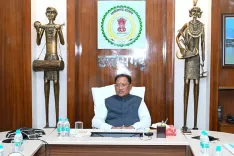
CM Samrat Choudhary Reviews India-Nepal Border Security

Synopsis
Bihar Chief Minister Samrat Choudhary held a high-level review of India-Nepal border security and development on 3 July 2026, ordering 15 km checkpost surveillance zones, inter-agency coordination meetings against fertiliser and narcotics smuggling, and station-level special teams to flag unexplained wealth in border districts.
Key Takeaways
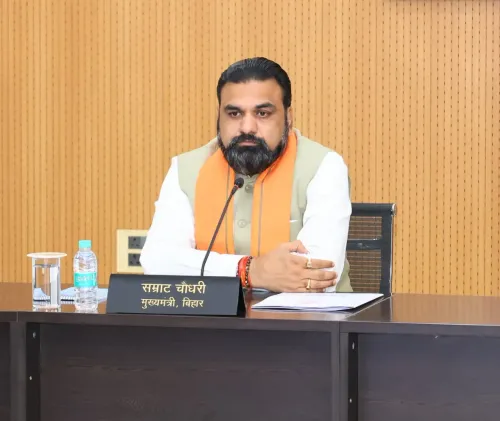
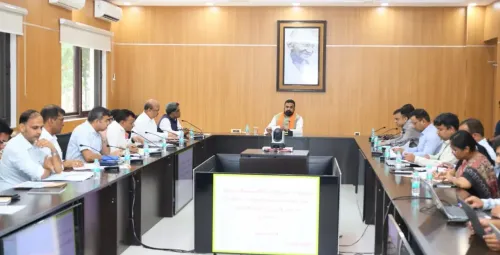
Bihar CM Samrat Choudhary chaired a high-level India-Nepal border security and development review at Samvad Sabhagar on 3 July 2026 .
Authorities were directed to maintain effective surveillance within a 15-kilometre radius of all border checkposts.
Special police teams are to be formed at the police-station level in border districts to identify individuals with sudden, unexplained income growth.
Regular joint coordination meetings among district administration, police, and the Sashastra Seema Bal were mandated to curb fertiliser and narcotics smuggling.
All departments were ordered to complete pending border infrastructure and development works with greater commitment and speed.
The Chief Minister described border security, good governance, and development as the government's 'highest priority.'
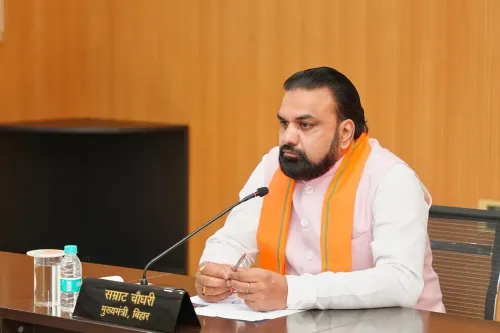
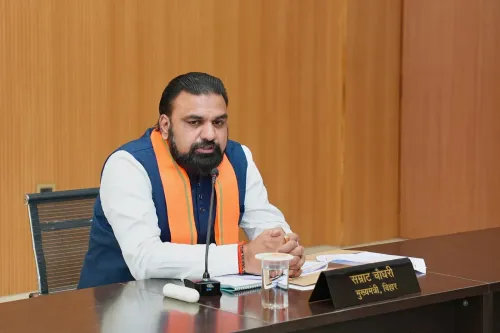
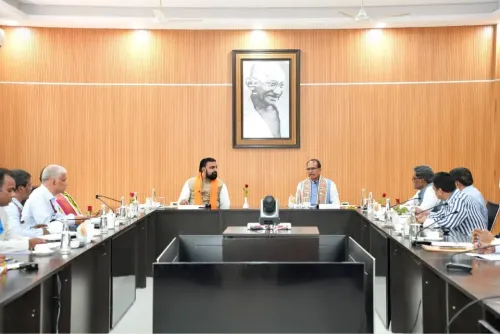
Bihar Chief Minister Samrat Choudhary chaired a high-level review meeting at Samvad Sabhagar on Friday, 3 July 2026, directing security forces and district administrations to intensify surveillance and crack down on illegal activities along the India-Nepal border. The meeting covered both security operations and pending development works in border districts, with the Chief Minister issuing a series of specific directives.
What the Chief Minister Directed
Choudhary ordered complete surveillance of all illegal and economic crimes along the India-Nepal frontier. A key operational directive mandated effective monitoring within a 15-kilometre radius of every checkpost, with special vigilance on economic offences and suspicious activities.
He also instructed that special police teams be formed at the police-station level in border districts to identify and verify individuals whose income has shown a sudden, unexplained rise disproportionate to their known sources of earnings — a measure aimed at detecting proceeds of smuggling and other cross-border crime.
On inter-agency coordination, the Chief Minister directed that regular joint meetings be held among district administrations, police, and the Sashastra Seema Bal (SSB) to effectively curb the smuggling of fertilisers and narcotics. All concerned departments were told to complete pending works in border areas with 'better coordination and commitment.'
Context: A Porous and Strategically Sensitive Frontier
The India-Nepal border stretches approximately 1,751 kilometres, a significant portion of which runs along Bihar's northern districts. The 1950 Treaty of Peace and Friendship between India and Nepal established an open-border regime permitting visa-free movement, which — while symbolically significant — has historically complicated law-enforcement efforts.
The Sashastra Seema Bal, raised in 1963 specifically to guard India's borders with Nepal and Bhutan, is the primary paramilitary force deployed along this frontier. State police and district administrations work alongside SSB on anti-smuggling and intelligence operations, but coordination gaps have been a recurring concern.
Policy Backdrop: Layered Security and Development
Successive governments at the Centre and in Bihar have pursued a twin-track approach along the Nepal frontier: physical surveillance and check-post modernisation on one side, and socio-economic development schemes on the other. The Border Area Development Programme, launched in the 1980s and later expanded to Bihar's Nepal-adjoining districts, has funded infrastructure projects aimed at reducing incentives for cross-border crime.
Bihar administrations have periodically convened inter-departmental meetings to align state police with SSB and customs authorities on fertiliser diversion, narcotics trafficking, and economic offences. The Chief Minister's emphasis on sudden-wealth verification and a mandatory 15 km surveillance perimeter continues and formalises this layered approach.
Stakeholders and Impact
The directives directly affect district administrations, local police stations, and SSB units across Bihar's border districts. The instruction to form station-level special teams will require fresh deployment of personnel and coordination protocols, placing new operational demands on police forces in areas that are often under-resourced.
For residents of border communities, the heightened scrutiny — particularly the sudden-wealth verification mechanism — signals a more proactive enforcement posture from the state government. Farmers and traders who use legitimate cross-border channels may also face closer checks as authorities tighten the 15 km monitoring zone.
What's Next
The critical test will be whether the mandated regular coordination meetings between district police, SSB, and revenue agencies translate into measurable outcomes — reduced fertiliser diversion, fewer narcotics seizures reaching the market, and faster completion of pending border infrastructure. Choudhary stated that 'the security, good governance, and overall development of border areas is our highest priority,' and that 'the government is working with full commitment on every issue related to state and national interest.'
Observers will watch whether the station-level special teams are constituted within a defined timeline and whether inter-agency coordination meetings are institutionalised or remain episodic.
Point of View
Directive-driven security framework along the Nepal frontier. The 15 km surveillance mandate and sudden-wealth verification mechanism are operationally specific — unusual for what might otherwise be a routine administrative meeting — suggesting the state is responding to concrete intelligence about economic crime networks. Politically, the exercise allows a BJP chief minister to project a strong governance image on national-security adjacency, linking border management to the 'Viksit Bharat' narrative. The real measure of impact will be whether these directives survive as standing orders or fade between review cycles.
NationPress
3 Jul 2026
Frequently Asked Questions
What did Bihar CM Samrat Choudhary announce about India-Nepal border security?
Choudhary chaired a high-level review on 3 July 2026 and directed authorities to enforce surveillance within 15 km of all checkposts, form special police teams in border districts to detect unexplained wealth, and hold regular joint meetings among police, SSB, and district administration to curb fertiliser and narcotics smuggling.
Which force guards the India-Nepal border in Bihar?
The Sashastra Seema Bal (SSB), raised in 1963, is the primary paramilitary force responsible for guarding India's borders with Nepal and Bhutan, and works alongside Bihar state police and district administrations on anti-smuggling operations.
Why is the India-Nepal border considered porous?
The 1950 Treaty of Peace and Friendship between India and Nepal established an open-border regime allowing visa-free movement for citizens of both countries, which facilitates free passage but also makes law enforcement against smuggling and illegal crossings more complex.
What is the 15 km surveillance zone ordered by Bihar CM?
Bihar CM Samrat Choudhary directed that effective monitoring be ensured within a 15-kilometre radius of every checkpost along the India-Nepal border, with special vigilance on economic offences and suspicious activities in that zone.
What smuggling problems exist on the Bihar-Nepal border?
The Bihar-Nepal border has been a known route for the smuggling of fertilisers and narcotics. Fertiliser diversion exploits subsidy differentials between the two countries, while narcotics trafficking has been a persistent cross-border law-enforcement challenge for state police and SSB.