CM Sai: Chhattisgarh Forms 515 New PACS Cooperatives
Synopsis
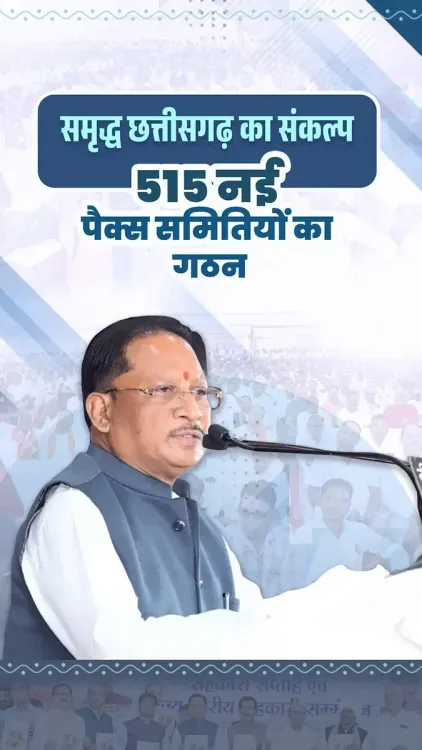
Chhattisgarh Chief Minister Vishnu Deo Sai announced 515 new Primary Agricultural Credit Societies have been formed in the state, aiming to widen cooperative credit access and create livelihood opportunities for farmers and rural communities.
Key Takeaways
515 new PACS (Primary Agricultural Credit Societies) have been established in Chhattisgarh under the Vishnu Deo Sai government.
The move is intended to provide farmers with better credit access, subsidised inputs, and MSP-linked procurement services.
The expansion aligns with the Union Government's national cooperative revival drive launched through the Ministry of Cooperation in July 2021 .
Chief Minister Sai framed the development as a pillar of his administration's 'good governance' agenda focused on tribal and rural welfare.
New PACS also create direct employment for cooperative staff in previously unserved villages.
Operationalisation, NABARD funding linkage and PACS computerisation will determine the real-world impact of this expansion.
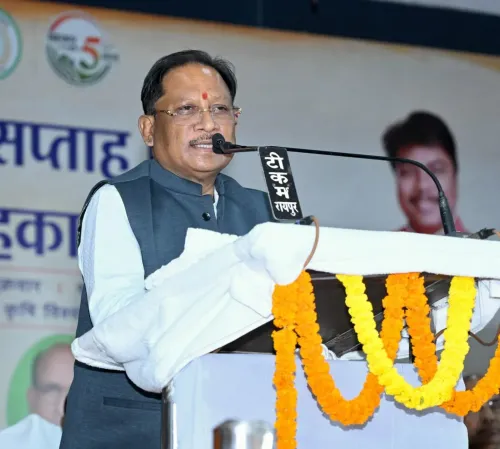
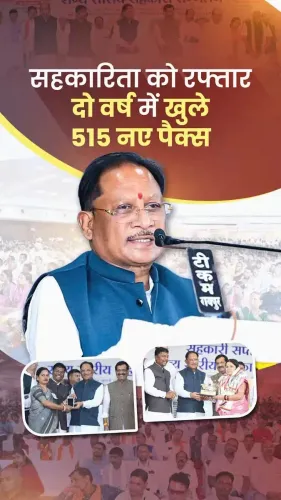
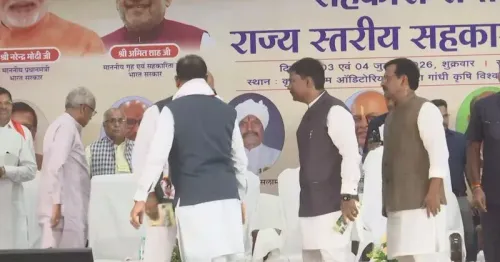
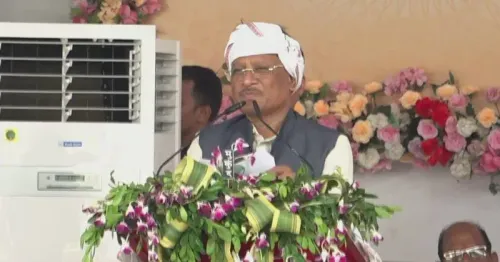
Chhattisgarh Chief Minister Vishnu Deo Sai announced on Friday, 3 July 2026 that the state government has established 515 new Primary Agricultural Credit Societies (PACS), describing the move as part of a sustained effort to strengthen the cooperative sector under what he termed a 'good governance' administration.
Context
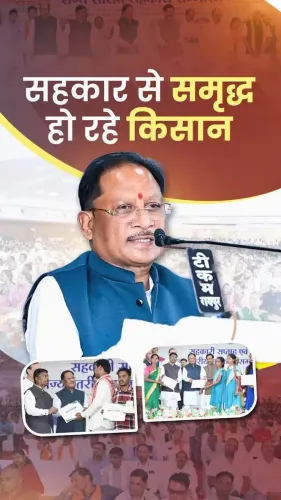
In his post on X, Chief Minister Sai wrote: 'छत्तीसगढ़ में हमारी सुशासन सरकार सहकारिता के क्षेत्र को लगातार सशक्त बना रही है' ('Our good-governance government in Chhattisgarh is continuously empowering the cooperative sector'). He stated that the 515 new PACS committees would deliver better services, greater facilities and new livelihood opportunities to farmers and those connected to cooperatives.
PACS, or Primary Agricultural Credit Societies, are the grassroots tier of India's cooperative credit architecture. They provide short-term loans, seeds, fertilisers and crop-procurement services directly to farmers at the village level, making them a critical link in rural economic infrastructure.
Policy Backdrop
The announcement aligns with a national push that gained formal momentum when the Union Government established a dedicated Ministry of Cooperation in July 2021, with an explicit mandate to expand and modernise the PACS network across India. The ministry has since encouraged states to bring previously unserved villages under the cooperative credit umbrella.
Chhattisgarh, a central Indian state with a large tribal and agrarian population, has historically relied on cooperatives for rural credit delivery alongside forest-produce procurement. Chief Minister Sai, who took office in December 2023, has emphasised tribal and rural development as governance priorities, consistent with his earlier roles as a Member of Parliament and state minister.
Several states have run parallel PACS formation drives in recent years, reflecting cooperative federalism between the Centre and states in the agriculture sector. Computerisation of existing PACS — supported by NABARD funding — has been a complementary strand of this national reform effort.
Stakeholders and Impact
The primary beneficiaries of new PACS formation are farmers in villages that currently lack access to formal cooperative credit, forcing them to depend on informal moneylenders at higher interest rates. Expanded PACS coverage can also improve access to government-subsidised inputs such as seeds and fertilisers.
Beyond credit, PACS serve as procurement points under schemes like the Minimum Support Price (MSP) system, enabling farmers to sell produce at guaranteed prices rather than distress-selling to private traders. For rural cooperative workers and staff, new societies also represent direct employment and livelihood creation.
What's Next
Attention will now turn to the operationalisation of these 515 new societies — including staffing, capitalisation and linkage with district cooperative banks. Progress on PACS computerisation under central guidelines and any new credit or procurement targets in Chhattisgarh's next cooperative policy document or state budget will be key indicators of follow-through.
If the expansion translates into measurable increases in formal credit disbursal and MSP procurement in underserved villages, it could reinforce the state's positioning as a model for cooperative-led rural development under the BJP's national cooperative revival agenda.
Point of View
If operationalised effectively, represents meaningful coverage expansion given Chhattisgarh's dispersed village geography. The move is part of a broader Centre-state alignment on cooperative federalism that the BJP has cultivated since the creation of the Ministry of Cooperation in 2021, giving state governments political ownership of a nationally driven reform. The real test will be whether these societies achieve functional credit disbursal and procurement volumes, or remain paper entities — an accountability gap that opposition parties are likely to probe.
NationPress
3 Jul 2026
Frequently Asked Questions
What are PACS and why are they important for farmers?
PACS, or Primary Agricultural Credit Societies, are village-level cooperative bodies that provide short-term loans, seeds, fertilisers and crop-procurement services to farmers. They are the most accessible point of formal rural credit, reducing farmer dependence on high-interest informal moneylenders.
How many new PACS has Chhattisgarh formed?
The Chhattisgarh government has formed 515 new PACS committees, as announced by Chief Minister Vishnu Deo Sai on 3 July 2026.
What is the national policy behind expanding PACS in India?
The Union Government created a dedicated Ministry of Cooperation in July 2021 with a mandate to expand and modernise the PACS network, bringing cooperative credit to previously unserved villages across states.
Who is Vishnu Deo Sai and when did he become Chhattisgarh CM?
Vishnu Deo Sai is a BJP leader who became Chief Minister of Chhattisgarh in December 2023 . He previously served as a Member of Parliament and state minister, with a focus on tribal and rural development.
What benefits will new PACS bring to Chhattisgarh villages?
New PACS are expected to expand access to formal credit, government-subsidised agricultural inputs, and MSP-based crop procurement for farmers in underserved villages, while also creating employment for cooperative staff.