CM Sai Reviews Kharif 2026 Prep Amid Low Rainfall Fears
Synopsis
Chhattisgarh Chief Minister Vishnu Deo Sai on 3 July 2026 reviewed Kharif season preparations amid fears of deficient rainfall, directing officials to ensure timely fertiliser and seed supply, activate the 'Mor Gaon Mor Pani' water conservation campaign, and prepare rural employment works as a farmer safety net.
Key Takeaways
CM Vishnu Deo Sai chaired a Kharif 2026 review meeting on 3 July 2026 , citing possible deficient monsoon rainfall in Chhattisgarh .
Officials were directed to ensure timely and adequate availability of quality seeds and fertilisers across the state before the sowing season.
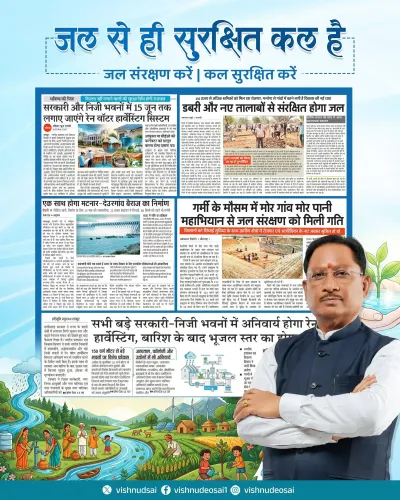
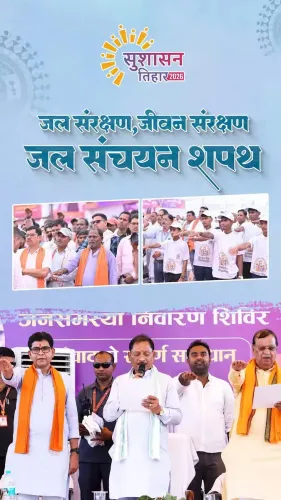
The 'Mor Gaon Mor Pani' campaign — promoting village-level rainwater harvesting — was highlighted as a key water management tool.
Alternative crop planning and rural employment-linked works were reviewed as contingency measures if rainfall falls short.
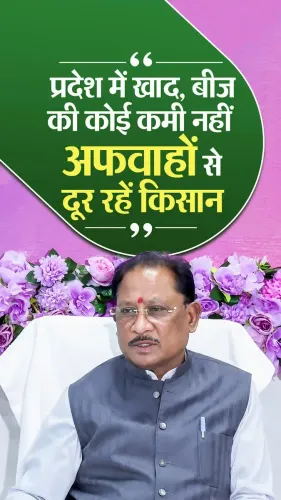
The Chief Minister publicly assured farmers that fertiliser stocks are sufficient and the government is fully prepared for all weather scenarios.
The review also covered the Viksit Bharat G-Ram-Gi Yojana , with a focus on its effective implementation in rural areas.
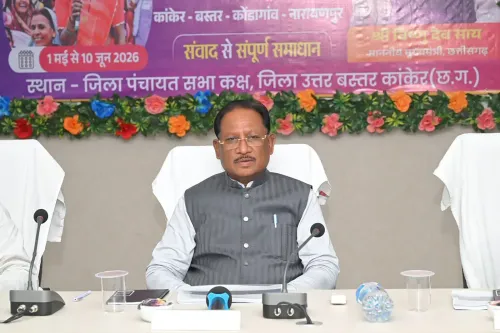
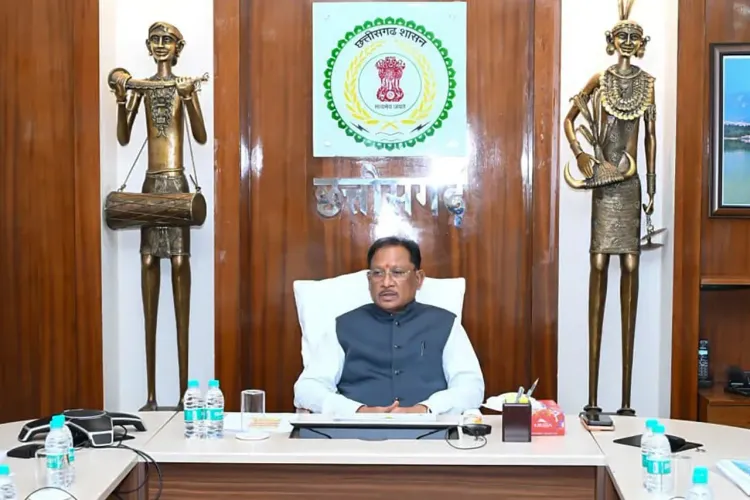
Chhattisgarh Chief Minister Vishnu Deo Sai on Friday, 3 July 2026 chaired a detailed review meeting on preparations for the Kharif season 2026, citing concerns over potentially deficient monsoon rainfall, and issued directives to officials to ensure all groundwork is completed in a time-bound and effective manner.
Context
Posting in Hindi on X, CM Sai stated: 'Har chunauti ka samadhan, har kisan ka vishwas — yahi sushasan ki pehchaan hai' ('A solution to every challenge, the trust of every farmer — this is the hallmark of good governance'). The review encompassed alternative crop planning, water management, rainwater conservation, the 'Mor Gaon Mor Pani' (My Village My Water) campaign, and the timely availability of quality seeds and fertilisers. Rural employment-linked works were also assessed during the session.
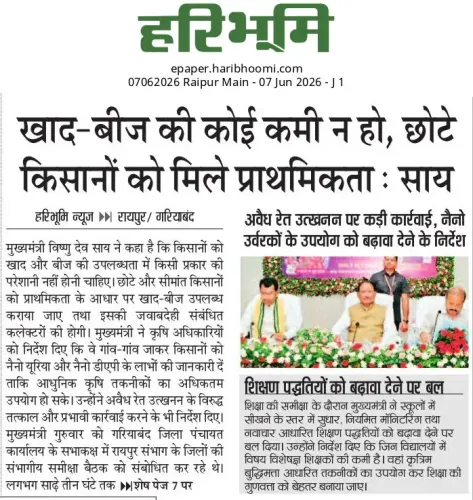
The Chief Minister directly addressed farmers, assuring them: 'There is no need to worry about the availability of fertilisers. Adequate stocks of fertilisers and seeds are in place for the Kharif season across the state.' He added that the government is 'fully alert, prepared, and firmly standing with farmers in every situation.'
Policy Backdrop
The review also covered the Viksit Bharat G-Ram-Gi Yojana, a scheme referenced by the Chief Minister in the context of rural development and effective implementation. The Viksit Bharat (Developed India) framework is a central national vision targeting comprehensive rural and agricultural uplift by 2047.
Since the BJP government assumed office in Chhattisgarh in December 2023, agricultural input security and water management have been stated priorities. The 'Mor Gaon Mor Pani' campaign, a state-level initiative, promotes village-level water harvesting and local resource management — a critical buffer in a state where a large share of farmland depends on rainfall.
Stakeholders and Impact
Chhattisgarh is a central Indian state with substantial rain-fed agriculture and a significant tribal farming population that is acutely vulnerable to monsoon variability. A deficient southwest monsoon can compress the sowing window and reduce yields, making pre-season contingency planning essential for millions of small and marginal farmers.
The review's emphasis on rural employment works points to the likely activation of MGNREGA-linked schemes as a livelihood safety net should rainfall fall short of normal levels. Officials have been directed to align seed and fertiliser distribution chains so that inputs reach farmers before the critical sowing period.
What's Next
The actual performance of the southwest monsoon 2026 over Chhattisgarh will determine whether the contingency cropping advisories and water conservation measures are activated at scale. District-level administrations are expected to operationalise the directives issued at Friday's review, with sowing advisories likely to be revised if rainfall continues to lag seasonal averages. The government's stated preparedness will be tested by how swiftly inputs and employment works are mobilised at the village level.
Point of View
Visible stance on agrarian risk management ahead of a potentially weak monsoon — a politically sensitive issue in a state where farming communities form a core electoral constituency. By publicly guaranteeing fertiliser availability and invoking the 'Mor Gaon Mor Pani' campaign, the administration is simultaneously managing farmer anxiety and reinforcing the BJP's 'good governance' narrative heading into a period of climate uncertainty. The linkage of the Viksit Bharat framework to village-level water and employment programmes also reflects a deliberate effort to align state delivery with the national development vision. Whether these directives translate into on-ground preparedness will depend on the speed of district-level execution — the real test the monsoon will impose.
NationPress
3 Jul 2026
Frequently Asked Questions
What did Chhattisgarh CM Vishnu Deo Sai announce for Kharif 2026?
CM Vishnu Deo Sai reviewed and directed preparations for the Kharif 2026 season on 3 July 2026, covering alternative crop planning, fertiliser and seed availability, rainwater conservation under the 'Mor Gaon Mor Pani' campaign, and rural employment works in anticipation of potentially deficient monsoon rainfall.
Is there a fertiliser shortage in Chhattisgarh for the Kharif season?
CM Sai stated on 3 July 2026 that adequate stocks of fertilisers and seeds are available across Chhattisgarh for the Kharif season and asked farmers not to worry about any shortage.
What is the 'Mor Gaon Mor Pani' campaign in Chhattisgarh?
'Mor Gaon Mor Pani' — meaning 'My Village My Water' — is a Chhattisgarh state campaign that promotes village-level rainwater harvesting and local water resource management, particularly important in rain-fed agricultural areas.
What is the Viksit Bharat G-Ram-Gi Yojana mentioned by CM Sai?
CM Sai referenced the Viksit Bharat G-Ram-Gi Yojana as part of the 3 July 2026 review, describing it in the context of rural development and effective implementation. It is linked to the national Viksit Bharat (Developed India by 2047) framework.
What happens if the monsoon is deficient in Chhattisgarh in 2026?
The Chhattisgarh government has directed officials to prepare alternative crop plans, activate rainwater conservation measures under 'Mor Gaon Mor Pani', and scale up rural employment-linked works as a livelihood safety net for farmers if rainfall falls below normal levels.