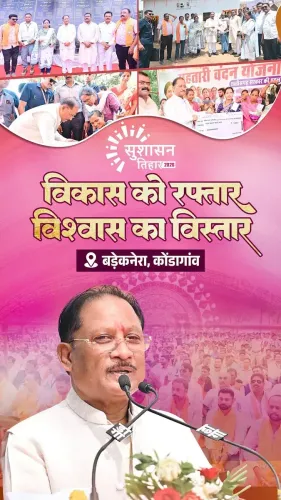
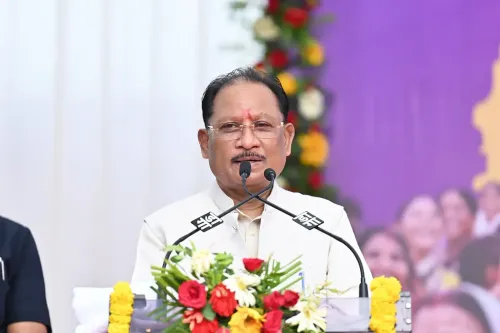
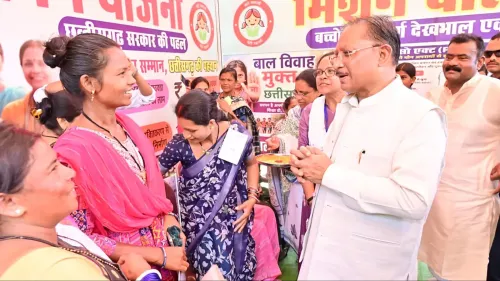
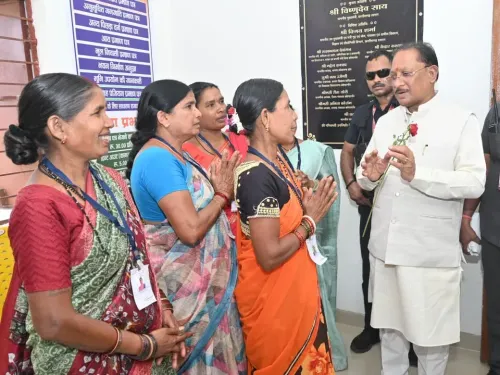
CM Vishnu Deo Sai reviews Bastar welfare rollout at Kanker meet
Synopsis
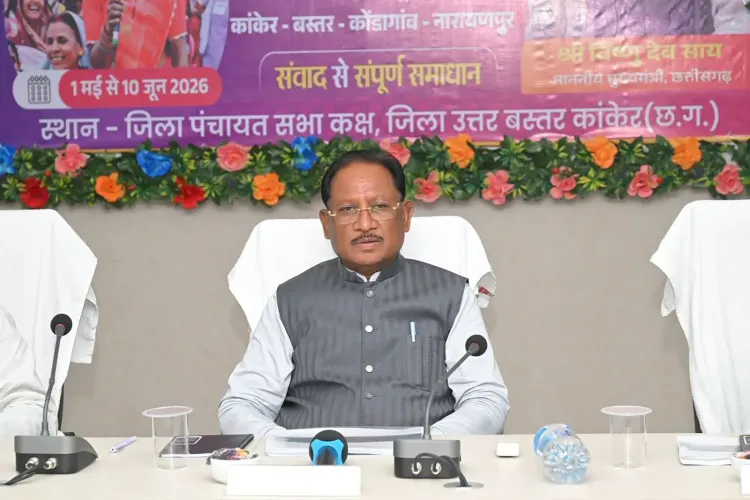
Chhattisgarh CM Vishnu Deo Sai reviewed welfare delivery and monsoon farm readiness with officials of Narayanpur, Kondagaon, Bastar and Kanker at a Sushasan Tihar 2026 meeting in Kanker, focusing on Niyad Nellanar Yojana 2.0, Mahtari Vandan Yojana and PM Awas Yojana, and directing time-bound implementation and faster clearance of pending cases.
Key Takeaways
CM Vishnu Deo Sai chaired a four-district review at Kanker under Sushasan Tihar 2026.
Officials of Narayanpur, Kondagaon, Bastar and Kanker districts attended the joint meeting.
Niyad Nellanar Yojana 2.0, Mahtari Vandan Yojana and PM Awas Yojana were reviewed in detail.
Directions were issued for time-bound implementation and quick disposal of pending cases.
Pre-monsoon agricultural preparedness was also examined for the four Bastar districts.
Sai reiterated that reaching remote Bastar pockets remains the state's top priority.
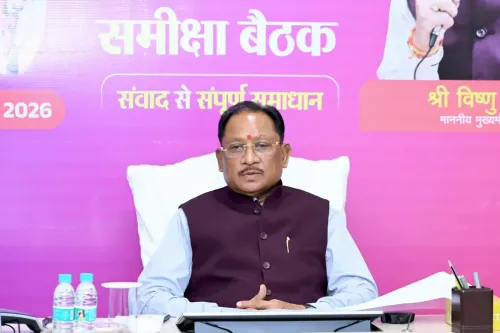
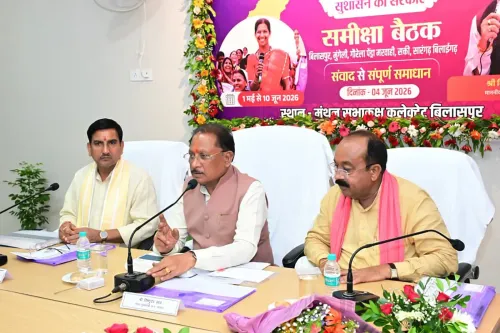
Chhattisgarh Chief Minister Vishnu Deo Sai on Tuesday chaired a joint review meeting of senior officials from Narayanpur, Kondagaon, Bastar and Kanker districts at the Zila Panchayat hall in Kanker, taking stock of flagship welfare schemes and pre-monsoon agricultural preparedness under the state's ongoing Sushasan Tihar exercise. The session focused on the timely delivery of central and state programmes in the southern Bastar division, where last-mile access has historically been a challenge.
In his post on X, the Chief Minister said the meeting carried out a detailed review of Niyad Nellanar Yojana 2.0, Mahtari Vandan Yojana, Pradhan Mantri Awas Yojana and other welfare and development works. 'Our resolve is that the benefits of the government's schemes reach every beneficiary effectively,' Sai wrote, adding that officials had been directed to ensure samaybaddh kriyanvayan (time-bound implementation), quick disposal of pending cases, and quality and transparency in development works.
Context
The Kanker meeting forms part of Sushasan Tihar 2026, an annual good-governance review drive used by the Chhattisgarh government to audit scheme implementation district by district. By convening officials from four Bastar division districts in a single forum, the state administration signalled a continued push on saturation-mode delivery in tribal-majority blocks.
Sai, a senior BJP leader and tribal face from the state, has led the Chhattisgarh government since December 2023, when the party returned to power in the assembly election. His tenure has placed visible emphasis on welfare expansion in Bastar, a region long associated with developmental gaps and security challenges linked to Left-Wing Extremism.
Policy backdrop
Mahtari Vandan Yojana, rolled out after the 2023 assembly verdict, provides monthly financial assistance to eligible women across Chhattisgarh and remains a politically salient programme for the ruling dispensation. Pradhan Mantri Awas Yojana, the Centre's rural and urban housing scheme, continues to be a major instrument for delivering pucca houses to beneficiaries below the poverty line.
Niyad Nellanar Yojana, whose updated 2.0 version was on the agenda, is a Chhattisgarh-specific intervention targeting nutrition and basic services in the most inaccessible tribal hamlets of Bastar. The scheme is designed to plug gaps in areas where conventional administrative reach has been thin.
Stakeholders and impact
The most direct stakeholders are tribal households across Narayanpur, Kondagaon, Bastar and Kanker, who depend on these housing, women-welfare and nutrition programmes for income support and basic infrastructure. District collectors, panchayat functionaries and line-department officials carry the operational responsibility for clearance of pending cases and quality control on civil works.
Farmers in the four districts are another key constituency, with the meeting also examining mansoon poorv krishi taiyariyan (pre-monsoon agricultural preparations). Inputs availability, seed distribution and irrigation readiness typically dominate such reviews ahead of the kharif season.
'Ensuring that development and public amenities reach the remote pockets of Bastar is our highest priority,' Sai said in the post, framing the exercise as part of a broader effort to enrich the region with vikas, vishwas aur nayi sambhavnaon (development, trust and new possibilities) through sensitive administration and public welfare.
What's next
Implementation watchers will track how quickly the four districts dispose of pending beneficiary cases flagged at the Kanker meeting and how Niyad Nellanar Yojana 2.0 is extended to additional blocks within the Bastar division. Progress on monsoon agricultural preparations will be tested almost immediately as the rainy season sets in.
For the Sai government, the political payoff of Sushasan Tihar 2026 will hinge on whether on-ground delivery in Bastar visibly improves on housing completion, women's transfers and access indicators in the months ahead.
Point of View
District-level audits in Bastar. By bundling Niyad Nellanar 2.0 with Mahtari Vandan and PM Awas Yojana in a single review, the state is signalling that women's transfers, housing and tribal nutrition are being treated as one delivery stack. The political logic is straightforward, since Bastar's developmental optics carry weight well beyond the four districts in the room. The real test will be measurable saturation, not meeting frequency.
NationPress
17 Sept 2026
Frequently Asked Questions
What is Sushasan Tihar 2026 in Chhattisgarh?
Sushasan Tihar 2026 is the Chhattisgarh government's good-governance review drive under which Chief Minister Vishnu Deo Sai and senior officials assess the implementation of welfare schemes and development works across districts. The 2026 edition has seen district-level review meetings, including the Kanker session covering four Bastar division districts.
Which districts attended the Kanker review meeting?
Officials from Narayanpur, Kondagaon, Bastar and Kanker districts attended the joint review meeting chaired by CM Vishnu Deo Sai at the Zila Panchayat hall in Kanker. The agenda covered welfare schemes, development works and pre-monsoon agricultural preparations.
What is Niyad Nellanar Yojana 2.0?
Niyad Nellanar Yojana is a Chhattisgarh state scheme aimed at delivering welfare and basic services to remote tribal hamlets in the Bastar region. Version 2.0 is its updated iteration and was among the programmes reviewed at the Kanker meeting.
What is Mahtari Vandan Yojana?
Mahtari Vandan Yojana is a Chhattisgarh government scheme launched after the 2023 assembly elections that provides monthly financial assistance to eligible women in the state. It is one of the flagship welfare programmes of the Vishnu Deo Sai government.
Why is Bastar a focus area for the Chhattisgarh government?
Bastar is a tribal-majority division in southern Chhattisgarh that has historically faced developmental gaps and security challenges linked to Left-Wing Extremism. The state government has prioritised last-mile delivery of welfare and infrastructure programmes there as part of its governance agenda.