CM Samrat Choudhary shares Bhagwat's warning on 'regime change' plots
Synopsis
On RSS Foundation Day, Bihar CM Samrat Choudhary amplified RSS chief Mohan Bhagwat's stark warning that global 'regime change' is a foreign-power scheme to install puppet governments, with India, Hindu society, and the Sangh named as deliberate targets being undermined through collusion with local leaders.
Key Takeaways
Bihar CM Samrat Choudhary shared a statement by RSS Sarsanghchalak Dr Mohan Bhagwat on RSS Foundation Day, 20 October 2026 .
Bhagwat alleged that global 'regime change' is a cover for foreign powers to install puppet governments and serve narrow interests.
The statement directly names India, Hindu society, and the RSS (Sangh) as targets of a 'continuous conspiracy' aided by 'power-hungry local leaders.' Bhagwat identified India's firm policies, strong leadership, and youth patriotism as the primary obstacles to this foreign agenda.
The RSS was founded on 27 September 1925 and is now in its 101st year ; Foundation Day speeches are a key forum for its ideological positions.
BJP leaders amplifying RSS leadership statements on sovereignty and foreign interference is a pattern especially prominent since 2014 .
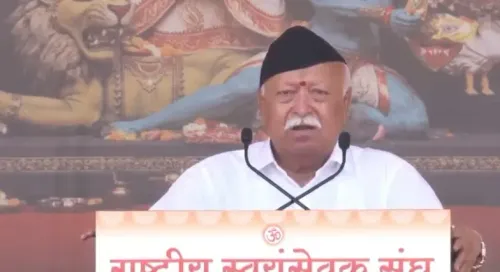
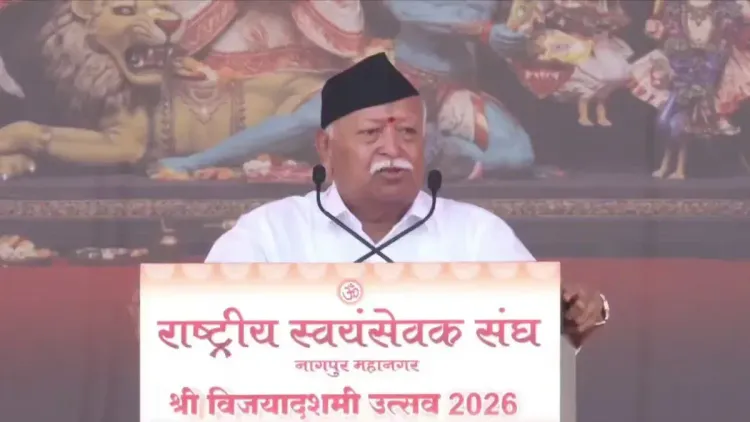
Foreign powers engineering 'regime change' across the world are really installing puppet governments to serve their own interests — and India is a prime target. That is the warning Bihar Chief Minister Samrat Choudhary amplified on Tuesday, 20 October 2026, sharing a pointed statement by RSS Sarsanghchalak Dr Mohan Bhagwat on the occasion of the RSS Foundation Day.
Quoting Bhagwat directly, Choudhary's post reads: 'दुनिया भर में रिजीम चेंज के नाम पर हो रही उथल-पुथल वास्तव में विदेशी ताकतों द्वारा अपनी कठपुतली सरकारें बिठाने और अपने स्वार्थ का पोषण करने का उपक्रम है।' — 'The turmoil being caused across the world in the name of regime change is, in reality, a scheme by foreign powers to install puppet governments and serve their own selfish interests.'
Bhagwat's charge: local collaborators, foreign agendas
Bhagwat goes further, alleging that 'power-hungry and self-serving local leaders' are colluding with external forces to 'continuously conspire to weaken and dismantle India, Hindu society, and the Sangh.' The language is precise and confrontational — not geopolitical boilerplate but a named threat with named targets. It frames the RSS itself as a deliberate object of foreign subversion.
The counter to this threat, in Bhagwat's framing, is threefold: India's firm policies, strong leadership, and an awakened patriotism among the youth. These, he argues, are 'the biggest obstacle to the agenda of these forces.' The statement positions the Indian state and Hindu nationalist civil society not merely as defenders but as active disruptors of a hostile external project.
RSS Foundation Day and the 101-year arc
The timing is deliberate. The Rashtriya Swayamsevak Sangh, founded on 27 September 1925, marks its foundation day as an occasion for ideological stocktaking. Now in its 101st year, the organisation has long framed its mission in terms of cultural and national consolidation. Bhagwat's statements on foreign interference are a recurring feature of these observances, but the explicitness of the 'dismantling' language and the direct invocation of the Sangh as a target gives this edition a sharper edge.
Senior BJP figures amplifying RSS leadership's words — as Choudhary does here — is a well-established pattern, particularly since 2014. It signals ideological alignment across the organisational and governmental wings and ensures the message travels well beyond the RSS's own ecosystem into mainstream political discourse.
Bihar's CM enters a national-security conversation
Choudhary is Bihar's Chief Minister, not a foreign-policy portfolio holder — yet his choice to broadcast Bhagwat's foreign-interference warning reflects how thoroughly the sovereignty-threat narrative has become a standard political register for BJP leadership at every level. The post carries no state-specific policy implication; its weight is entirely ideological, directed at a national and organisational audience on a symbolically loaded day.
Whether opposition parties respond — or whether RSS functionaries sharpen the charge with specifics in the weeks ahead — will determine how far this framing travels into mainstream legislative debate. For now, the message from the RSS's centenary-plus moment is unmistakable: the organisation sees itself as both a target and a bulwark, and it wants that understood.
Point of View
Such messaging sharpens ahead of electoral cycles or periods of heightened opposition scrutiny, serving to consolidate the Hindu nationalist vote around a shared external-threat narrative. How the opposition engages with — or ignores — this framing will shape the terms of political debate in the months ahead.
NationPress
20 Oct 2026
Frequently Asked Questions
What did Mohan Bhagwat say about regime change on RSS Foundation Day 2026?
Bhagwat stated that global 'regime change' turmoil is a scheme by foreign powers to install puppet governments, and alleged that these forces — aided by self-serving local leaders — are continuously conspiring to weaken and dismantle India, Hindu society, and the RSS.
Why did Bihar CM Samrat Choudhary post Bhagwat's statement?
Choudhary shared Bhagwat's words on RSS Foundation Day to amplify the RSS chief's warning about foreign interference, a common practice among senior BJP leaders who publicly align with RSS ideological positions.
What is RSS Foundation Day and when is it celebrated?
RSS Foundation Day marks the founding of the Rashtriya Swayamsevak Sangh on 27 September 1925 . It is observed annually as an occasion for ideological addresses and organisational affirmations.
Who is Mohan Bhagwat?
Mohan Bhagwat is the Sarsanghchalak — the supreme chief — of the RSS, holding the position since 2009. He regularly addresses issues of national security, cultural integrity, and Hindu society in his public speeches.
What does Bhagwat say is India's defence against foreign interference?
According to the statement shared by Choudhary, Bhagwat identified India's firm policies, strong leadership, and an awakened sense of patriotism among Indian youth as the biggest obstacles to foreign powers' agendas.