CM Samrat Choudhary transfers ₹112.52 cr to flood-hit Bihar farmers

Synopsis
Bihar Chief Minister Samrat Choudhary transferred ₹112.52 crore in agricultural input grants via Direct Benefit Transfer to 2,48,704 flood-hit farmers on October 14, 2026, disbursing relief directly from the Chief Minister's Secretariat to help farmers recover from monsoon crop losses.
Key Takeaways
₹112.52 crore in agricultural input grants transferred on October 14, 2026 by Bihar CM Samrat Choudhary.
2,48,704 flood-affected farmers received the funds directly in their bank accounts via Direct Benefit Transfer (DBT).
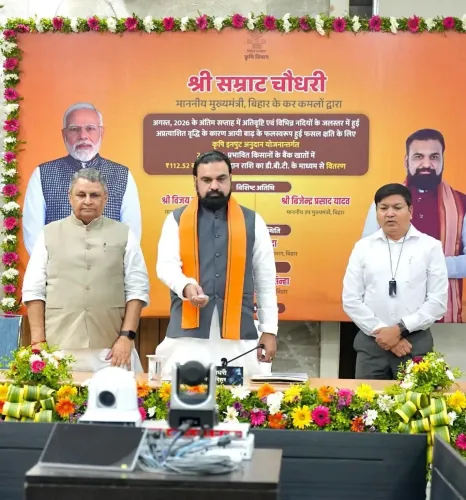
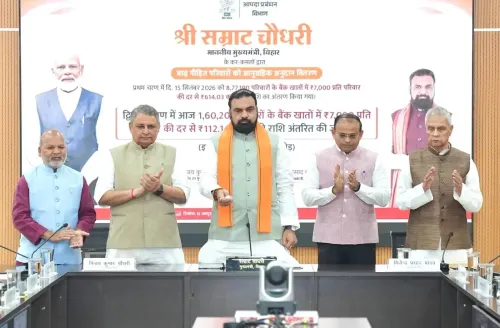
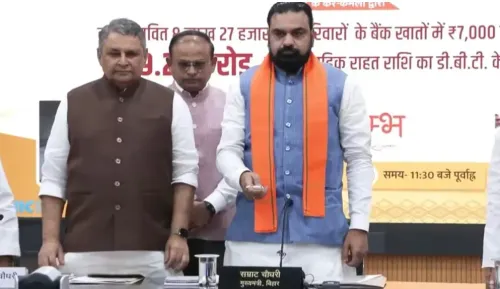
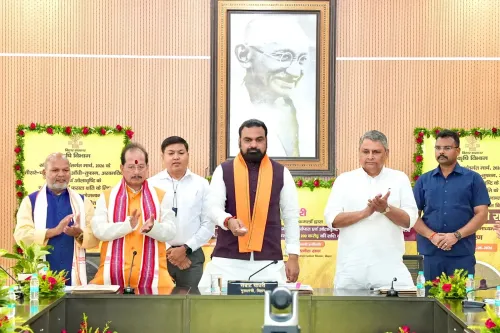
The transfer was initiated personally from the Chief Minister's Secretariat Dialogue Hall in Patna.
The per-farmer average works out to approximately ₹4,530 , intended to cover essential agricultural input costs for the next sowing cycle.
Bihar faces recurring monsoon flooding from rivers including the Kosi and Ganga , making such relief tranches an annual administrative imperative.
Further district-wise damage assessments may lead to additional tranches of relief for remaining affected areas.
More than a quarter-million Bihar farmers woke up on Wednesday, October 14, 2026, to a direct deposit in their bank accounts — flood relief they had been waiting for since the monsoon devastated their standing crops. Bihar Chief Minister Samrat Choudhary personally initiated the transfer from the dialogue hall of the Chief Minister's Secretariat, pushing ₹112.52 crore in agricultural input grants to 2,48,704 flood-affected farmers via Direct Benefit Transfer.
Posting on X, Chief Minister Choudhary announced: 'Mukhyamantri Sachivalaya sthit Samvad Kaksh se baadh ke kaaran fasal kshati se prabhavit 2,48,704 kisanon ke bank khaton mein ₹112.52 crore ki krishi input anudan rashi DBT ke madhyam se antarit ki' — ('From the Dialogue Hall at the Chief Minister's Secretariat, an agricultural input grant of ₹112.52 crore has been transferred via DBT into the bank accounts of 2,48,704 farmers affected by flood-induced crop damage.')
What the ₹112.52 crore grant is meant to do
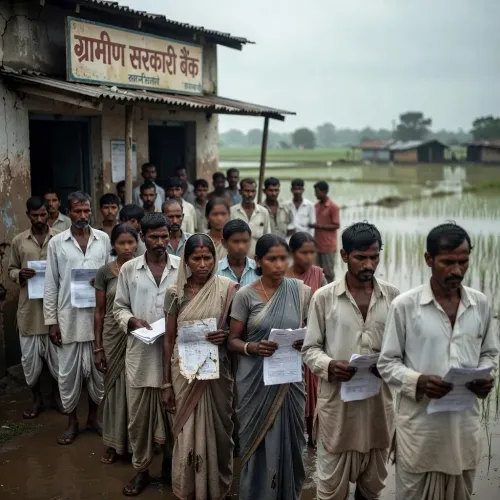
Agricultural input grants are designed to bridge the gap between a ruined harvest and the next sowing cycle. When floodwaters recede and leave behind waterlogged or silt-choked fields, farmers face an immediate cash crunch — they need to buy seeds, fertilisers, and basic inputs before the next crop window closes. The grant lands directly in a beneficiary's bank account, bypassing the traditional chain of middlemen that historically delayed — and sometimes diverted — relief funds. Bihar is one of India's most flood-prone states. Rivers including the Kosi and the Ganga regularly spill into the plains during the monsoon, wiping out paddy and maize crops across multiple districts. Each year, the damage triggers a political and administrative race to assess losses and release relief before the next agricultural season is lost too.DBT and Bihar's shift toward transparent relief
The Direct Benefit Transfer architecture has been progressively adopted by both the central and Bihar state governments to plug the leaks in subsidy delivery. By routing money electronically into verified bank accounts, the system creates a digital audit trail — every rupee can be traced from state treasury to individual farmer. Successive Bihar administrations have leaned into this model for flood relief, arguing it is faster and more tamper-proof than cash distribution through local officials. At ₹112.52 crore spread across 2,48,704 beneficiaries, the per-farmer average works out to roughly ₹4,530 — a sum calibrated to cover essential input costs rather than full crop-loss compensation. The state is expected to conduct ongoing district-wise damage assessments, and further tranches of relief could follow for areas not yet covered in this round. For nearly two and a half lakh farming families across Bihar, today's credit notification is not just a government statistic — it is the difference between planting next season and sitting it out.Point of View
Disbursing over ₹112 crore to nearly 2.5 lakh farmers just as the post-monsoon agricultural cycle restarts carries obvious electoral optics in a state with a large agrarian voter base. The move also fits a broader national pattern of state governments using DBT timelines as measurable governance deliverables, making relief quantifiable and attributable. Whether the amounts are sufficient to fully absorb crop-loss costs — or whether a second tranche follows — will be the real test of the programme's reach.
NationPress
14 Oct 2026
Frequently Asked Questions
How much relief did Bihar give to flood-affected farmers in October 2026?
Bihar Chief Minister Samrat Choudhary transferred ₹112.52 crore in agricultural input grants to flood-affected farmers on October 14, 2026, covering 2,48,704 beneficiaries via Direct Benefit Transfer.
What is agricultural input grant in Bihar?
An agricultural input grant is financial assistance given to farmers whose crops have been damaged by floods or other calamities, meant to help them buy seeds, fertilisers, and other essential inputs for the next sowing season. Bihar distributes this via DBT directly into farmers' bank accounts.
How does DBT help flood relief reach farmers faster?
Direct Benefit Transfer (DBT) routes subsidy funds electronically into verified bank accounts, cutting out middlemen and creating a digital audit trail. This speeds disbursement and reduces the risk of funds being delayed or diverted.
Why does Bihar face floods every year?
Bihar's geography makes it highly vulnerable to monsoon flooding — rivers such as the Kosi, Ganga, and Gandak regularly overflow during heavy rainfall, inundating agricultural land and destroying standing crops across multiple districts every year.
Will more Bihar farmers receive flood relief after this tranche?
Ongoing district-wise damage assessments are expected, and the state government may announce additional tranches of agricultural input grants for areas not yet covered in the October 14 disbursement.