CM Samrat Choudhary demands Congress apology for 1947 Partition
Synopsis
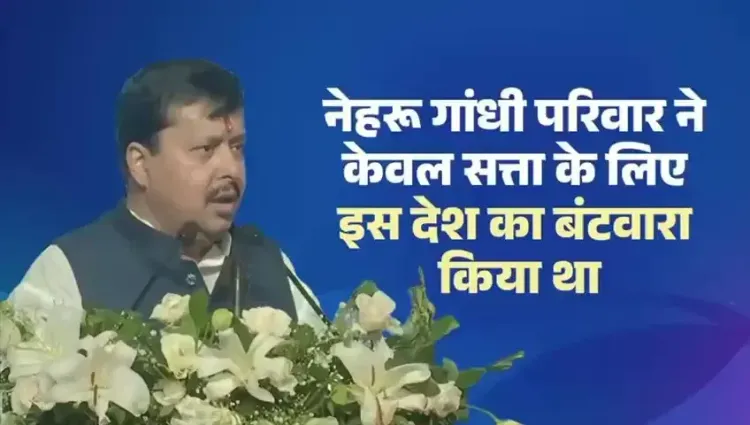
On the eve of Independence Day 2026, Bihar CM Samrat Choudhary amplified a BJP statement demanding Congress publicly apologise to families displaced and devastated by the 1947 Partition of India, reigniting a charged debate over historical accountability.
Key Takeaways
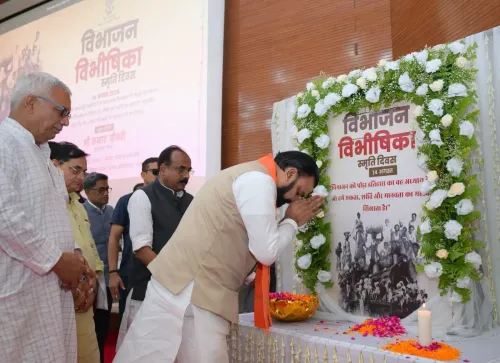
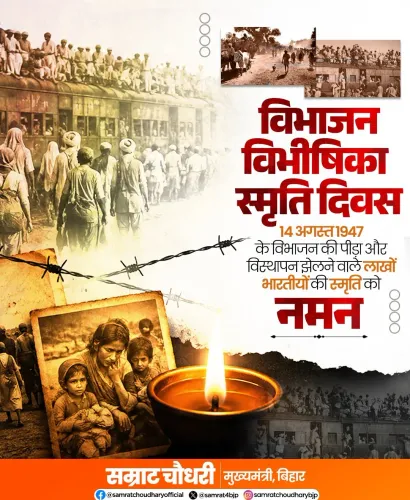
Bihar Chief Minister Samrat Choudhary shared a BJP statement on 14 August 2026 demanding a public apology from Congress over the 1947 Partition .
The statement declared that the pain of Partition-affected families 'cannot be forgotten' and called for truth over concealment.
The Mountbatten Plan , accepted by Congress leadership, formally divided British India into India and Pakistan in 1947 .
BJP has periodically raised Partition accountability as a political issue, framing it as an unresolved historical wrong.
No formal response from Congress leadership had emerged at the time of posting.
The wounds of 1947 refuse to close — and on the eve of Independence Day, Bihar Chief Minister Samrat Choudhary sharpened that edge, sharing a pointed statement demanding that the Indian National Congress publicly apologise to the millions of families torn apart by the Partition of India.
Choudhary shared the statement attributed to the BJP national president, which read: 'विभाजन के दंश को झेलने वाले परिवारों के दर्द को भुलाया नहीं जा सकता' — 'The pain of families who endured the agony of Partition cannot be forgotten.' The statement posed a direct challenge: 'Will Congress ever publicly apologise to those families? History must be faced with truth, not concealed behind a curtain.'
The Partition question BJP keeps on the table
BJP leaders have made the Partition of 1947 a recurring instrument in political discourse, framing Congress's acceptance of the Mountbatten Plan — which formally divided British India into India and Pakistan — as a decision that demands ongoing reckoning. The displacement of millions, the communal violence, and the generational trauma of border-crossing families are invoked as evidence that historical accountability cannot be archived away.
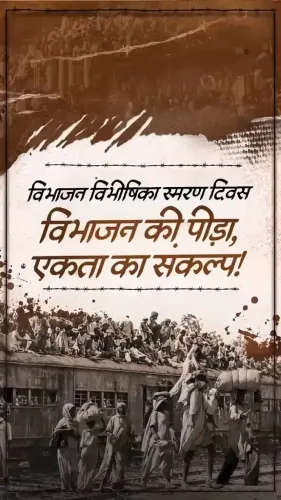
The timing is deliberate. August 14 — the night before Independence Day — carries particular resonance. It is the moment the subcontinent was cleaved in two. Raising the apology demand on this date is not incidental; it is a calculated act of political memory.
Congress yet to respond
As of the post's publication, no formal counter-statement from Congress leadership had emerged in response to this latest salvo. The party has historically rejected the framing that it bears singular responsibility for Partition, pointing to the complex colonial pressures and multi-party negotiations that preceded the 1947 division. That counter-argument, however, has not dimmed BJP's appetite for the debate.
For Partition-affected families — whose descendants number in the tens of millions across India, Pakistan, and the diaspora — the question is rarely just political. It is personal, inherited, and unresolved. Whether a formal apology would constitute justice or merely political theatre is a question that cuts far deeper than any single post can answer.
History, as Choudhary's shared statement insists, does not wait for a convenient moment to be answered.
Point of View
While ignoring it allows the narrative to harden unchallenged. This exchange reflects a broader BJP strategy of converting historical grievances into live political liabilities for the opposition.
NationPress
29 Sept 2026
Frequently Asked Questions
Why is BJP demanding a Congress apology for the 1947 Partition?
BJP leaders argue that Congress leadership accepted the Mountbatten Plan that divided British India in 1947 , causing mass displacement and communal violence, and that the party has never formally acknowledged responsibility to affected families.
What did Bihar CM Samrat Choudhary post about the Partition?
Samrat Choudhary shared a statement on 14 August 2026 saying the pain of Partition-affected families cannot be forgotten and asking whether Congress would ever publicly apologise to them.
What was the Partition of India in 1947?
The Partition of India in 1947 was the division of British India into the independent nations of India and Pakistan , triggering one of the largest mass migrations in history and widespread communal violence.
Has Congress responded to BJP's Partition apology demand?
Congress has historically rejected the framing that it bears singular responsibility for Partition, citing complex colonial-era negotiations, but had not issued a formal response to this specific statement at the time of posting.
Why is 14 August significant in the context of the Partition?
14 August is the date Pakistan was created as a result of the 1947 Partition , making it the eve of India's Independence Day and a date of deep historical weight for Partition-affected communities.