CM Conrad Sangma closes 2nd Youth Engagement Programme
Synopsis
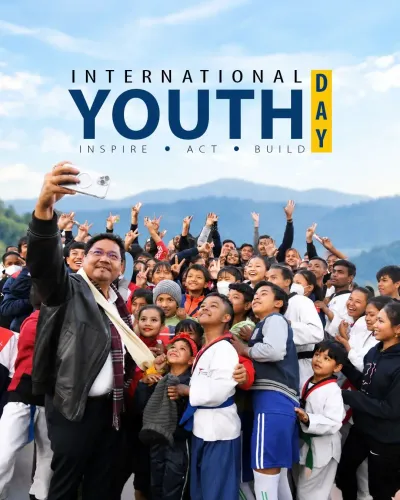
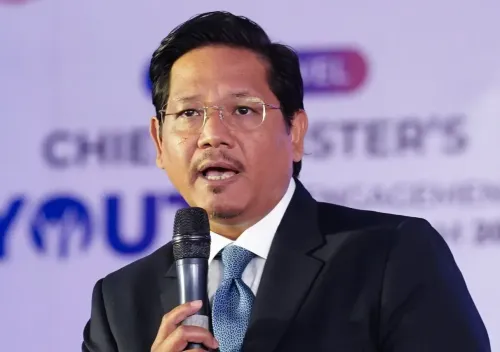
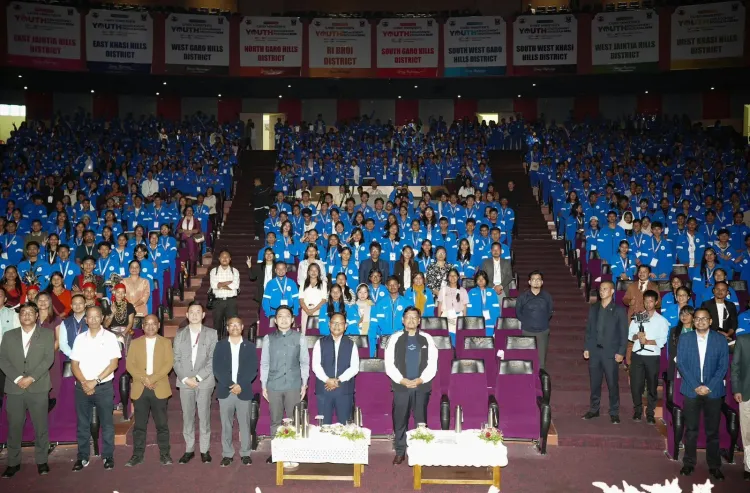
Meghalaya CM Conrad Sangma joined participants at the closing ceremony of the 2nd State Level Chief Minister's Youth Engagement Programme 2026 on October 16, engaging directly with youth on programme improvements and the government's plans for the next generation across the state.
Key Takeaways
Meghalaya Chief Minister Conrad Sangma attended the closing ceremony of the 2nd State Level Chief Minister's Youth Engagement Programme 2026 on October 16 .
Sangma interacted directly with participants to gather feedback on how to improve the programme in future editions.
The programme unites youth from across Meghalaya's diverse districts for cultural exchange, talent showcases, friendship-building and healthy competition.
Union Minister of Youth Affairs and Sports Mansukh Mandaviya was tagged in the post, signalling coordination with central government youth policy.
The initiative aligns with India's National Youth Policy (2014) , which frames state-level youth engagement as a vehicle for skill-building, harmony and leadership development.
As only the second edition, the programme is still being refined — district coverage and participation scale in the next edition are key things to watch.
Hundreds of young voices from across Meghalaya filled the closing ceremony of the 2nd State Level Chief Minister's Youth Engagement Programme 2026 on Friday, October 16 — and Meghalaya Chief Minister Conrad Sangma was right there among them, listening as much as speaking.
A two-way conversation at the closing ceremony
Sangma described the experience as a genuine exchange, noting he took time to interact with participants 'to learn about how we can improve the program, and to tell them about our plans for our youth through different programs of the Government.' That framing — the Chief Minister as student as much as speaker — sets a deliberate tone for a programme built around listening across difference.
The post also tags Union Minister of Youth Affairs and Sports Mansukh Mandaviya, signalling that the state initiative is being positioned in direct conversation with central government youth policy — a notable alignment for a Northeast state seeking both visibility and resources from New Delhi.
What the programme actually does for Meghalaya's youth
The Chief Minister's Youth Engagement Programme pulls participants from districts across the state, bringing together young people from Meghalaya's diverse tribal and non-tribal communities under one roof. The design is deliberate: cultural discovery, cross-regional friendships, talent showcases, and structured competition are woven together to build what Sangma calls 'a stronger, more united Meghalaya.'
Northeast India carries a particular weight when it comes to inter-community harmony. The region's states periodically run cross-district youth programmes precisely to ease identity-based friction and foster a shared sense of citizenship — goals that sit alongside, and often reinforce, central schemes run by the Ministry of Youth Affairs and Sports under India's National Youth Policy (2014).
The second edition — and what comes next
This is only the second edition of the programme, meaning the architecture is still being refined. Sangma's willingness to solicit direct feedback from participants at the closing ceremony suggests the government is actively iterating on the model. The watch point now is whether the next edition expands district coverage, draws higher participation numbers, or introduces new skill and leadership components linked to central government youth schemes.
For a state that blends Khasi, Garo, Jaintia and dozens of other distinct cultural identities, a programme that turns that diversity into a feature rather than a fault line carries stakes well beyond a single closing ceremony.
Point of View
A pattern Northeast CMs have pursued with varying success. For the NPP, which governs a state defined by its tribal plurality, a programme that frames diversity as national strength rather than a governance challenge also carries quiet electoral logic — building cross-community goodwill ahead of future electoral cycles. The broader Northeast pattern of using cross-district youth programming to reduce identity-based friction gives this initiative a security-adjacent dimension that purely celebratory framing tends to obscure.
NationPress
16 Oct 2026
Frequently Asked Questions
What is the Chief Minister's Youth Engagement Programme in Meghalaya?
The Chief Minister's Youth Engagement Programme is a state-level initiative in Meghalaya that brings together young people from different districts and communities for cultural exchange, talent showcases, cross-regional friendship-building and healthy competition. The 2026 edition was its second instalment.
Who attended the closing ceremony of the 2nd Youth Engagement Programme 2026?
Meghalaya Chief Minister Conrad Sangma attended the closing ceremony of the 2nd State Level Chief Minister's Youth Engagement Programme 2026 on October 16, 2026, and interacted directly with participants.
Why was Mansukh Mandaviya tagged in Conrad Sangma's post about the youth programme?
Sangma tagged Union Minister of Youth Affairs and Sports Mansukh Mandaviya in his post, indicating coordination or engagement between the Meghalaya state initiative and the central government's youth affairs framework.
What is the purpose of youth engagement programmes in Northeast India?
Northeast states run cross-district youth programmes to promote inter-tribal and inter-community understanding, reduce identity-based friction and build a shared sense of citizenship — goals aligned with India's National Youth Policy of 2014.
What will be different in the next edition of the Meghalaya CM's Youth Engagement Programme?
No specific changes have been announced yet. CM Sangma solicited direct feedback from participants at the closing ceremony, suggesting the government is actively refining the model; district coverage and participation numbers in future editions are key things to watch.