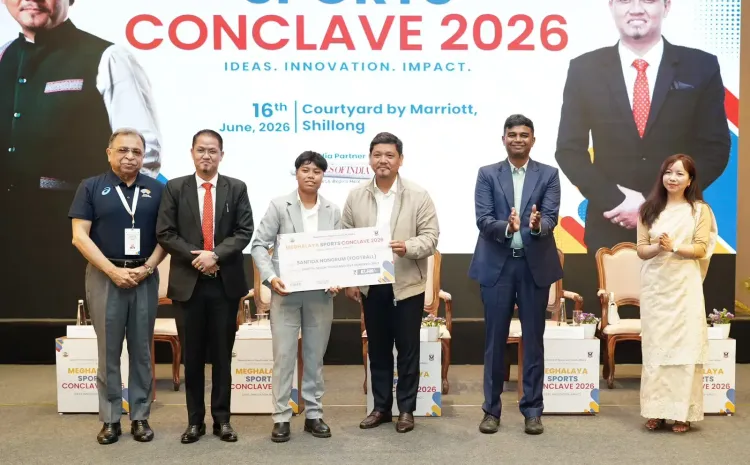
CM Conrad Sangma Honours 15 Athletes at Meghalaya Sports Conclave
Synopsis
Meghalaya CM Conrad Sangma honoured 15 sports achievers across Archery, Athletics, Swimming, Weightlifting, Wrestling, and Football at the Meghalaya Sports Conclave, with cash awards up to ₹87,500, tagging Union Sports Minister Mansukh Mandaviya to signal state-Centre coordination.
Key Takeaways
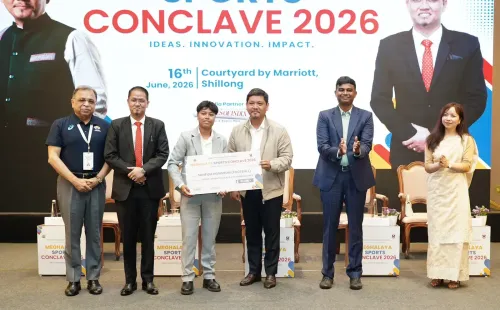
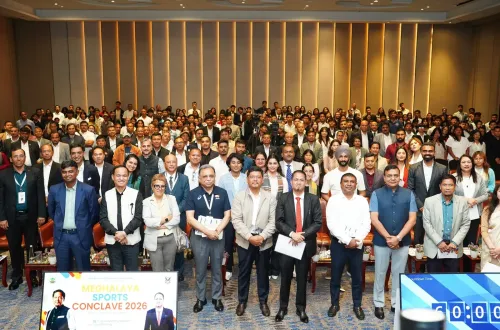
15 athletes were honoured at the Meghalaya Sports Conclave on June 16, 2026 .
Cash awards ranged from ₹25,000 to ₹87,500 across six disciplines : Archery, Athletics, Swimming, Weightlifting, Wrestling, and Football.
CM Conrad Sangma tagged Union Sports Minister Mansukh Mandaviya , indicating active state-Centre coordination on sports policy.
The initiative aligns with the national Khelo India scheme, launched in 2017 , which targets grassroots talent in the Northeast.
The conclave aims to inspire Meghalaya's youth to pursue sports at competitive levels beyond state boundaries.
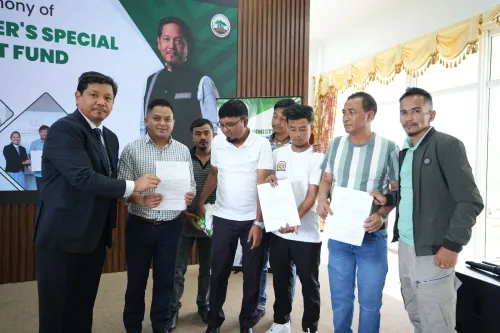
Meghalaya Chief Minister Conrad Sangma on Tuesday, June 16, 2026, announced that the state had honoured 15 outstanding sports achievers at the Meghalaya Sports Conclave, presenting cash awards across six disciplines — Archery, Athletics, Swimming, Weightlifting, Wrestling, and Football. The awards ranged from ₹25,000 to ₹87,500 per recipient.
Context
Sharing the news on social media, CM Sangma stated that recognising sporting talent is 'important not only to encourage these young achievers to continue striving for excellence, but also to inspire our youth to dream bigger, work harder, and pursue greatness through sports.' The post also tagged Union Minister for Youth Affairs and Sports Mansukh Mandaviya, signalling active coordination between the state government and the Central ministry.
The conclave brought together athletes from disciplines that reflect Meghalaya's traditional sporting strengths, particularly in Archery and Football, alongside competitive fields such as Athletics and Wrestling where the state has been steadily building grassroots talent.
Policy Backdrop
The recognition drive fits within a broader national framework anchored by the Khelo India scheme, launched in 2017, which aims to promote grassroots sports and identify talent across states — with a particular emphasis on the Northeast. Northeastern states have progressively expanded state-level cash incentive programmes to complement central funding and talent pipelines.
By tagging the Union Sports Minister, Meghalaya underscored the state-Centre partnership model that has become central to sports policy in the region. Such coordination typically opens pathways for athletes to access national training camps, scholarships, and selection trials under centrally-sponsored programmes.
Stakeholders and Impact
The 15 awardees span a wide range of disciplines, meaning the conclave's impact cuts across different sporting communities within the state. Cash awards of up to ₹87,500 provide meaningful financial recognition for athletes who often train with limited institutional support at the grassroots level.
For Meghalaya's youth, the public visibility of the conclave carries a motivational dimension beyond the monetary awards. State-level recognition events have historically encouraged school and college athletes to pursue competitive sports more seriously, particularly in smaller states where role models and institutional support structures are still developing.
What's Next
Attention will now turn to whether Meghalaya scales up its sports infrastructure budget in line with this recognition push, and how the state's athletes perform at upcoming national platforms such as the Khelo India Games or national championships. The involvement of the Union Sports Ministry could also signal potential central grants or joint programmes targeting the state's identified disciplines.
The conclave may also set a precedent for expanding the number of disciplines and awardees in future editions, particularly if central coordination with Minister Mandaviya's office translates into structured follow-through for the honoured athletes.
Point of View
Topping at ₹87,500, is modest by national standards but meaningful in a state where sports infrastructure is still maturing. The choice of six disciplines — spanning traditional Northeast strengths like Archery and Football alongside mainstream competitive sports — suggests a deliberate strategy to build a broad talent base rather than concentrating resources on a single discipline. Whether this conclave translates into sustained investment or remains a one-off recognition event will determine its long-term impact on Meghalaya's sporting ecosystem.
NationPress
26 Sept 2026
Frequently Asked Questions
What is the Meghalaya Sports Conclave?
The Meghalaya Sports Conclave is a state-level event organised to recognise and reward outstanding sports achievers from Meghalaya across multiple disciplines, with cash awards presented by the state government.
How much cash award did athletes receive at the Meghalaya Sports Conclave 2026?
Athletes received cash awards ranging from ₹25,000 to ₹87,500 depending on their discipline and achievement level at the conclave.
Which sports were recognised at the Meghalaya Sports Conclave?
The six disciplines recognised were Archery, Athletics, Swimming, Weightlifting, Wrestling, and Football , covering a broad range of competitive sports.
Why did Conrad Sangma tag Mansukh Mandaviya in the sports post?
Mansukh Mandaviya is the Union Minister for Youth Affairs and Sports. CM Sangma's tag signals coordination between the Meghalaya state government and the Central ministry on sports talent development, potentially opening doors to national schemes and funding.
What is the Khelo India scheme and how does it relate to Meghalaya?
The Khelo India scheme, launched in 2017 , promotes grassroots sports and talent identification across India, with a focus on the Northeast. Meghalaya's state-level recognition events like the Sports Conclave complement this national framework.