CM Conrad Sangma Lays Foundation for NLU Meghalaya Campus

Synopsis
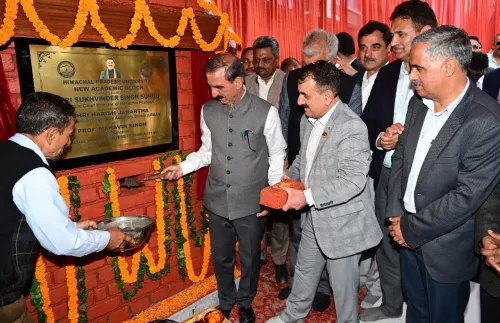
Meghalaya CM Conrad Sangma laid foundation stones for the permanent campuses of National Law University, Meghalaya and the Meghalaya State Judicial Academy at Mawpdang-Mawkhanu, New Shillong Township on October 27, 2026, alongside Chief Justice Revati Mohite Dere and Law Minister Lahkmen Rymbui.
Key Takeaways
CM Conrad Sangma laid foundation stones for two legal institutions on October 27, 2026 .
Both campuses will come up at Mawpdang-Mawkhanu, New Shillong Township , Meghalaya's planned urban extension.
National Law University, Meghalaya will provide undergraduate, postgraduate and research-level legal education in the state.
Meghalaya State Judicial Academy will offer continuing training for judges, magistrates and court staff.
Chief Justice Revati Mohite Dere , former Chief Justice Sanjiv Banerjee , and Law Minister Lahkmen Rymbui attended the ceremony.
The projects are part of a broader push to build institutional infrastructure within the New Shillong Township corridor.
Two institutions that will shape Meghalaya's legal landscape for generations broke ground on Tuesday, October 27, 2026, as Meghalaya Chief Minister Conrad Sangma laid the foundation stones for the permanent campuses of the National Law University, Meghalaya and the Meghalaya State Judicial Academy at Mawpdang-Mawkhanu, New Shillong Township. Legal education and judicial training — long aspirations for a state still building its institutional spine — now have a fixed address.
Who Stood on That Ground at Mawpdang-Mawkhanu
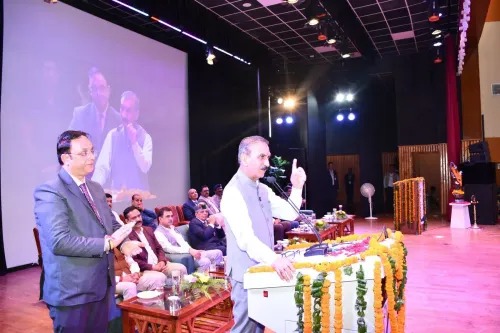
The ceremony brought together the full weight of Meghalaya's legal establishment. Alongside Chief Minister Sangma stood Justice Revati Mohite Dere, Chief Justice of the High Court of Meghalaya, former Chief Justice Sanjiv Banerjee, and Law Minister Lahkmen Rymbui, along with senior officials. The joint presence of the executive and the judiciary at the same foundation-stone ceremony signals an unusually unified institutional push — both campuses rising on the same plot, side by side.
What NLU Meghalaya and the Judicial Academy Actually Do
The National Law University, Meghalaya is the state's dedicated higher-education institution for law — offering undergraduate and postgraduate legal programmes and a mandate for legal research. Across India, the NLU network has become the pipeline for the country's top litigators, judges, and policy lawyers; Meghalaya's permanent campus plants the state firmly in that national circuit.
The Meghalaya State Judicial Academy serves a different but equally critical function: continuing education and training for sitting judges, magistrates, and court staff. In a state where access to justice is complicated by geography, a well-resourced judicial academy can accelerate reforms inside courtrooms. Together, the two institutions address both ends of the legal chain — from student to serving judge.
New Shillong Township as Meghalaya's Infrastructure Frontier
The choice of New Shillong Township is deliberate policy, not just a land decision. The planned urban extension has been positioned as a relief valve for Shillong's congested centre — drawing government offices, educational institutions, and infrastructure outward. Placing both campuses here reinforces the township's role as the state's emerging institutional corridor and signals that the project is moving from blueprint to concrete.
Chief Minister Sangma described the institutions as 'an important investment in Meghalaya's future, strengthening legal education, research and judicial training while expanding opportunities for our youth.' For a northeastern state that has historically sent its law aspirants to colleges in distant cities, a permanent NLU campus is a measurable change in the geography of opportunity.
Northeast's Broader Push for Legal Infrastructure
Meghalaya is not alone in this arc. Across the Northeast, states have been playing catch-up with the rest of India on specialised higher-education infrastructure — and legal institutions have been a particular gap. The NLU network's expansion into the region, backed by state judicial academies, fits a pattern of the Centre and state governments jointly strengthening the institutional backbone of India's frontier states. The construction timeline and the recruitment of faculty will be the next tests of whether today's foundation stones translate into open lecture halls.
The foundations are poured. The question now is how fast the walls go up — and when Meghalaya's first generation of NLU graduates walks out of a campus that was built for them.
Point of View
Where NLU access has historically meant leaving the region entirely, a permanent Meghalaya campus alters the talent-retention calculus in a meaningful way. The presence of the sitting Chief Justice alongside the Chief Minister also signals executive-judiciary alignment on infrastructure priorities, which can accelerate clearances and resource allocation. Whether the project sustains momentum will depend on construction timelines and faculty recruitment — the two pressure points where similar northeast infrastructure drives have historically stalled.
NationPress
27 Oct 2026
Frequently Asked Questions
Where will the National Law University Meghalaya permanent campus be located?
The permanent campus of National Law University, Meghalaya will be built at Mawpdang-Mawkhanu in New Shillong Township, the planned urban extension area near Shillong.
What is the Meghalaya State Judicial Academy?
The Meghalaya State Judicial Academy is an institution that provides continuing education and professional training for judges, magistrates, and court staff in Meghalaya.
Who attended the foundation-stone ceremony for NLU Meghalaya?
Chief Minister Conrad Sangma, Chief Justice of the Meghalaya High Court Revati Mohite Dere, former Chief Justice Sanjiv Banerjee, and Law Minister Lahkmen Rymbui attended the ceremony on October 27, 2026.
What is New Shillong Township?
New Shillong Township is a planned urban extension project near Shillong designed to decentralise government and educational infrastructure away from the congested city centre.
Why is a National Law University important for Meghalaya?
A permanent NLU campus gives Meghalaya students access to top-tier legal education within the state, reducing the need to travel to colleges in other regions and strengthening local legal research and talent development.