CM Sawant attends 57th GST Council meet in New Delhi
Synopsis
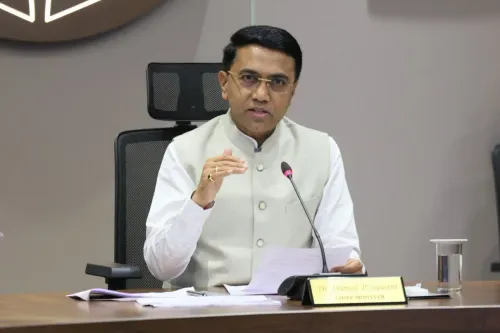
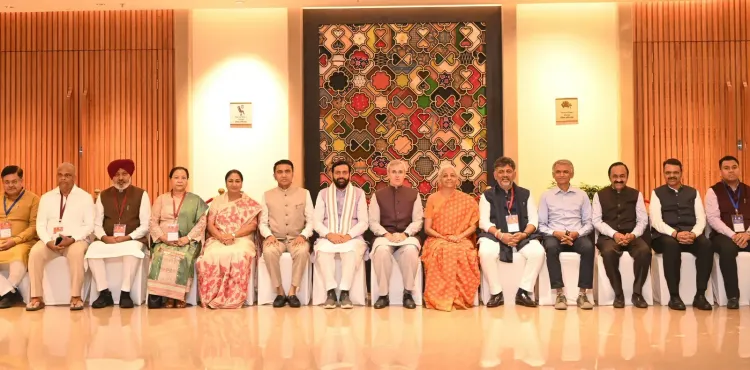
Goa Chief Minister Pramod Sawant joined the 57th GST Council meeting at Bharat Mandapam, New Delhi on October 8, 2026, chaired by Union Finance Minister Nirmala Sitharaman, alongside Chief Ministers, Deputy Chief Ministers, and Finance Ministers of states.
Key Takeaways
The 57th GST Council meeting was held at Bharat Mandapam, New Delhi on October 8, 2026 .
Goa Chief Minister Pramod Sawant attended in person, representing Goa at the apex indirect-tax forum.
The meeting was chaired by Union Finance Minister Nirmala Sitharaman , as mandated under Article 279A of the Constitution.
Chief Ministers, Deputy Chief Ministers, and Finance Ministers of multiple states were present, underlining the session's federal significance.
Goa, with its tourism- and hospitality-driven economy, has a distinct interest in GST Council outcomes on rate slabs and sector-specific levies.
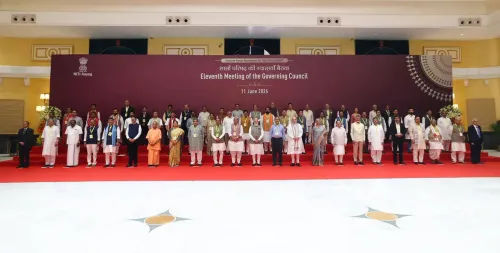
At Bharat Mandapam, New Delhi, on Thursday, October 8, 2026, the 57th GST Council convened with the widest table of federal stakeholders India's indirect tax regime commands — Chief Ministers, Deputy Chief Ministers, and Finance Ministers of states sitting alongside senior officials. Goa Chief Minister Pramod Sawant was among the state leaders present, marking Goa's participation in what is the apex decision-making body for the Goods and Services Tax framework.
The GST Council's 57th sitting — who was in the room
The meeting was chaired by Union Finance and Corporate Affairs Minister Nirmala Sitharaman, whose role as GST Council chair is constitutionally mandated. The gathering at Bharat Mandapam brought together fiscal representatives from across India's federal structure — a configuration that makes every council meeting, in effect, a compact national budget conclave in miniature. CM Sawant posted about his attendance directly from the venue, flagging the presence of Chief Ministers and Deputy Chief Ministers alongside state Finance Ministers and senior officials.
Why the 57th Council meeting carries weight
The GST Council, established under Article 279A of the Constitution, is India's primary intergovernmental forum for rate rationalisation, compliance reform, and revenue-sharing between the Centre and states. Smaller states like Goa — heavily reliant on tourism, hospitality, and mining sectors that have distinct GST implications — have a direct stake in council decisions on rate slabs, exemptions, and the compensation cess regime. Each meeting has the potential to redraw the contours of state revenues overnight, which is why Chief Ministerial attendance signals the political salience a particular meeting carries.
Goa's seat at the federal tax table
By attending in person, CM Sawant positions Goa as an active participant rather than a passive recipient of council outcomes. Smaller coastal and tourism-dependent states have historically used Council sessions to push for sector-specific relief — whether on hotel tariffs, casino levies, or construction materials. The 57th meeting continues a series of sessions that have grappled with post-compensation-period revenue gaps faced by several states, making the voice of every Chief Minister in the room consequential.
Whatever the 57th GST Council resolves today, one thing is certain: the decisions made inside Bharat Mandapam's halls will ripple through every state's budget arithmetic well before the next fiscal year begins.
Point of View
Whose revenues are acutely sensitive to GST treatment of hospitality, tourism, and extraction industries, direct representation at the 57th sitting is a strategic choice. The broader pattern across recent Council meetings has been states asserting stronger fiscal voices as the post-GST compensation period ends, making intergovernmental negotiation more intense than ever. CM Sawant's attendance plants Goa firmly inside that negotiation, not outside it.
NationPress
8 Oct 2026
Frequently Asked Questions
What is the GST Council and who chairs it?
The GST Council is India's constitutional body under Article 279A that decides GST rates, exemptions, and compliance rules. It is chaired by the Union Finance Minister — currently Nirmala Sitharaman — with state Finance Ministers and Chief Ministers as members.
Where was the 57th GST Council meeting held?
The 57th GST Council meeting was held at Bharat Mandapam in New Delhi on October 8, 2026.
Why did Goa CM Pramod Sawant attend the GST Council meeting?
As Chief Minister, Pramod Sawant represents Goa's fiscal interests at the Council. Goa's economy depends heavily on tourism and hospitality, sectors directly affected by GST rate decisions.
What is the significance of the 57th GST Council session?
Each GST Council meeting can alter rate slabs, exemptions, and revenue-sharing arrangements that directly impact state budgets. The 57th session continues deliberations on rate rationalisation and the revenue gaps states face after the GST compensation period ended.
Who all attended the 57th GST Council meeting?
The meeting was attended by Chief Ministers, Deputy Chief Ministers, and Finance Ministers of states and union territories, along with senior central and state officials, under the chairpersonship of Finance Minister Nirmala Sitharaman.