CM Sawant Highlights Education Push as Goa's Minister
Synopsis
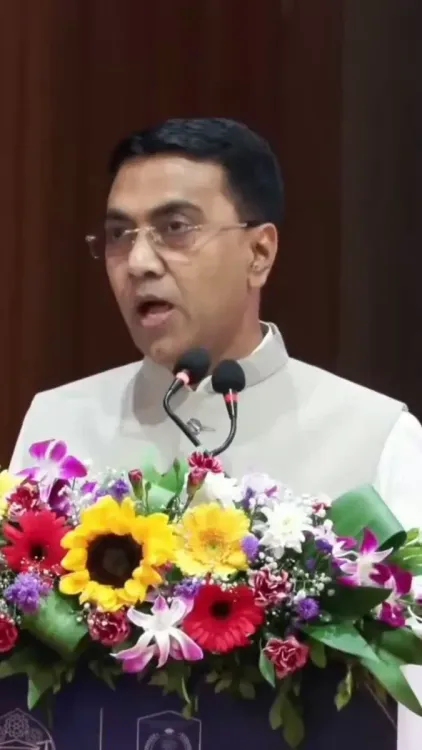
Goa Chief Minister Pramod Sawant, who also holds the Education portfolio, has highlighted his record of building quality education infrastructure in the state, framing the investment as preparation of Goa's youth — or 'Yuva Shakti' — for the future, in alignment with NEP 2020 goals.
Key Takeaways
Pramod Sawant holds both the Chief Minister and Education Minister portfolios in Goa since 2019 .
Sawant's post frames education infrastructure investment as empowering Goa's Yuva Shakti — the state's youth — for the future.
Goa was among India's early adopters of the National Education Policy 2020 , guiding curriculum and infrastructure reforms.
The dual portfolio has allowed Sawant to drive education reforms without inter-ministerial friction, a notable feature of governance in smaller states.
Goa's upcoming assembly budget sessions will be the clearest measure of whether education allocations match the ambition of the messaging.
Wearing two hats at once — Chief Minister and Education Minister — Pramod Sawant has staked his tenure on a clear bet: build the classrooms, labs, and digital infrastructure today, and Goa's next generation will carry the state forward tomorrow.
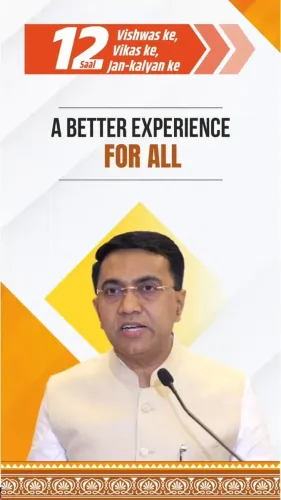
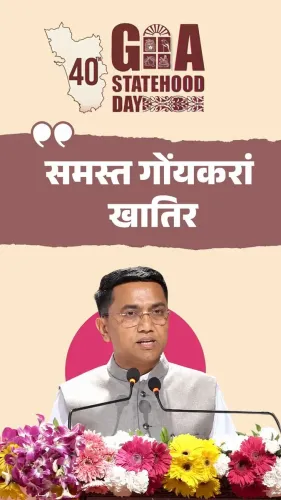
In a post on X on Saturday, October 24, 2026, Sawant wrote: 'As Education Minister, I have ensured quality education infrastructure in the state to empower our students and prepare Goa's Yuva Shakti for the future.' The phrase Yuva Shakti — 'youth power' — is a recurring frame in BJP-aligned governance messaging, signalling that the investment is cast not as welfare but as economic and social capital-building.
Sawant's dual role: Chief Minister and Education Minister
Pramod Sawant has held the education portfolio alongside the chief ministership since taking office in 2019, an arrangement that reflects both the political weight he attaches to the sector and the consolidation of authority typical of smaller states. Goa, with a population of roughly 1.5 million, runs a relatively compact school system — but one that punches above its weight on literacy and higher-education outcomes by Indian standards.
The dual mandate has allowed Sawant to push education reforms without the friction of inter-ministerial negotiation. Whether that speed has translated into measurable gains is a question Goa's upcoming assembly budget sessions will have to answer in rupees and enrolment numbers.
NEP 2020 and Goa's early adoption
Goa was among the early movers in adopting the National Education Policy 2020, the most sweeping overhaul of India's education framework since 1986. NEP 2020 pushed states toward competency-based learning, mother-tongue instruction in early grades, and a dramatic expansion of digital and vocational infrastructure. For a small, tourism-driven state with an educated workforce, the policy alignment offered a ready template.
State governments across India have used NEP 2020 implementation as a visible governance signal — announcing smart classrooms, upgraded science labs, and teacher-training drives. Goa's narrative follows that broader pattern, with Sawant positioning infrastructure investment as the connective tissue between national policy intent and local student outcomes.
What the 'Yuva Shakti' frame means for Goa's politics
The choice of language matters. Yuva Shakti — youth power — is not a neutral bureaucratic term; it is a deliberate mobilisation phrase that ties education spending to a larger BJP political vision of a 'New India' built by an aspirational young workforce. In a state where youth unemployment and out-migration to larger metros are persistent concerns, framing education infrastructure as a solution to those anxieties is both a policy argument and an electoral one.
Goa's assembly budget sessions will be the real test. Education allocations, new school construction timelines, and NEP 2020 implementation guidelines will reveal whether the infrastructure push matches the ambition of the messaging.
The blueprint is drawn. The next question is whether the buildings, the bandwidth, and the teachers are in place when Goa's students need them most.
Point of View
He signals that education is not just a welfare line item but a political identity marker. For a Chief Minister who has held the education portfolio since 2019, the statement is also a pre-emptive defence of his record ahead of budget scrutiny. The real test will come in how Goa's education allocations and measurable outcomes — enrolment, digital penetration, teacher vacancies — stack up against the rhetoric.
NationPress
25 Oct 2026
Frequently Asked Questions
Is Pramod Sawant the Education Minister of Goa?
Yes, Pramod Sawant holds both the Chief Minister and Education Minister portfolios in Goa, a dual role he has maintained since taking office in 2019.
What is Yuva Shakti in the context of Goa's education policy?
'Yuva Shakti' translates to 'youth power' and is used by Sawant to frame education infrastructure investment as a long-term strategy to empower Goa's young population and prepare them for future opportunities.
Has Goa adopted the National Education Policy 2020?
Yes, Goa was among the early states to adopt NEP 2020, using it to guide reforms in curriculum design, digital learning infrastructure, and school modernisation.
What education infrastructure improvements has Goa made under Sawant?
Sawant has cited quality education infrastructure development broadly; specific projects and timelines are subject to verification through official state budget and policy documents.
When is Goa's next assembly budget session for education?
The exact date of Goa's next assembly budget session has not been announced in the available information, but education allocations and NEP 2020 implementation guidelines are expected to be key agenda items.