CM Sawant kicks off Goa's Census 2027 Self-Enumeration
Synopsis
Goa Chief Minister Pramod Sawant on 16 November 2026 inaugurated the Census 2027 Self-Enumeration Phase in Goa, completing his own household details online and urging all Goans to participate at se.census.gov.in between 16 and 30 November. Participation is mandatory under the Census Act, 1948.
Key Takeaways
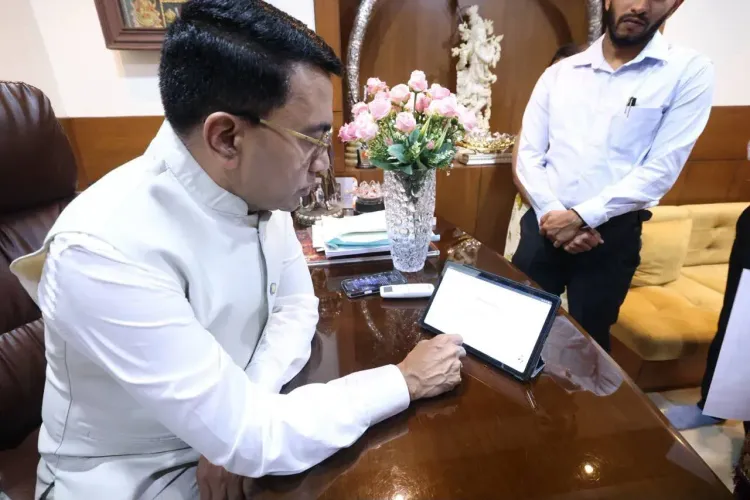
Goa CM Pramod Sawant inaugurated the Census 2027 Self-Enumeration Phase in Goa on 16 November 2026 from his Sankhali residence.
Citizens can submit household and individual data online at se.census.gov.in between 16 and 30 November 2026 .
The 2011 Census remains India's last completed decennial count; the 2021 exercise was deferred due to the COVID-19 pandemic.
Participation in the census is legally mandatory under the Census Act, 1948 , though all data submitted is strictly confidential.
Accurate census data underpins resource allocation, welfare scheme targeting, and future constituency delimitation across India.
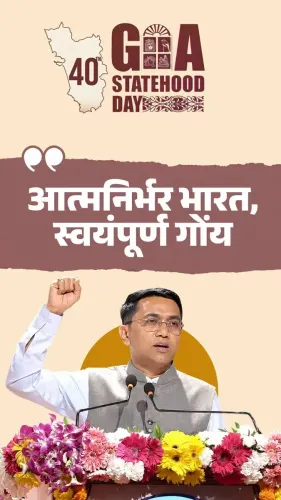
Sawant signed off with the Konkani phrase 'आमची जनगणना, आमचो विकास' — 'Our census, our development.'
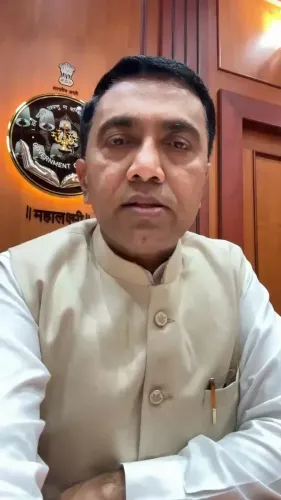
India's long-awaited census is finally moving — and Goa Chief Minister Pramod Sawant made sure his state was front and centre on Monday, 16 November 2026, as the Self-Enumeration Phase of Census 2027 was officially inaugurated in Goa. Sawant led by example, logging onto the official portal at se.census.gov.in from his Sankhali residence and completing the household and individual details of his family.
What the self-enumeration window means for Goans
The window is open from 16th to 30th November 2026 — a fortnight for residents to visit the official portal and submit their household data digitally, before field enumerators begin ground operations. This is new territory for India's census machinery: a citizen-driven, online first layer designed to enhance coverage and reduce the burden on door-to-door surveyors.
Sawant urged every Goan to participate 'actively and accurately,' stressing that the data collected would directly shape governance priorities. 'आमची जनगणना, आमचो विकास' — 'Our census, our development' — he wrote in Konkani, grounding a national exercise in the state's own identity.
A census delayed — and the weight that delay carries
The stakes here are unusually high. The 2011 Census remains the last completed decennial count of India — a dataset now fifteen years old. The exercise originally due in 2021 was deferred because of the COVID-19 pandemic, leaving planners, welfare administrators, and constituency delimitation committees working from increasingly stale numbers.
Fresh, accurate data from Census 2027 will feed directly into resource allocation formulas, parliamentary seat delimitation, and the targeting of flagship welfare schemes. Every household that skips the enumeration is, in effect, a gap in that blueprint.
The legal obligation citizens may not know about
Sawant also reminded residents of something easy to overlook: participation is not optional. The Census Act, 1948 — the central legislation that has underpinned every Indian census — makes it mandatory to provide census information. At the same time, the Act guarantees that all submitted data remains strictly confidential and cannot be used for any administrative action against an individual.
The dual assurance — legal obligation paired with data privacy — is the government's answer to citizen hesitation, and Sawant leaned into both in his message.
Goa as an early signal for national rollout
Goa's inauguration today positions the small coastal state as an early marker in what will be a phased national rollout. How smoothly the self-enumeration portal handles the load, and how thoroughly citizens respond to outreach, will offer early lessons for the rest of the country as the broader Census 2027 operation gears up.
India's ability to plan the next decade of infrastructure, social spending, and political representation rides on the accuracy of what gets submitted through portals like this one — fifteen minutes of data entry with decades of consequences.
Point of View
Goa's early rollout positions the BJP-led state government as administratively proactive on a Union exercise that carries enormous downstream consequences: Census 2027 data will shape delimitation, welfare rolls, and central fund transfers for years. With India's planning infrastructure running on fifteen-year-old demographic numbers, the speed and accuracy of this digital-first phase is as much a political test as an administrative one — and state leaders know it.
NationPress
16 Nov 2026
Frequently Asked Questions
What is the Census 2027 Self-Enumeration Phase in Goa?
The Self-Enumeration Phase allows Goan citizens to submit their household and personal information online at se.census.gov.in between 16 and 30 November 2026, ahead of field enumeration operations as part of India's Census 2027 exercise.
Is it mandatory to fill the census self-enumeration form?
Yes. Under the Census Act, 1948, providing census information is legally mandatory for all citizens. However, all data submitted remains strictly confidential and cannot be used for any administrative action against an individual.
Why was India's census delayed from 2021 to 2027?
India's decennial census, originally scheduled for 2021, was postponed due to the COVID-19 pandemic. The exercise has since been redesigned to include digital tools such as the online self-enumeration portal, with operations now planned for 2027.
What is the official census self-enumeration portal link?
The official portal for the Self-Enumeration Phase of Census 2027 is se.census.gov.in, as shared by Goa CM Pramod Sawant on 16 November 2026.
Why is Census 2027 data important for Goa and India?
Census data directly determines resource allocation, targeting of welfare schemes, and parliamentary constituency delimitation. With the last completed census dating to 2011, accurate 2027 data will update India's planning baseline for the decade ahead.